pwerle-logo

Our Dreamings

DREAMINGS

“Dreaming” — also known as “Dreamtime” — is a word commonly used to describe the complex spiritual and cultural belief systems of Aboriginal people. But the concept of the Dreaming is far deeper than any one English word can express.

The Dreaming refers to the time of creation — when ancestral beings shaped the land, waterways, animals, seasons, and people. These ancestral spirits travelled across the land, performing ceremonies and leaving behind sacred stories, law, and knowledge. The marks they left — in the form of rock formations, waterholes, and pathways — remain deeply significant today.

But the Dreaming is not just a story of the past. It is timeless. It exists in the past, present, and future all at once. It continues to guide every part of life today — from relationships and responsibilities, to how people care for the land, navigate kinship, and make art. Every Dreaming is specific to a place and to the people who belong to that Country. These stories connect Aboriginal people to their ancestors, to the land, and to a set of laws and duties that must be respected and passed down.
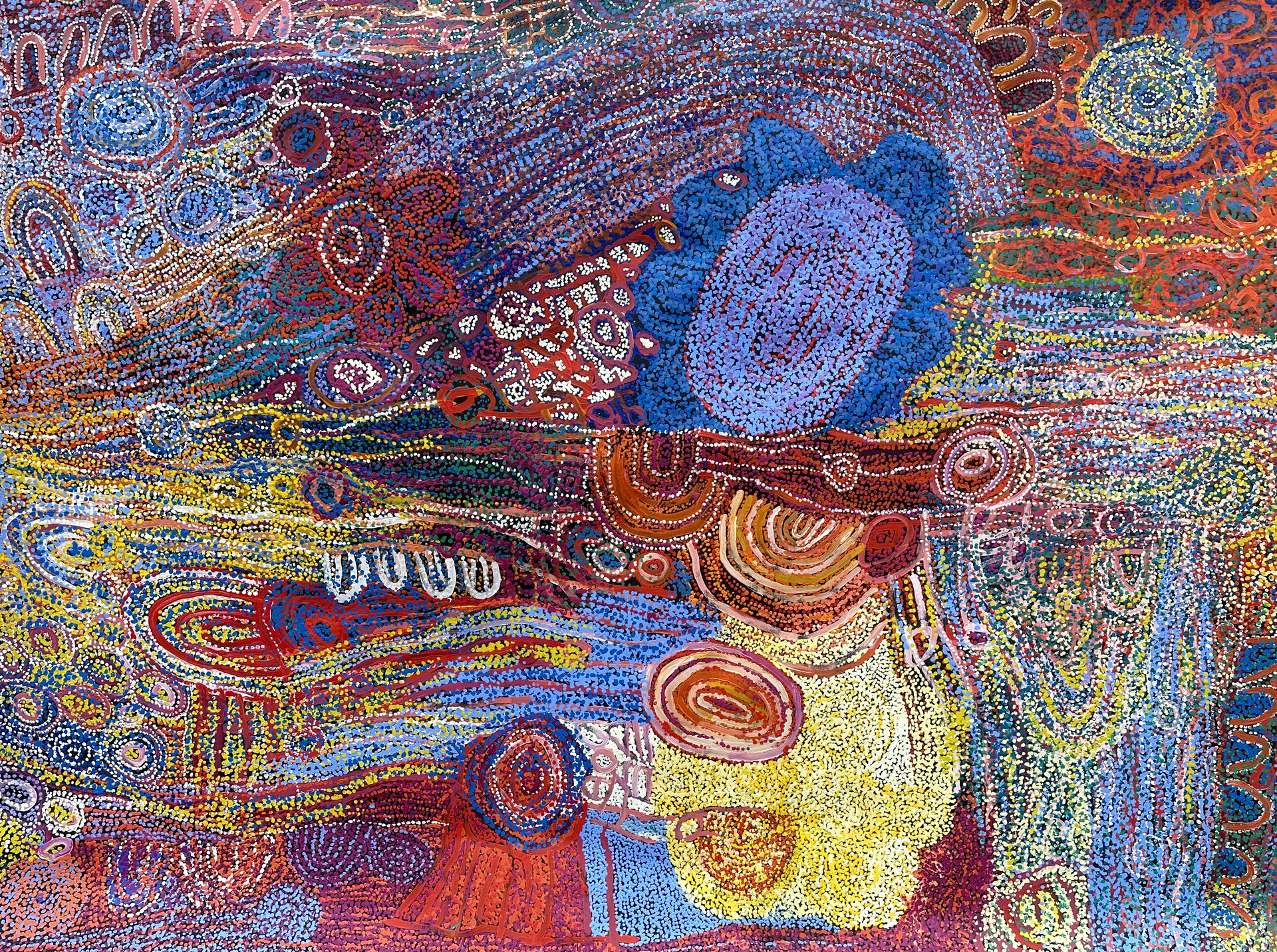
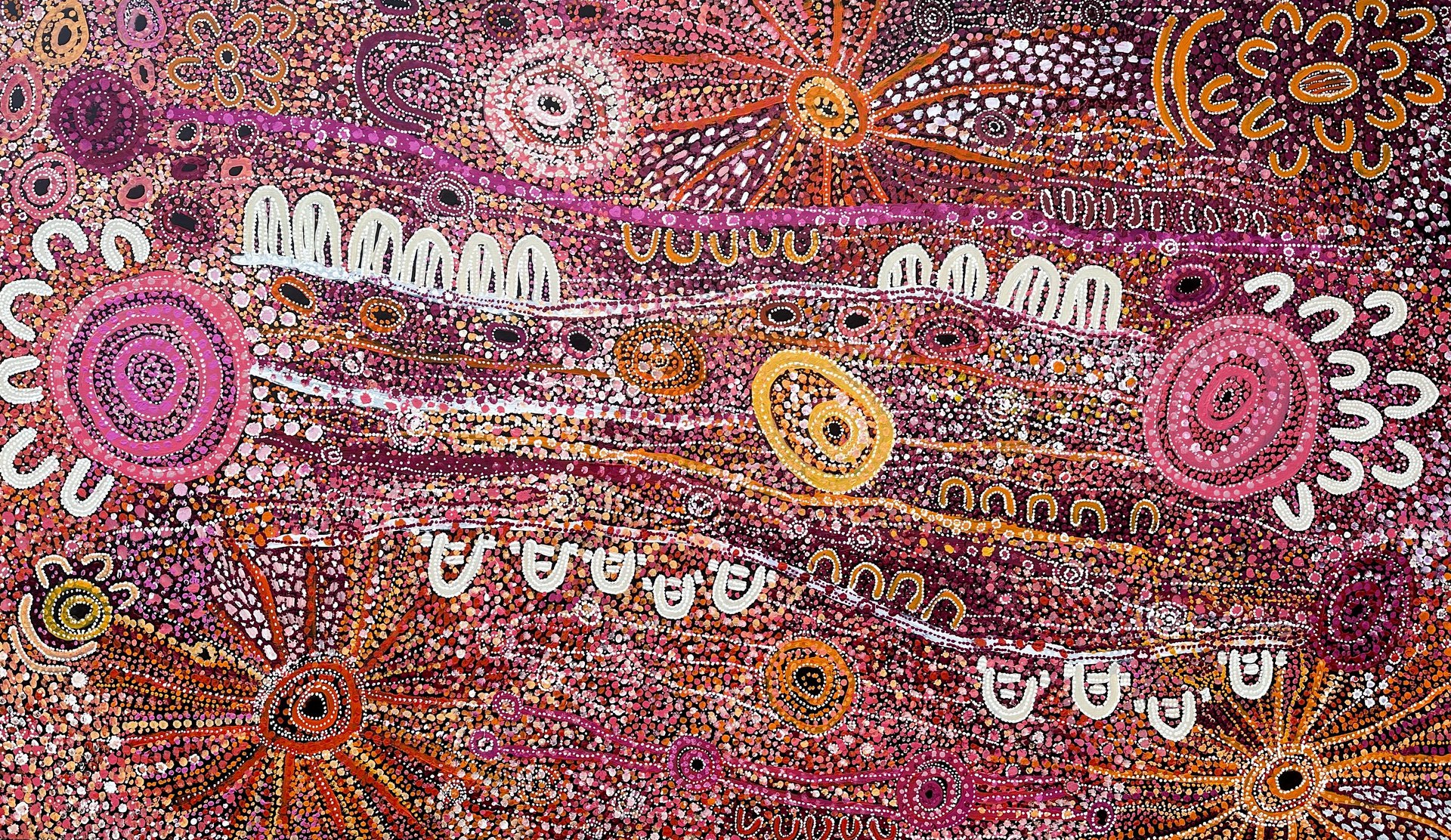
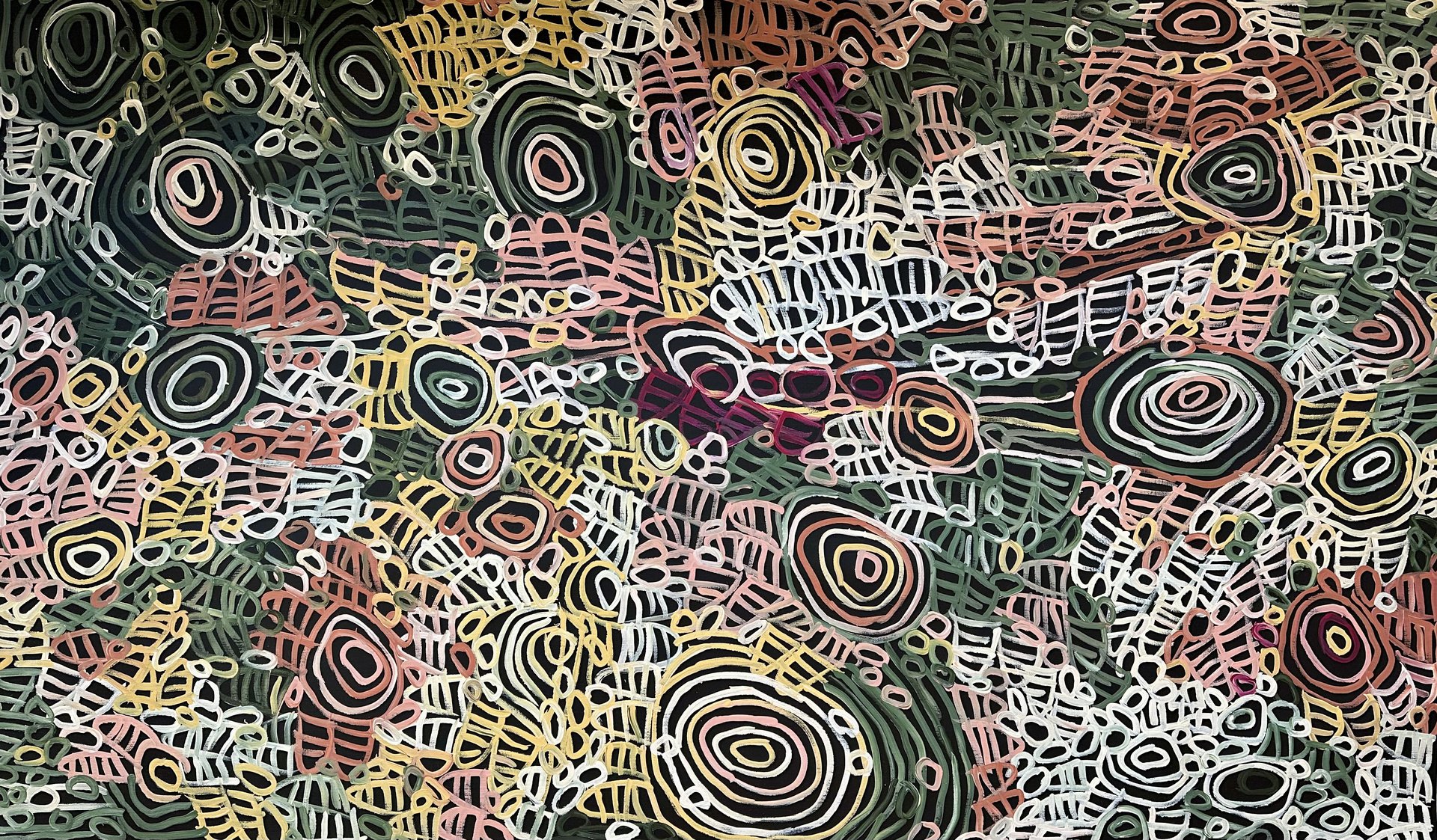
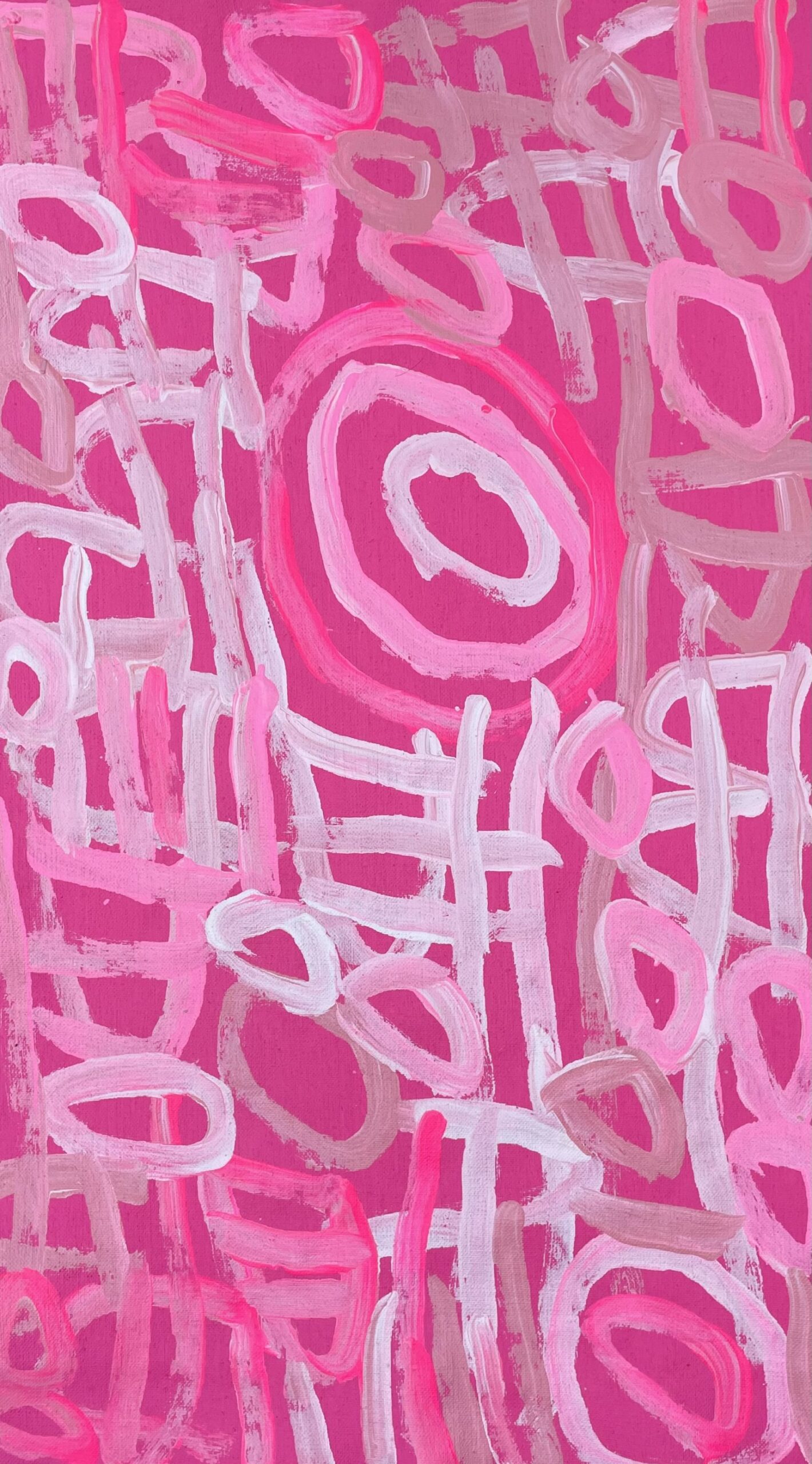
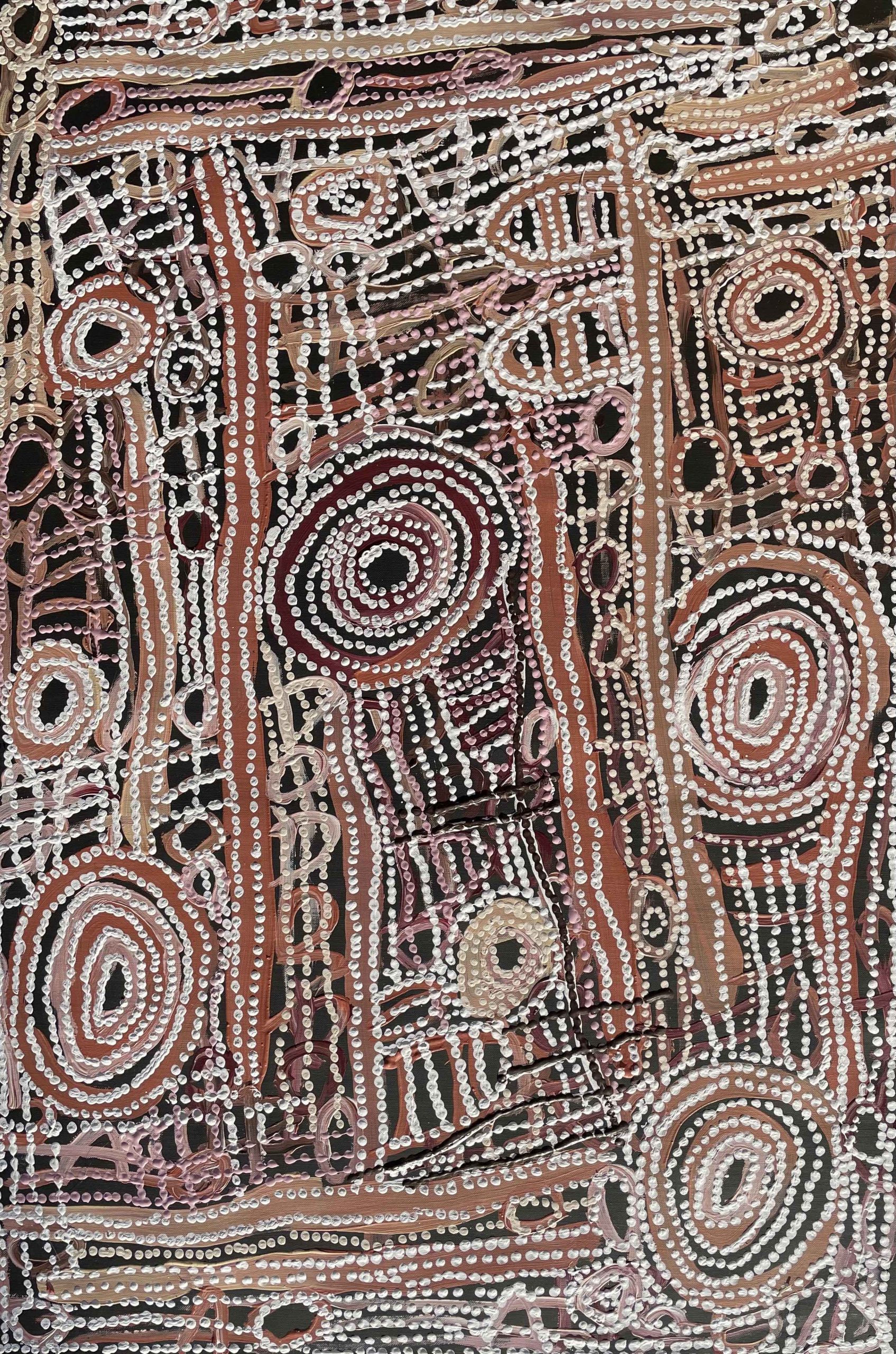
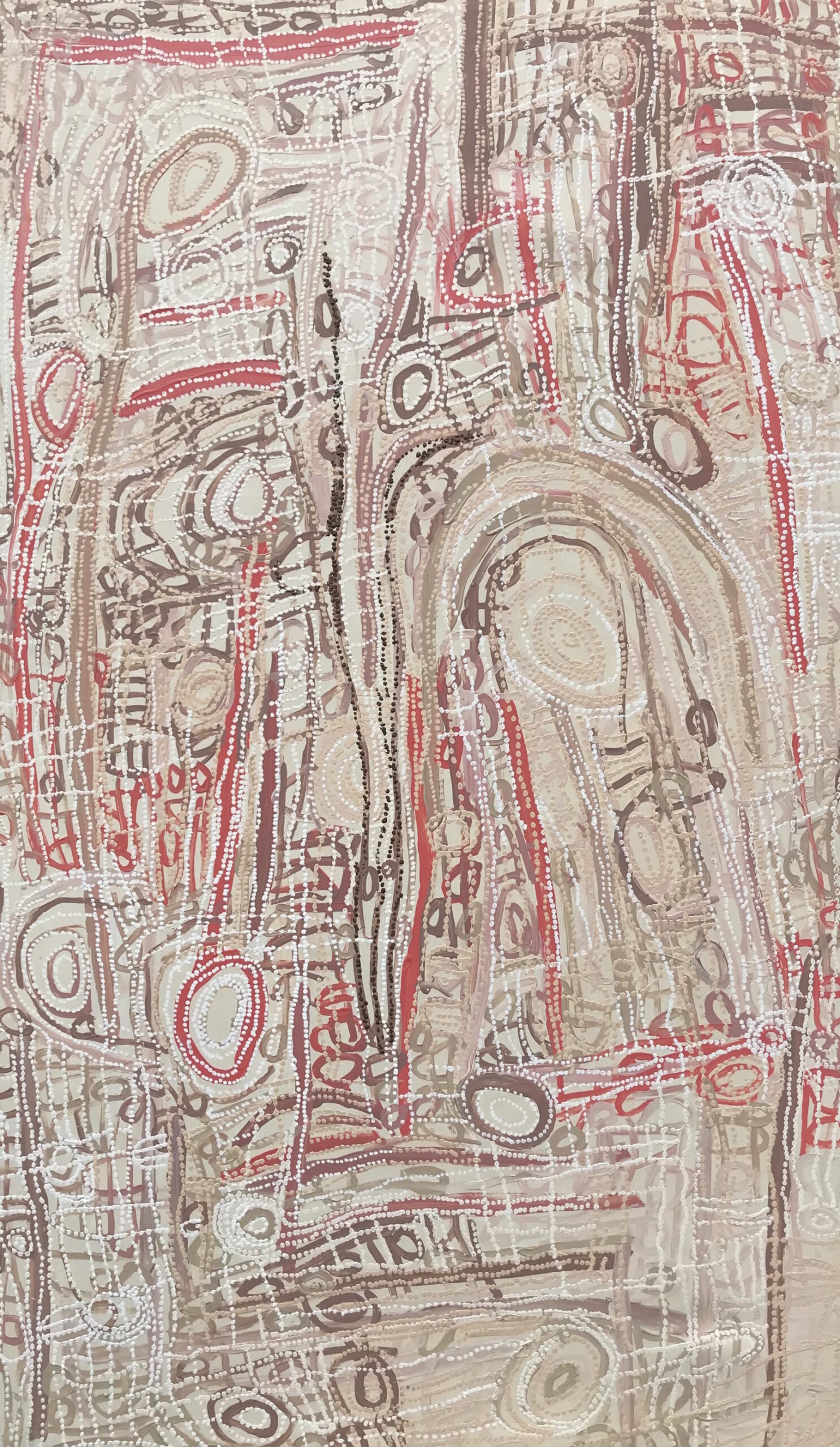
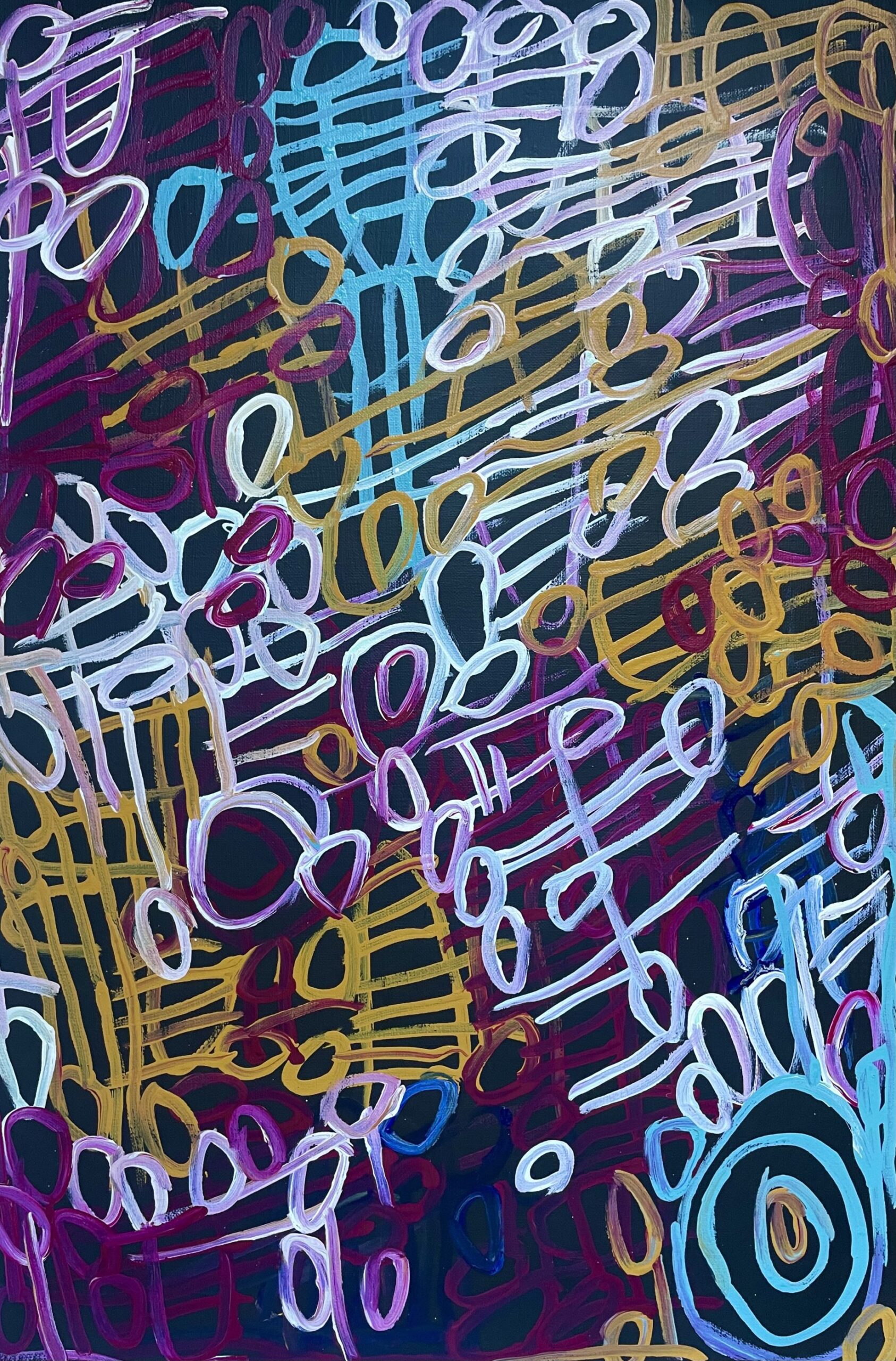
At Pwerle Gallery, the artworks we represent carry these Dreamings. Each painting is a living document — a map of memory, song, and Country. The artists we work with are not simply creating paintings for decoration; they are continuing an unbroken tradition of storytelling that dates back over 60,000 years.

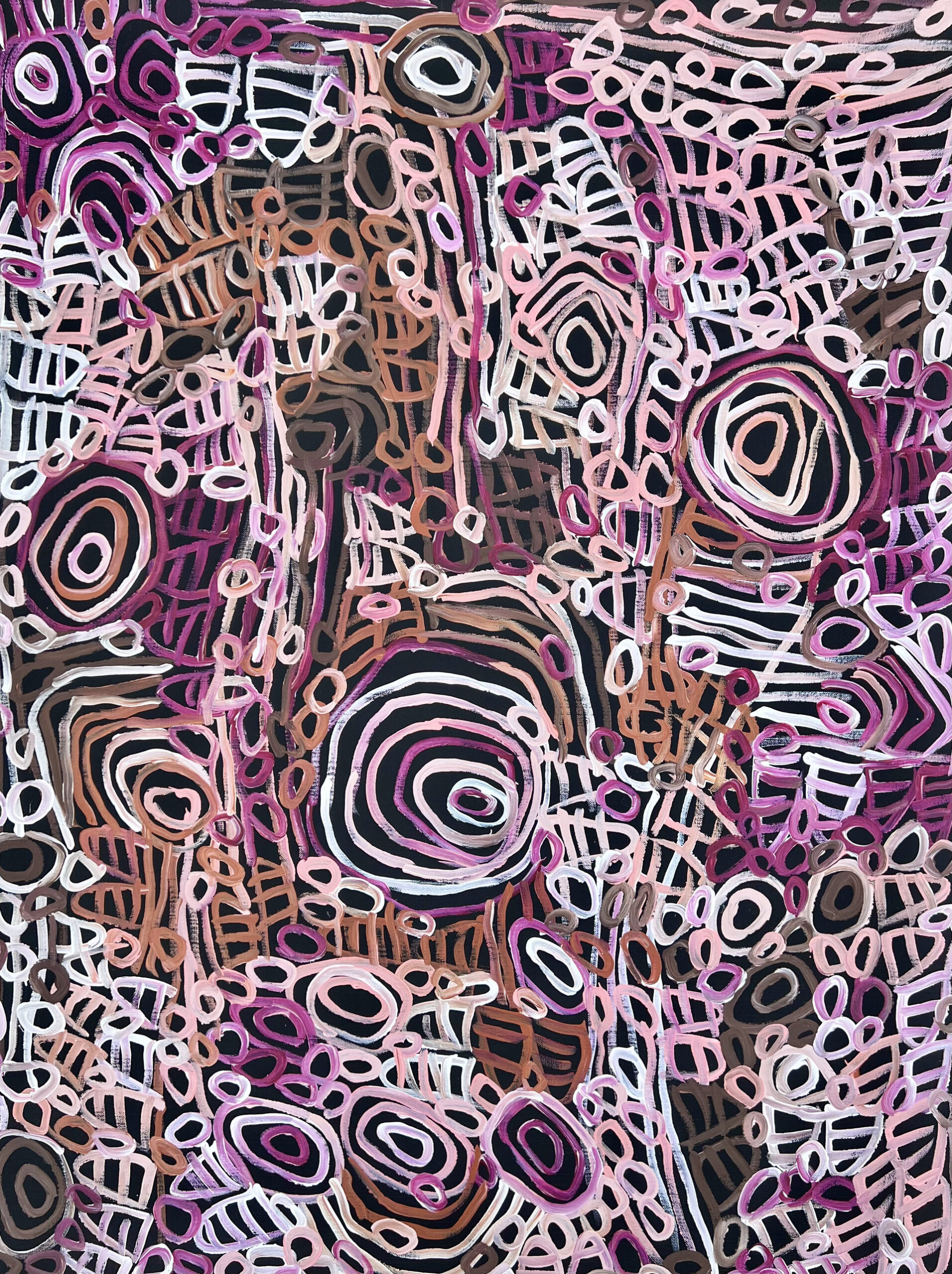
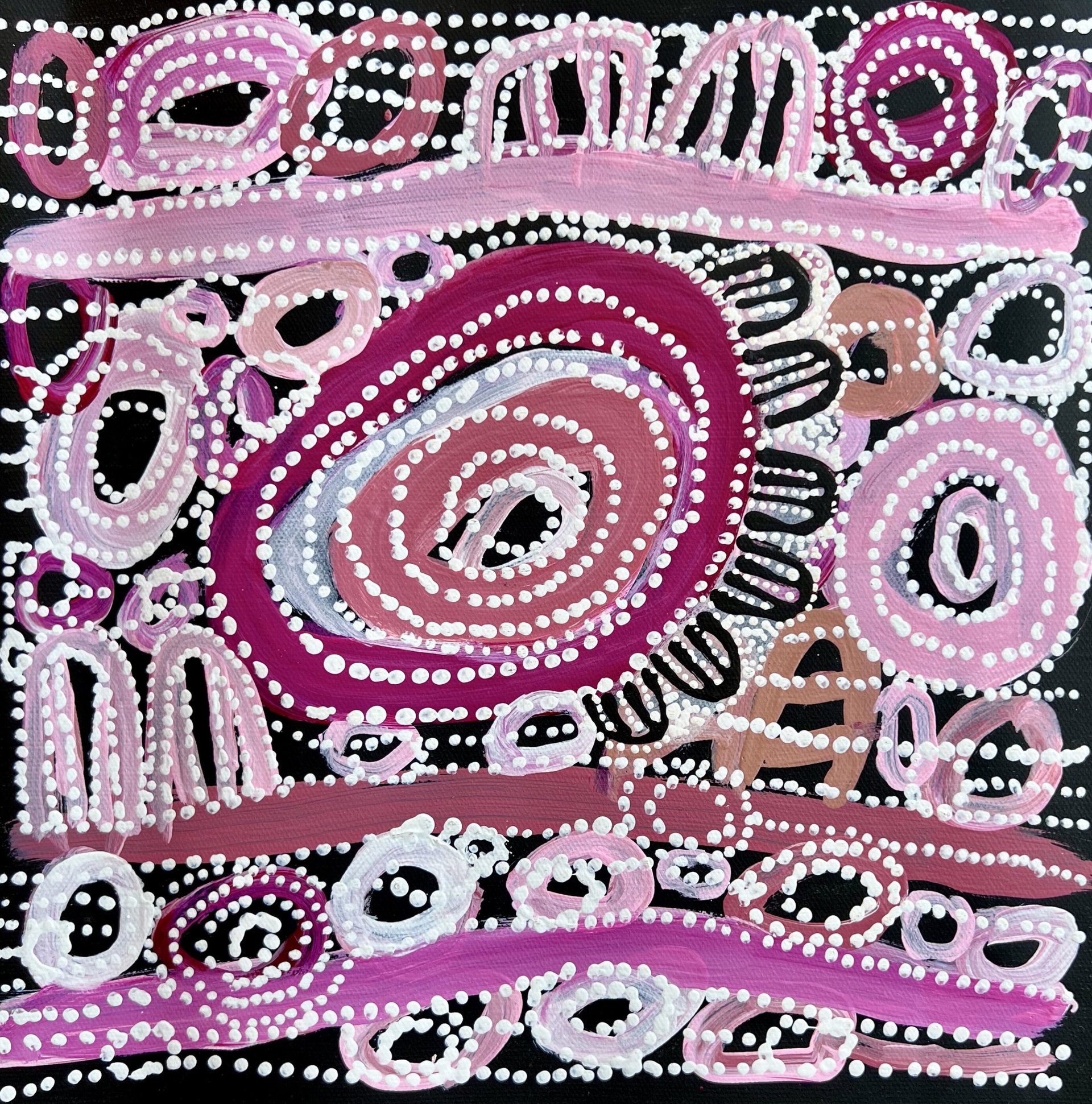
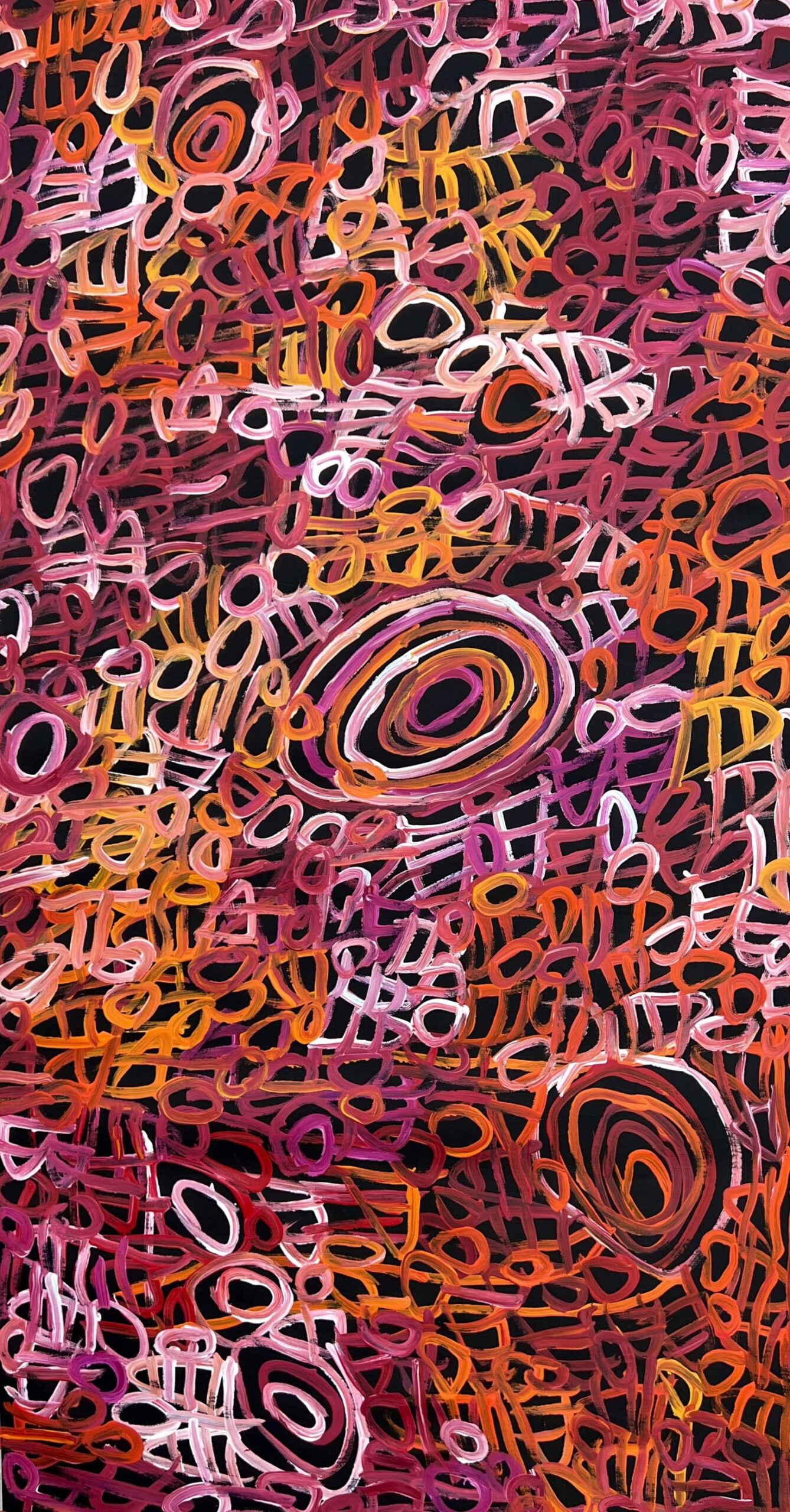
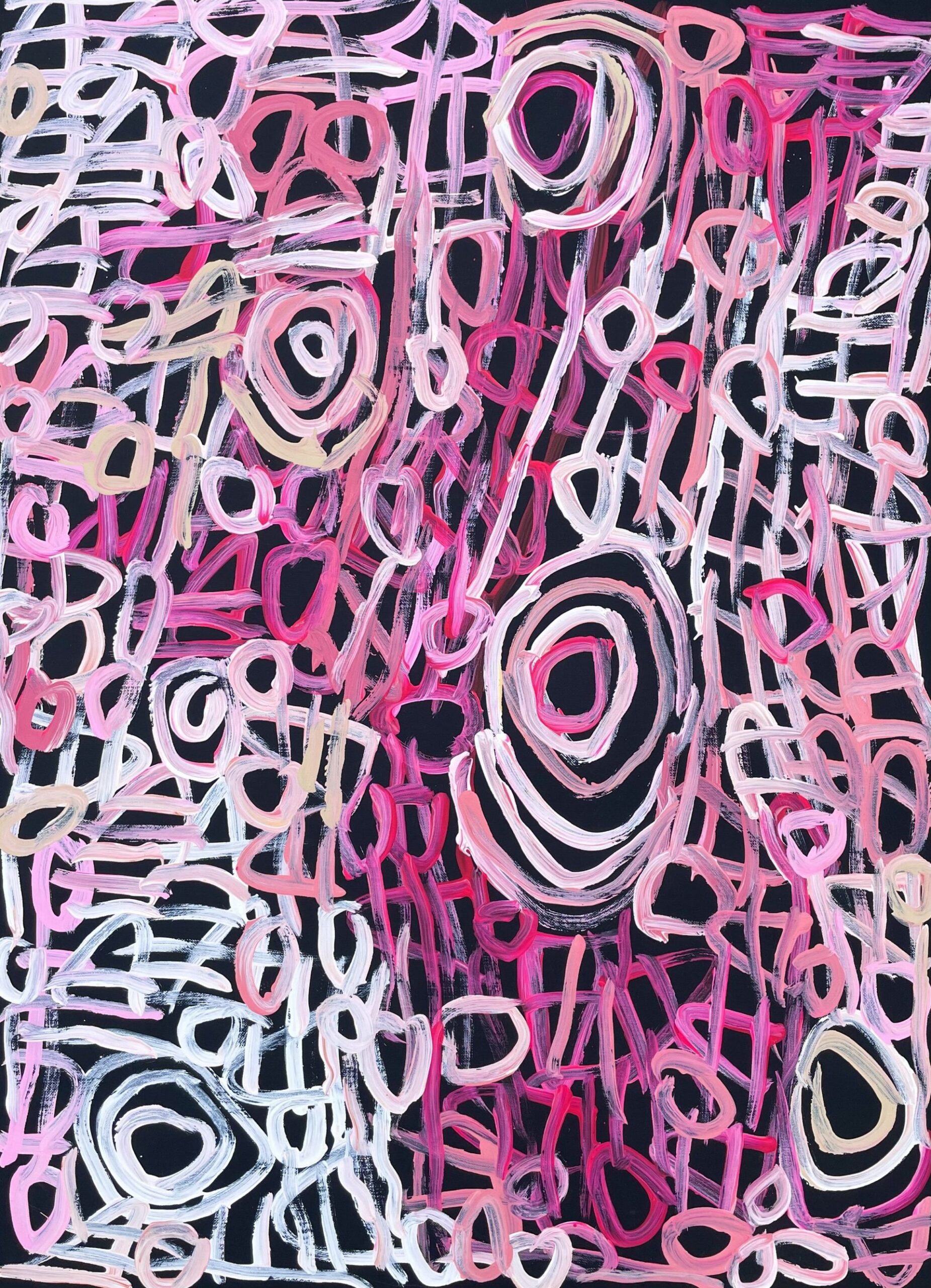
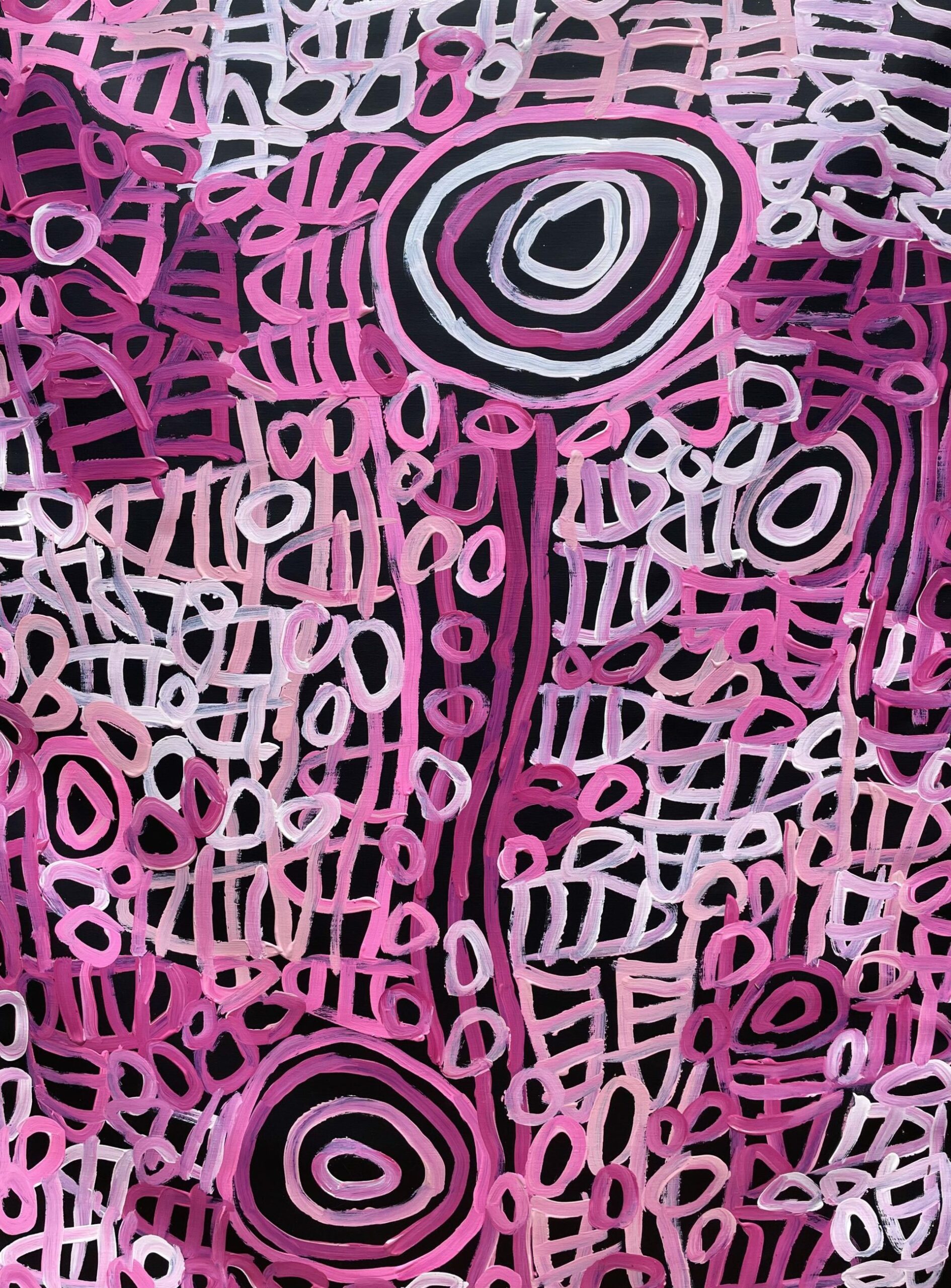
While contemporary Aboriginal artists often use acrylic paint on canvas, the symbols and stories within these works are ancient. The same sacred designs once appeared in body painting for ceremony, sand drawings, or carved on sacred tools and objects. These patterns and lines often seen from an aerial perspective reflect a deep, lived knowledge of Country.

For example:
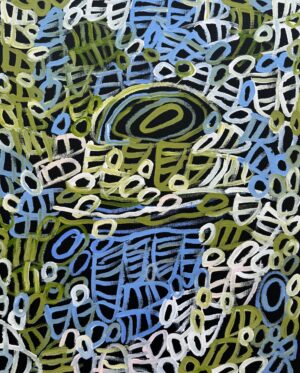
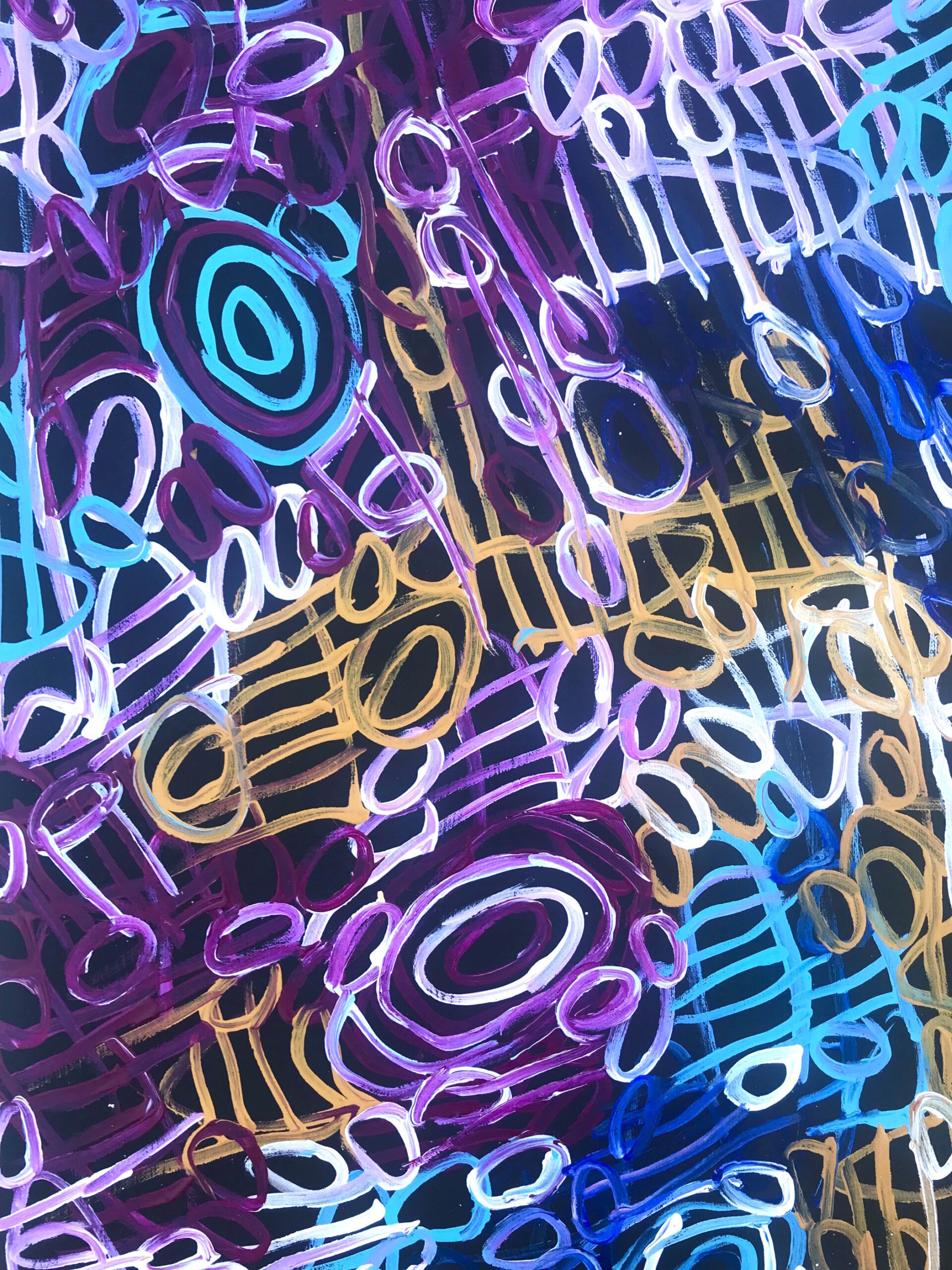
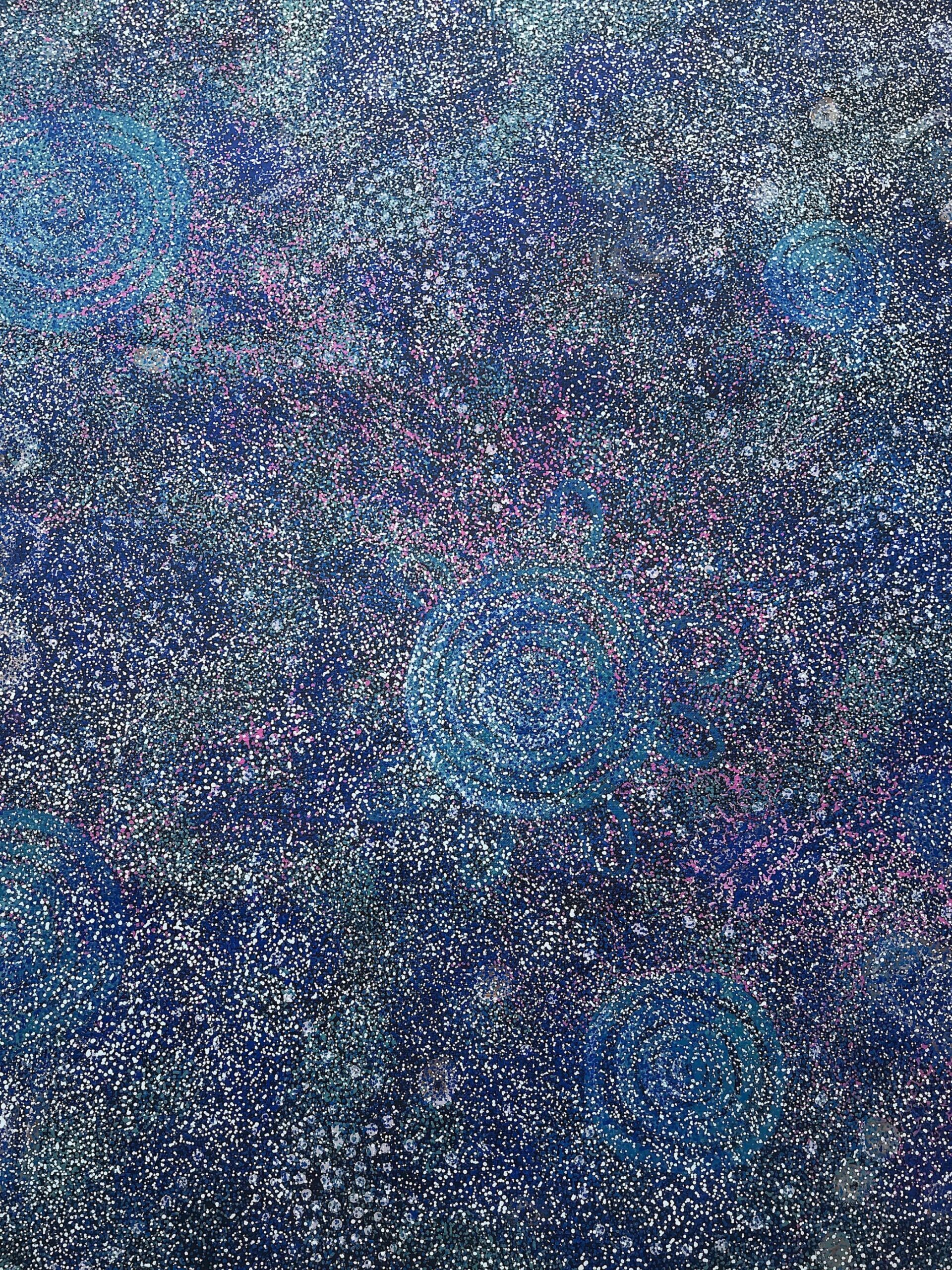
- Concentric circles can represent waterholes, campsites, or sacred ceremonial sites.
- U-shapes may show where people are seated on the ground.
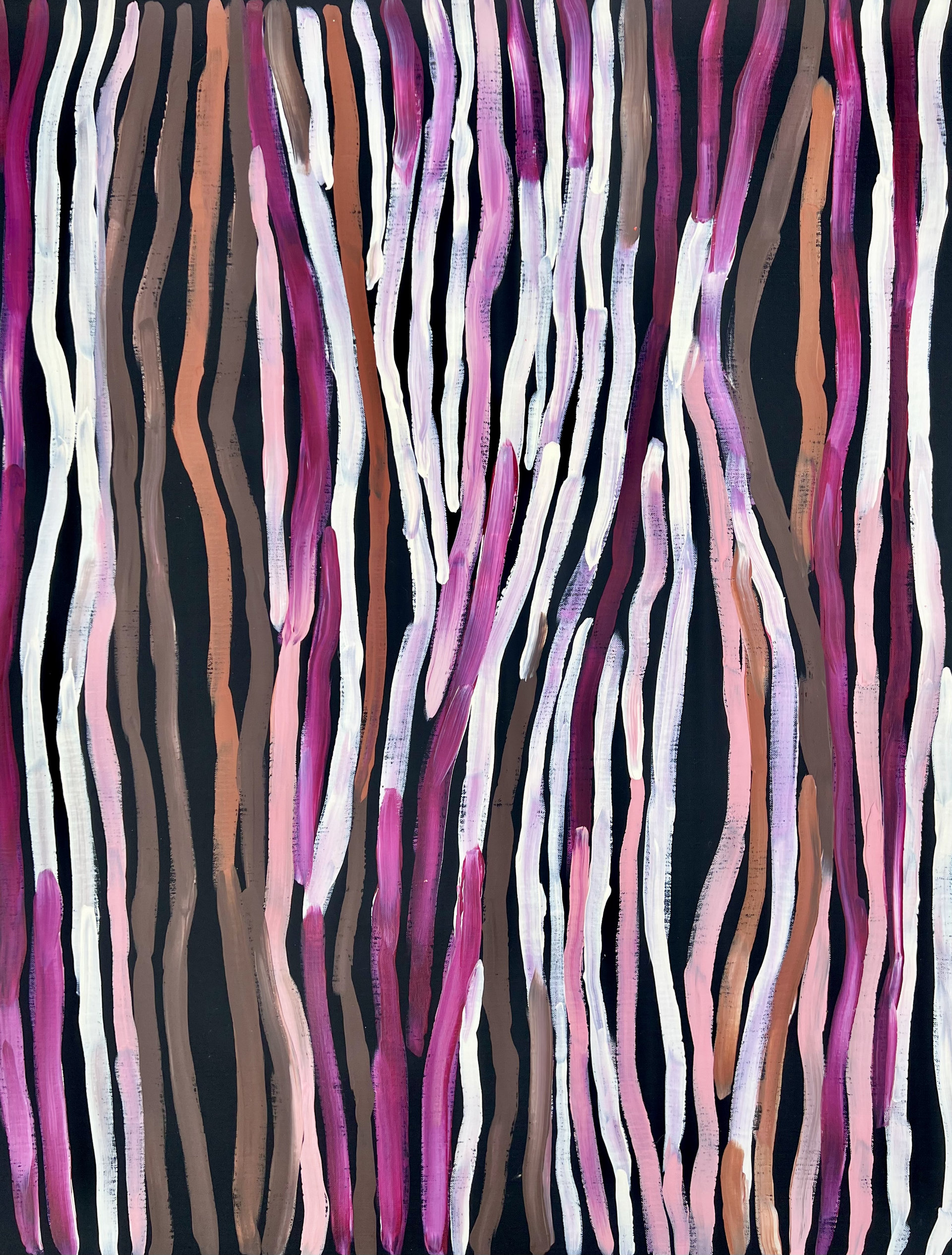
- Tracks and lines might depict ancestral journeys, songlines, or trade routes.
- Animal tracks, such as those of emus or kangaroos, reflect the path of ancestral beings.
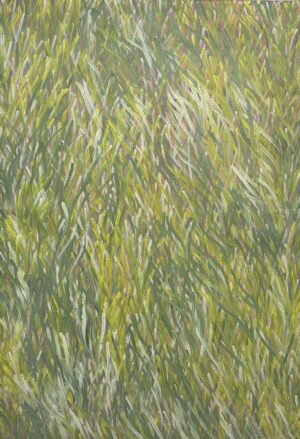
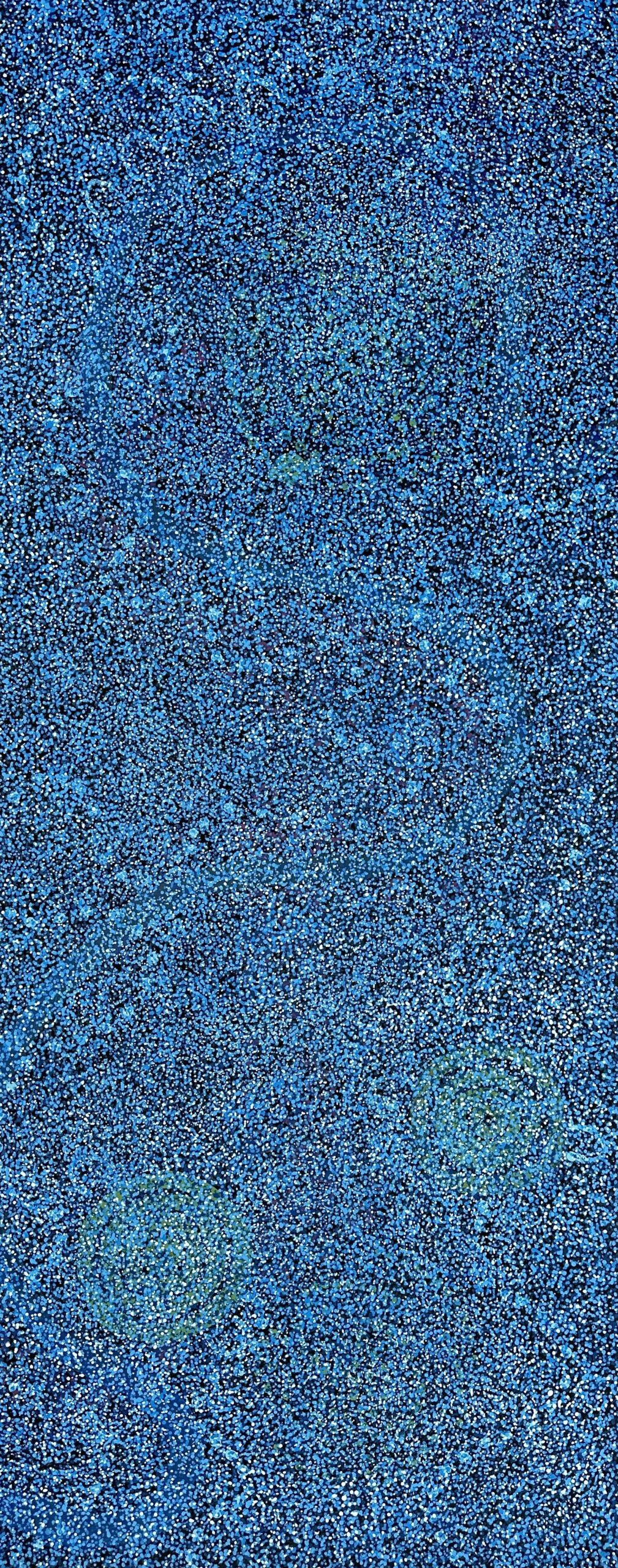
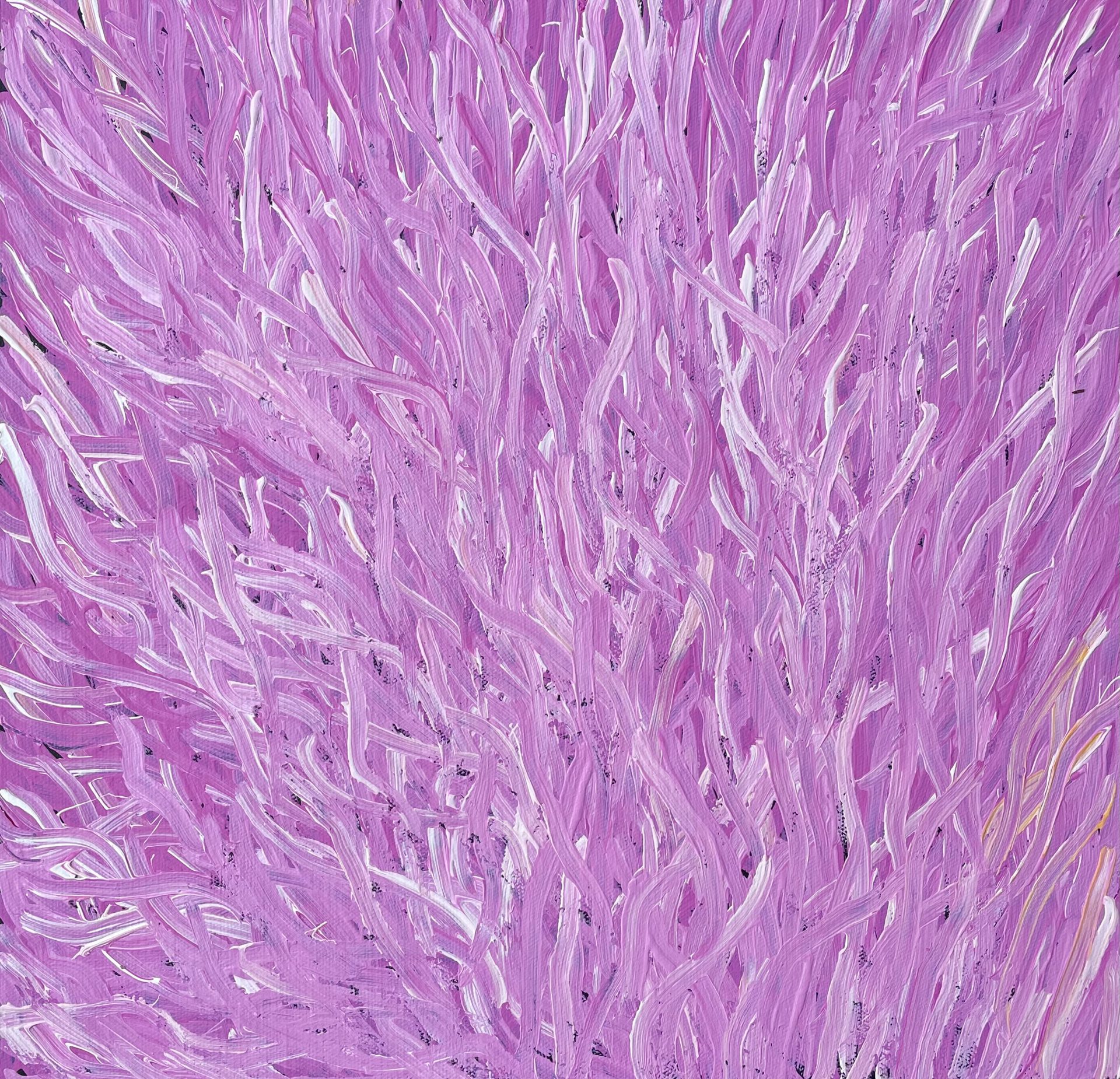
- Dots and flowing lines can represent fire trails, desert grasses, wind, or even the rhythm of a song.
These symbols may seem simple to the untrained eye, but many contain layers of meaning known only to those with the cultural authority to understand them. Some knowledge is public; much is sacred, gender-specific, or kept within certain family lines. What is shared on canvas is only ever a part of a much deeper system of knowledge.

The Dreaming teaches people how to live: how to hunt, find bush foods, care for Country, resolve conflict, understand weather, or raise children. It guides daily life and ceremonial obligations. It teaches values, connection, balance and the understanding that land, culture, language, and spirit are one and the same.

The artists of the Atnwengerrp community whose work we proudly showcase continue this storytelling through their painting. From the late Emily Kame Kngwarreye to contemporary artists such as Molly Pwerle, Barbara Weir and Gloria Petyarre, these works are expressions of lived culture. We are proud to exclusively represent artists from this region, where art is not a career — it is a responsibility and a spiritual practice.

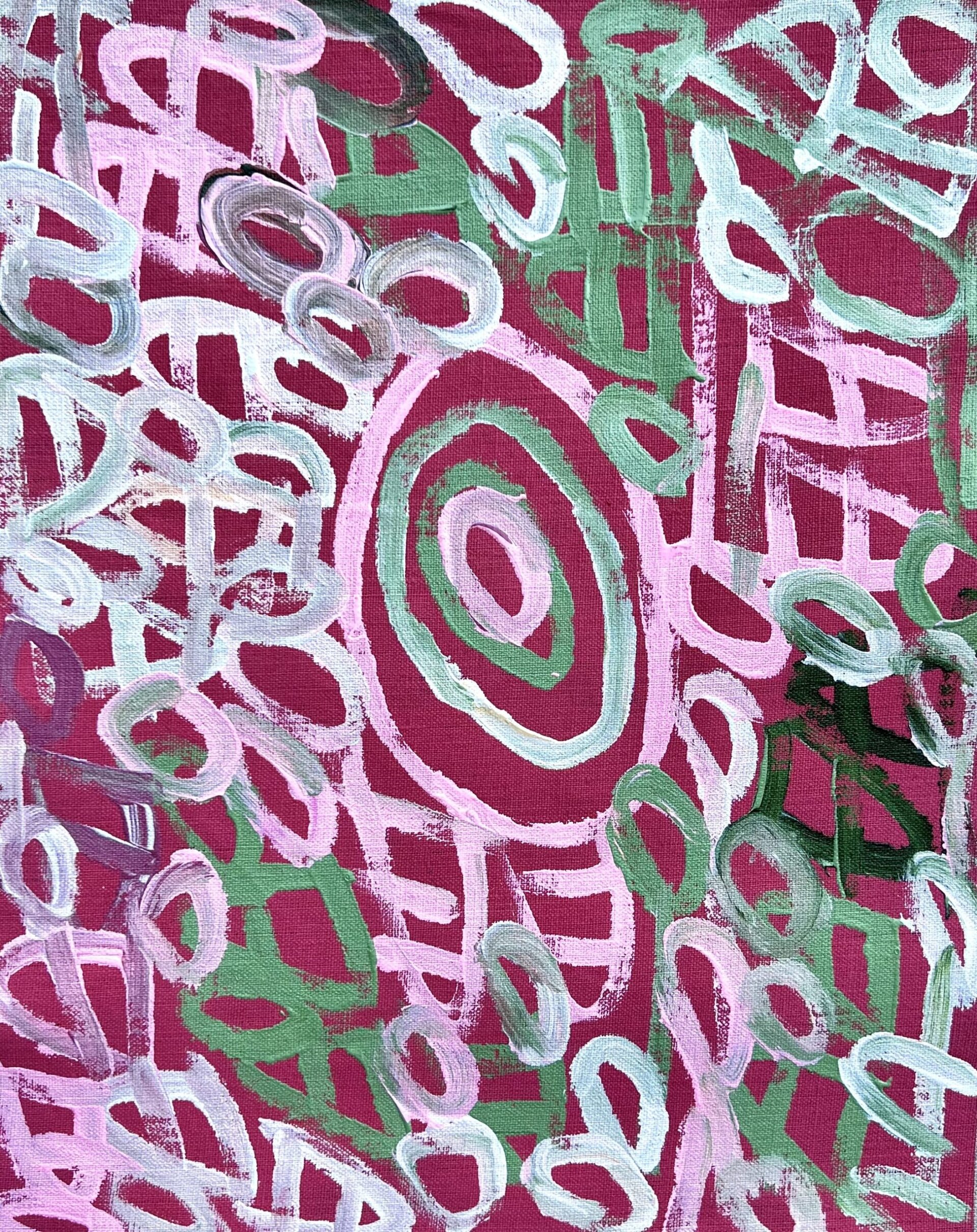
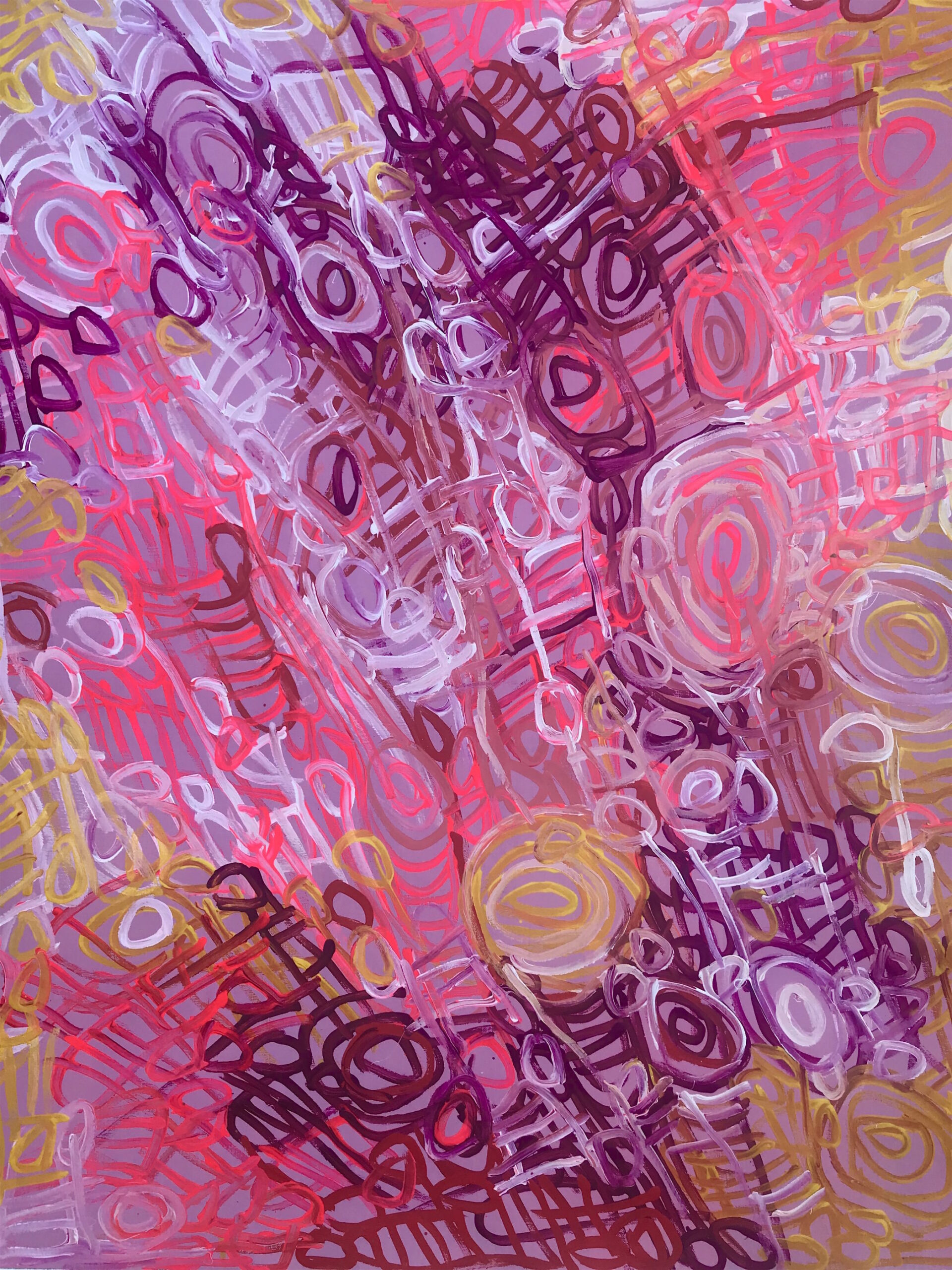
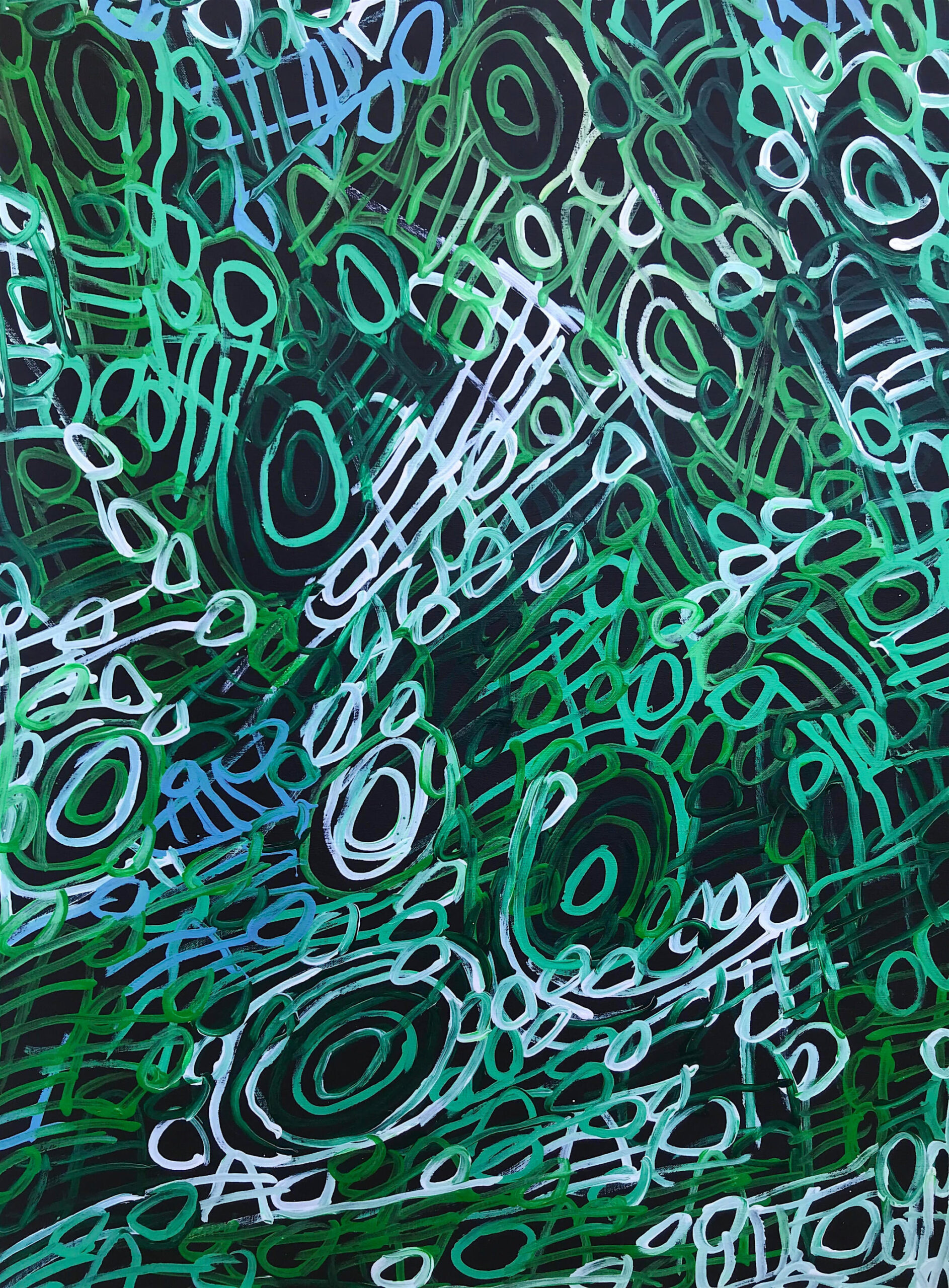
The vibrant colours often seen in Utopian artworks — from deep reds and ochres to emerald greens and sky blues — are not only visual choices. Each colour reflects something of the land and its seasonal cycles: the burst of the bush plum, the patterns of burnt earth, the shape of dry riverbeds, or the blooming of yam flower after rain.
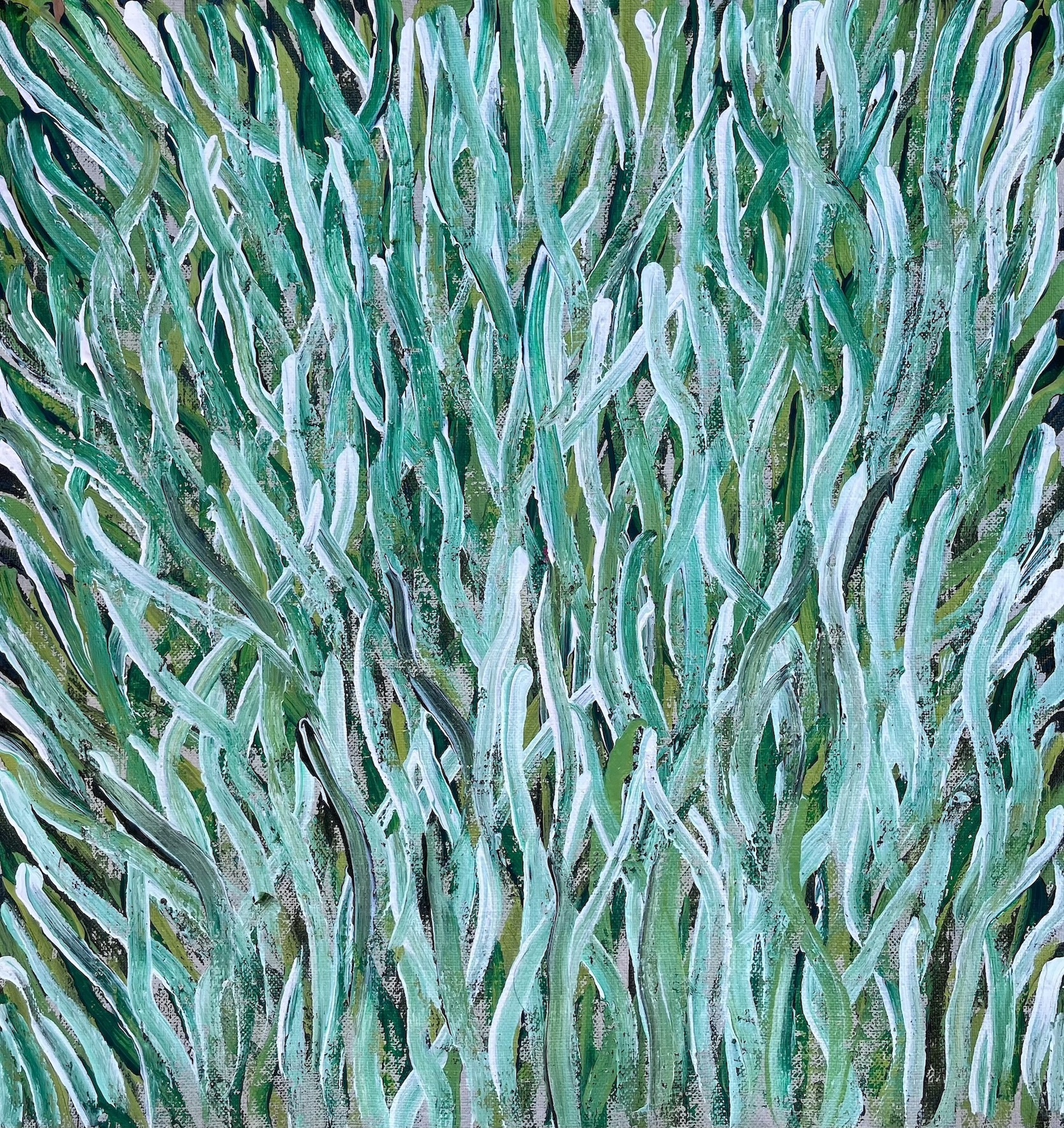
Over the past two decades, Aboriginal art has experienced a global renaissance. No longer seen merely as ethnographic or decorative, these paintings are now recognised as fine art — and more importantly, as cultural declarations. They speak of resilience, ancestral power, and cultural authority. Through their work, these artists challenge misconceptions, correct histories, and celebrate identity.

At Pwerle Gallery, our mission is to honour these stories, protect their integrity, and amplify the voices of the artists behind them. Each painting connects the viewer to something much older and more sacred than the canvas itself — a story passed down through bloodlines, ceremony, and deep cultural practice.

A timeline of significant milestones — from Emily Kame Kngwarreye’s international success in the 1980s and ’90s, to today’s multi-generational family of painters — will soon be available on this page. This visual history will help explain how Dreaming continues to thrive through art.

We also invite you to explore our Glossary of Dreamings and Bush Foods, where you can learn more about key motifs such as:
- Bush Plum Dreaming (Anwekety)
- Yam Dreaming (Anemangkerr)
- Emu Dreaming
- Wildflower Dreaming
- Women's Ceremony Dreamings

Each represents a sacred part of the Atnwengerrp story — not only through meaning, but through the act of painting itself, which sustains the land, the law, and the people.

BUSH PLUM

The bush plum fruits in the summer after a fall of rain and is an important food source, even though not all of the plum is edible. The plums can be collected when ripe and eaten immediately or they can be dried and eaten later. When young, the fruit is green in appearance but as it matures, it becomes a purple-black colour. It is similar in appearance to an olive. The plant can grow up to 3 metres high and has blue-green leaves and a creamy white flower, making it a very attractive plant. To ensure the fruiting of this plant each season, the artist pay’s homage to the spirit of the bush tomato by painting about it and by celebrating it in their ceremonies.

BUSH BERRIES

The Bush Berry vine grows in abundance throughout Utopia. It grows at the base of a tree and weaves its way to a high branch forming a cluster which will then produce many individual vines. Although there are many of these vines, only a small number of them will fruit, producing berries in large clusters
The berry itself is about half the size of the old one cent piece and it comes in a wide variety of bright colours. These bright colours are often depicted in the Bush Berry paintings. The fruit is sweet to taste and can be eaten as a main meal. As it is only found for six weeks of the year, usually in the summer months after rain, the women often dry the berries to be eaten during the leaner months. In “Bush Berry Dreaming”, the artist is paying homage to the spirit of the bush berry vine so that it regenerates year after year to provide food for the people.

BUSH TOMATO

The Bush Tomato is very different to the tomato that most people know. It is a plant that can grow up to one and a half metres tall with grey-green leaves and purple flowers. When young, the bush tomato is green-purple in colour but as it ripens it turns to a pale yellow when the mature fruit opens. The centre is filled with black seeds surrounded by an outer layer of ‘skin’. This is removed and only the outer rind is eaten. It is sweet to taste and is a good source of vitamin ‘C’.

The Bush Tomato is plentiful most times of the year except in the summer months. The fruit can be threaded onto sticks and dried to be stored for extended periods. They are then eaten when food is scarce. This popular type of bush tucker is easily found and is enjoyed by the whole community. By painting the bush tomato, the artist is honouring the spirit of the plant and securing future food supplies for the community.

BUSH POTATO

The Bush Potato along with the Yam plant traditionally was the most important food source for the Utopia community. In fact, it is not only a food source, but an important water source as well because the Bush Potato is sweet in taste and very juicy with a water content of 50%. This high water content enables the people to survive without drinking water for long periods, if large quantities of Bush Potato are consumed.

The plant grows on spinifex sand plains at Utopia and can reach one metre in height with branches that trail along the ground. It has green leaves with pink and red flowers. Like the Yam plant, the Bush Potato is abundant in summer months after rainfall.

The root system of the bush potato can extend up to one metre underground and three metres in width. The roots, commonly known as “tubers” can grow as large as a person’s head. These larger ones are less desirable as they are woody and hard. The smaller tubers are eagerly sought, as they will be sweet and juicy. Unfortunately, these tubers are found deep underground requiring a great deal of digging by the women.

The ability to find the Yam and Bush Potato is a skill that is passed down from mother to daughter. This skill can never be underestimated, as the family relies on the collection of different plants, when meat is hard to come by. Often Aboriginal women will walk long distances looking for signs indicating the presence of the Yam or Potato, and large areas are excavated to unearth this food.

As the Bush Potato is such an important source of food and water, ceremonies are often celebrated to give thanks to the spirit that supplies this food, and to ensure the plant’s continual regrowth.

BUSH BANANA

The bush banana is a woody, winding vine with cream flowers and green leaves that grows on other trees and shrubs throughout Utopia. It is a commonly found food that fruits after a fall of rain. The mature fruit releases seeds which are carried away by the wind to regenerate elsewhere. The fruit is either cooked and eaten whole, or the seeds discarded and only the thick outer rind is eaten.
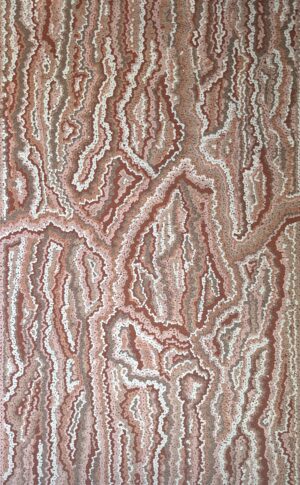
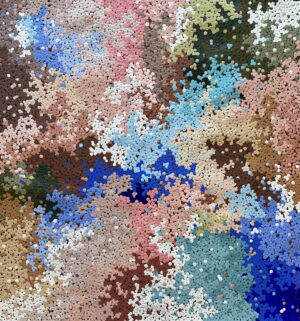
New, young leaves can be collected and eaten, with the older leaves steamed and then eaten. The only parts of the bush banana not consumed are the stems and the fine roots, making it an important food source for the people. Bush banana, bush melon, bush plum, bush orange, bush raisin and bush tomato are depicted as Bush Tucker Dreaming.

AWELYE - WOMENS CEREMONY

Charmaine Pwerle’s latest artwork ‘Awelye Creation’ represents when the Women paint each other’s breasts and upper bodies with ochre markings, before dancing in a ceremony. The body designs are important and, painted on chest and shoulders, they relate to each particular woman’s dreaming. The ochre pigment is ground into powder form and mixed with charcoal and ash before being applied with a flat padded stick or with fingers in raw linear and curving patterns.

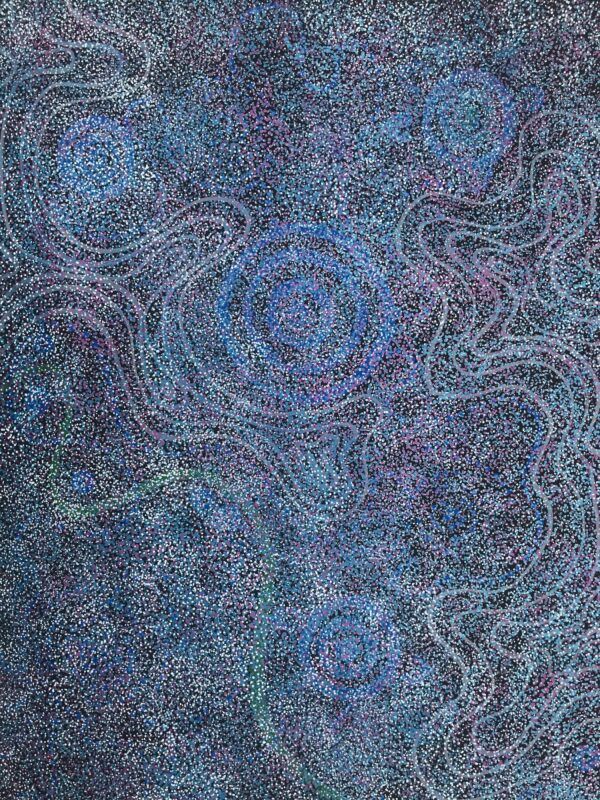
The circles in these designs represent the sites and movement where the ceremonies take place. The lines in the painting depict the tracks that her people made as they trekked across the country in search of food and dry river beds. The large semi circular shapes represent the sand-hills and valleys. The dark colour represents the path of a fire that has swept across the land. The dot work on the top layer represent the different unseen sacred sites and tracks that re created during ceremonies and traveling around the country too scared camp sites.

FIRE DREAMING

In Aboriginal culture the land is very important to each individual and from a young age the history of the land is taught. The land provides nourishment for Aboriginal communities and is the duty of the people to nurture their country. In the dry summer when there is very little rainfall, the conditions are ideal for a fire to start.

The fire is important to the people as this burns the undergrowth and allows the regeneration of the various plants, which include the vital bush tucker food such as – yam, potato, tomato, banana and plum. The journey of the fire is often depicted in Aboriginal paintings by the presence of wide dark areas and the flames of the fire are shown by circular designs surrounded by feather type shapes.

Surrounding these areas there is often varied dot-work that represents the bush tucker which will begin to seed and take root to regenerate and feed the people. By painting “Fire Dreaming” the artist is paying homage to the spirit of the fire to guard the people and to ensure new regrowth.

MENS CEREMONY

In Aboriginal culture, ceremonies play an important part and are vital to the health and well being of the people. Men’s’ ceremonies and women’s’ ceremonies are kept separate but they are of equal importance in the eyes of the community.

Due to the secret nature of “Men’s Business”, which is for initiated men only, very little is told about these ceremonies or the significance of the body paint used. What we are allowed to know is that the body paint drawn on young Aboriginal males to be initiated, relates to certain stories that are important to the adult initiated males of the community and only when boys come of age can they be told about them.

The initiation ceremony allows the boy to become involved in sacred ceremonies, to see ceremonial sites and to gain knowledge of the laws and customs, which he is expected to uphold.

MY MOTHER'S COUNTRY

Barbara Weir was born in the region of Utopia at a place formally known as Bundy River Station. Barbara’s mother, who is well known artist Minnie Pwerle, came from a region at Utopia called Atnwengerrp, and it is this country that is depicted in her paintings. The Dreaming that is the basis for Barbara’s paintings comes from various ceremonies that are held by the women from Atnwengerrp. In the underpainting, Barbara often depicts abandoned campsites that people made as they trekked across the country in search of food or the coolamans used by the women to collect the fruit and berries.

She may also show the form of a woman’s body adorned with paint for women’s ceremony. Small or large semi-circular shapes depict the hills and valleys of the land and winding trails are the rivers or streams dotted across the countryside. There may also be an outline of a person or slightly unusual shapes that convey the spirits that dwell in then many plants and animals at Utopia.

Overlaying these motifs is a complex array of dot work depicting different types of bush tucker found in the Utopia region including Bush Yam, Potato, Berry, Plum, Banana and the ever-important Grass Seed that was vital to the people’s survival. Traditionally this edible Grass Seed, from a particular type of grass, was collected by the people cleaned and ground into a paste to form a type of ‘Bush Damper’. There may also be areas of dark colour representing the path of a fire that has swept across the land.

This type of painting is very subtle in its method and appearance and one needs to search for the various motifs that Barbara has incorporated in each piece. They are all titled “My Mother’s Country”, but each one has slight differences and the different palettes suggest the land at different seasons of the year.

Wildflower Dreaming

The region of Utopia has a harsh climate, with summer temperatures exceeding 40 degrees Celsius. In contrast, winter nights are freezing cold with frosts occurring from late May to early September. During drought, the vegetation is sparse and the only ‘living’ plants are the spinifex and the mulga shrubs, which appear to be withered and dying.

After a fall of rain the landscape changes completely. The dried out spinifex flowers resembling a field of wheat, while the mulga shrub produces dense green foliage and masses of bright yellow flowers. Growing amongst these plants will be a profusion of wildflowers that completely transforms the land. In “Wildflower Dreaming” the artist pays homage to the spirit of the flowers. The transformation of the land means new growth and regeneration, and in particular, the Bush Tucker necessary for survival.

Women’s Ceremony - “Awelye”

In Aboriginal culture, ceremonies are focal points in the life of the community. They are held for different purposes, but are integral to the happiness and well being of the people. The people dance and celebrate to acknowledge the fertility of the land, the health of the people, and the initiation of young men or to mourn the passing of a loved one. For ceremony the women smear their bodies with animal fat and then trace certain ceremonial designs on the top half of their body using a variety of powders, ground from charcoal and yellow and red ochre. The most senior women of the clan group then lead the dancing and singing.

The women’s ceremony is celebrated separately from the men’s ceremony, though each is viewed as of equal importance by the community. Through their ceremonies the people are demonstrating their respect and love for the land. The body paint designs vary from ceremony to ceremony and depend on the subject and the time of year the ceremony is held. Different symbols are painted on the body and may vary from person to person, depending on the seniority of each membe

subscribe to our newsletter

follow
© Copyright - Pwerle Gallery | Website Designed & Developed by Tangible.