
| DREAMING | |
|---|---|
| SIZE | 126 × 206 cm |
| YEAR | |
| Weight | 1 kg |
| colour |
To request a commision, please email us at hello@pwerle.com.au.


Emily Kame Kngwarreye (c.1910–1996) is celebrated as one of Australia’s most important artists of the 20th century. A senior Eastern Anmatyerre Law woman from Utopia, her cultural authority and radical style have been compared to Monet, Pollock, and Rothko. Born at Alhalkere, she grew up living traditionally on Country before working as a stock hand — unusual for Aboriginal women at the time — a role that showed her strength and independence early in life.
Her principal Dreaming was the Atnwelarr Yam, tied to her father’s Country, and she painted all parts of it — the yam seed, flowers, leaves, cracked earth, and ceremonial Awelye body designs. Emily began her career in 1977 with batik, working alongside other Utopia women and exhibiting internationally through the landmark Utopia – A Picture Story project. In 1987, she turned to acrylic painting, quickly mastering the medium with bold dots, sweeping lines, and luminous colour to translate the stories and ceremonies of her Country onto canvas.
Emily’s rise was extraordinary. Within a decade she had exhibited across Australia, Europe, the USA, and Japan, represented Australia at the Venice Biennale (1993), and won the prestigious Australian Artists’ Creative Fellowship. Her works are held in every major Australian state gallery as well as international collections including the Vatican and leading Japanese museums. In 2017, her 1994 masterpiece Earth’s Creation I sold for AUD $2.1 million, at the time the highest price for an Australian female artist, cementing her place as a global figure in contemporary art.
Learn more about Emily here.
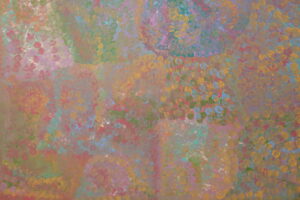
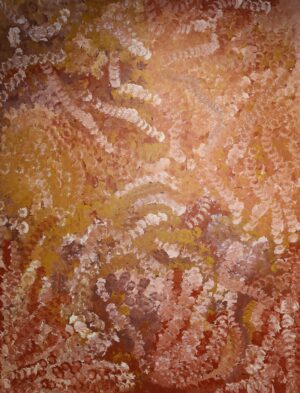
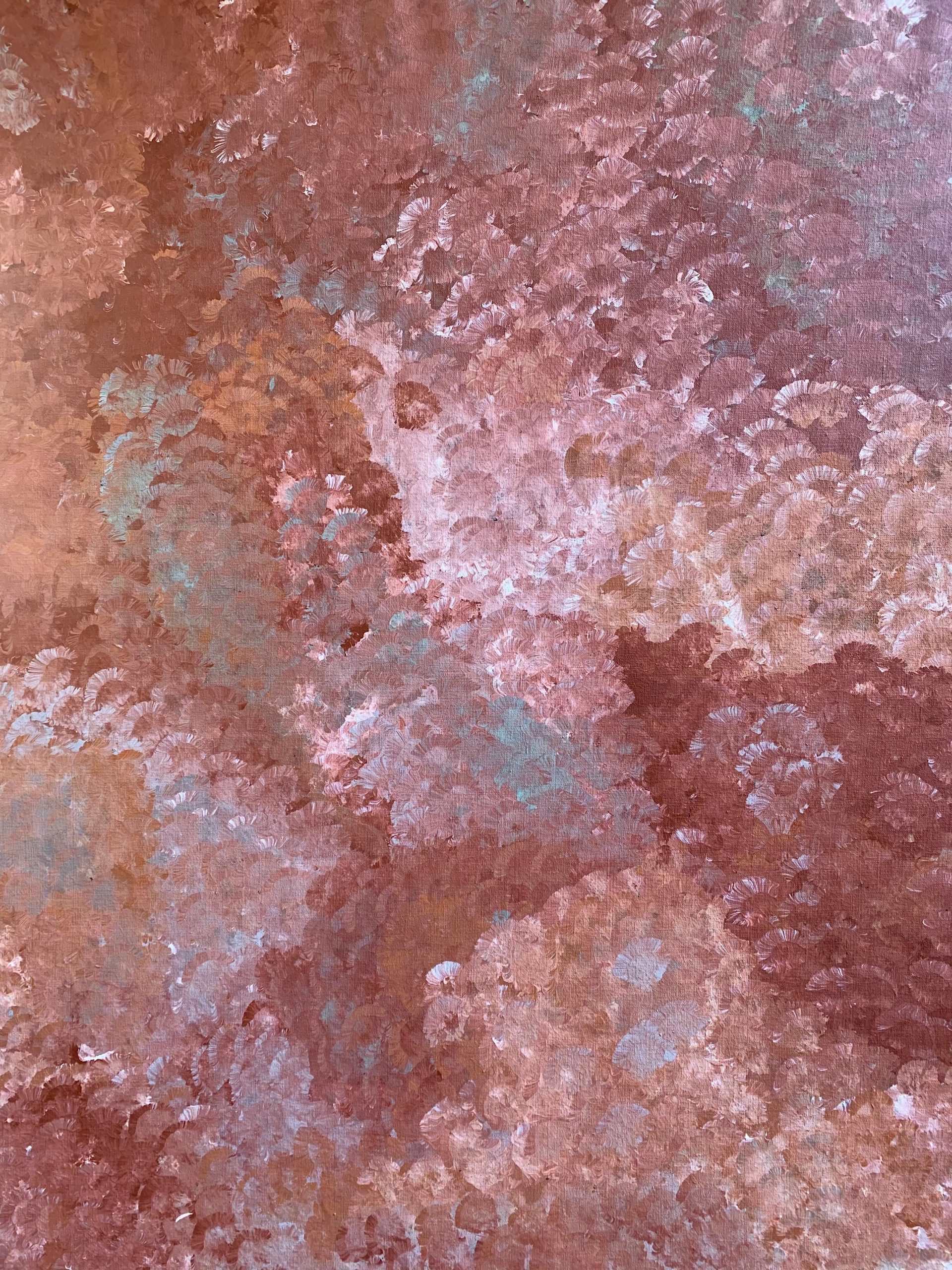
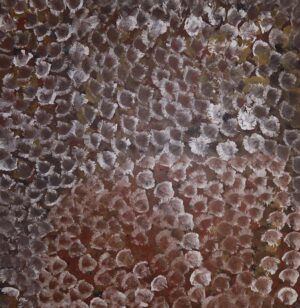
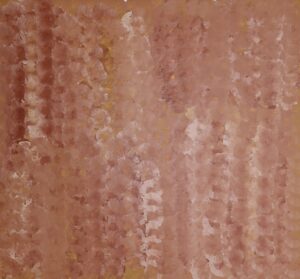
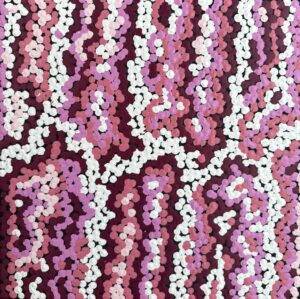
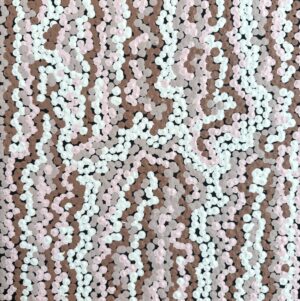
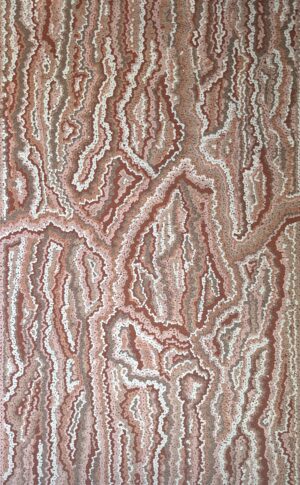
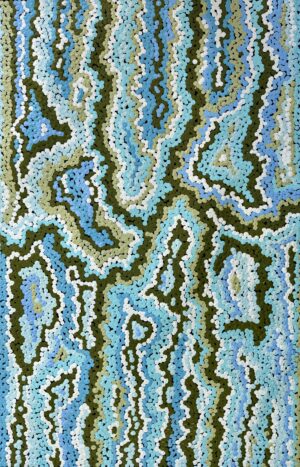
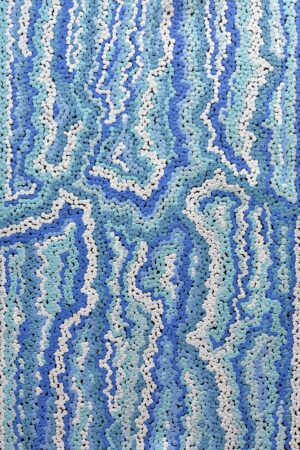
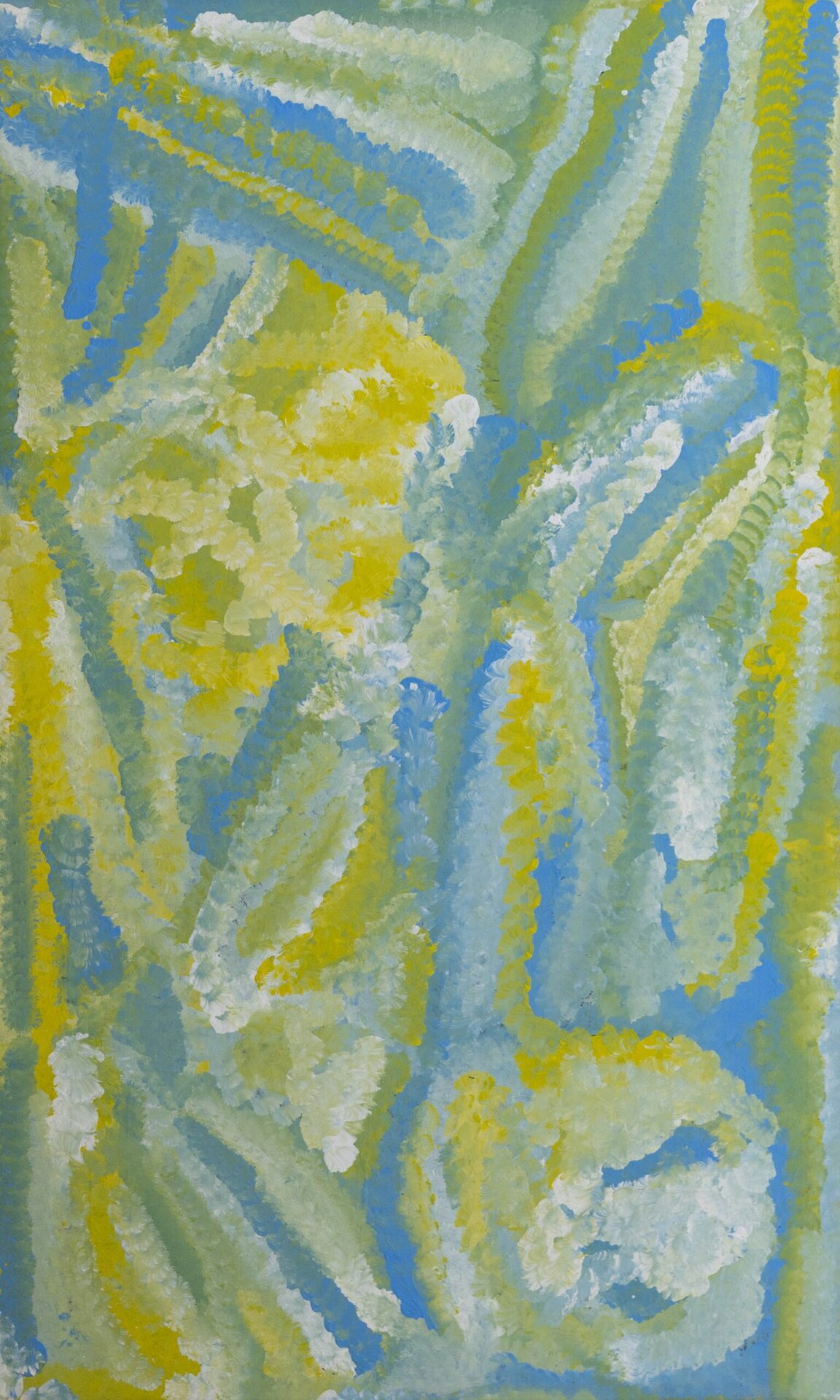
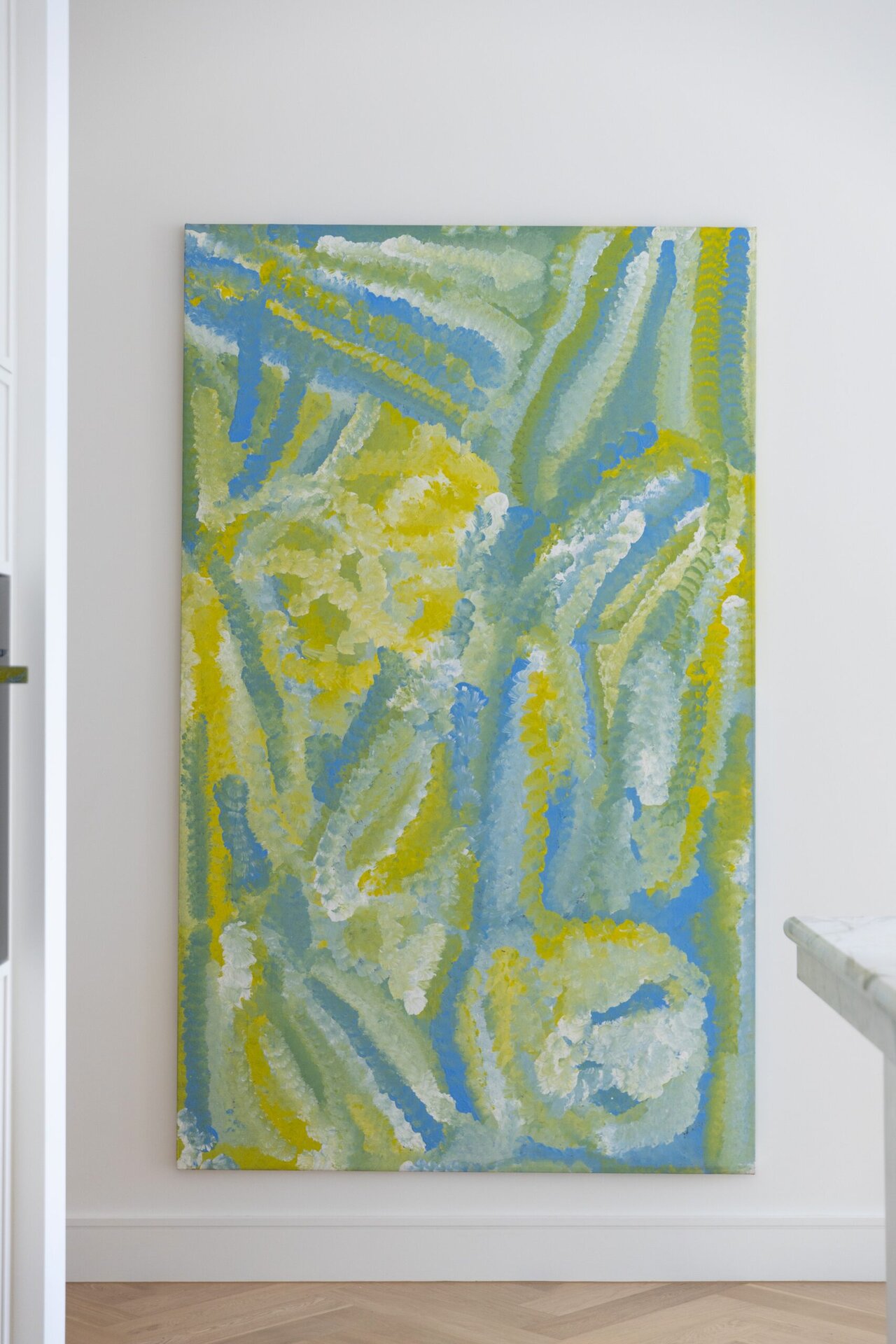
This piece was painted in 1996 and is 152cm x 120cm in size. It is currently stretched.

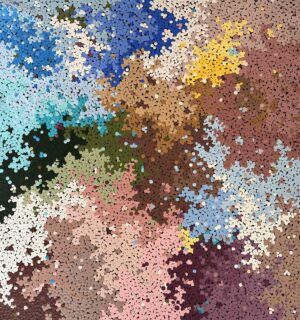
After rain in the desert country of Utopia, the land bursts with wildflowers in vivid pinks, greens, purples, and yellows against the red sand and blue skies. Emily Kame Kngwarreye loved this transformation and painted it again and again through her Wild Flowers series, always tied to her central Yam Dreaming. Her name, Kame, means yam seed, and the Atnwelarr yam’s flowers and roots became a constant subject throughout her career.
Emily developed a unique way of painting these flowers through her “dump dump” dotting style. With one brush dipped into multiple colours, she would let the pigments blend directly on the canvas, creating fields of shimmering flowers. The dots became both petals and the earth itself, reflecting the yam’s cycle of growth as roots lifted the ground and flowers emerged. This technique gave her works both complexity and vibrancy, like the desert in bloom after rain.
Though she explored many styles, Emily always returned to Wild Flowers. Of her thousands of paintings, the majority celebrated this subject, each a tribute to her Country, her Yam Dreaming, and the seasonal renewal it represented. More than just a visual impression of Utopia after rain, these works carried the knowledge of an elder and Law woman who understood that wildflowers meant survival — food, growth, and regeneration for her people.
Each artwork is meticulously created using the highest quality materials to ensure longevity, vibrancy, and integrity over time.
Artists work with premium linen canvas, selected for its durability and fine texture, paired with professional-grade acrylics and hand-picked brushes.
This combination allows for both bold expression and intricate detail, preserving the richness of the stories embedded in every piece. All materials are archival and museum-quality.