pwerle-logo

Provenance & Certification

Provenance & Certification

CERTIFCATE OF AUTHENCITY YOU CAN TRUST: FOR FAMILY, FROM FAMILY.

Provenance and integrity are at the core of every acquisition from Pwerle Gallery. Each artwork purchased through us is accompanied by a certificate of authenticity, which verifies the artist, the Dreaming, and the work’s connection to our family and community. Certification exists because the Aboriginal art market has a real, documented history of misattribution and exploitation.

Across the industry, certificates vary enormously in what they actually prove; some are issued by community-owned art centres with direct artist relationships, others by dealers with no connection to the artist at all. A certificate is only as strong as what backs it: who issued it, what they actually witnessed, and whether that history can be independently verified.

This is why provenance matters as much as the certificate itself. Provenance is the documented chain of custody of an artwork: who made it, who facilitated it, who has held it since. The strongest provenance in this market isn’t a nicely designed piece of paper. It’s a real, traceable history that holds up under scrutiny; at auction, in a valuation or decades from now when a collector’s family wants to understand what they own.

Two layers of provenance, not one.

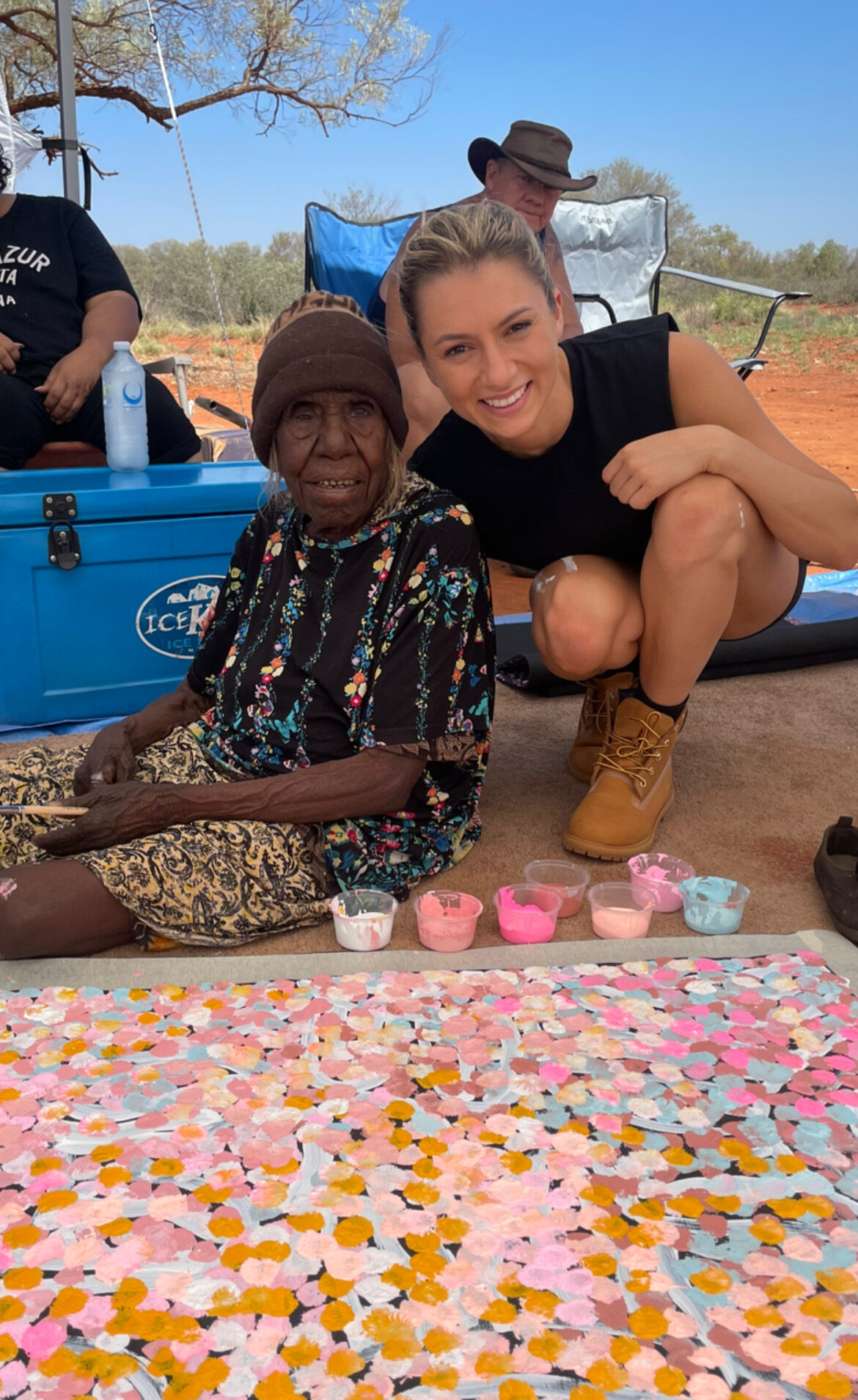
Every artwork sold through Pwerle Gallery carries two layers of provenance: the documented legacy of DACOU (Dreaming Art Centre of Utopia), founded in 1993 and the direct, unbroken family representation of Pwerle Gallery today. No other gallery in this market can offer both.
We are the only four-generation, Aboriginal-owned art gallery in this industry that has never taken a dollar of government funding and we have spent over 40 years giving back to our community and lifting up our artists, not extracting from them.

What DACOU actually means

[ dreaming art centre of utopia ]
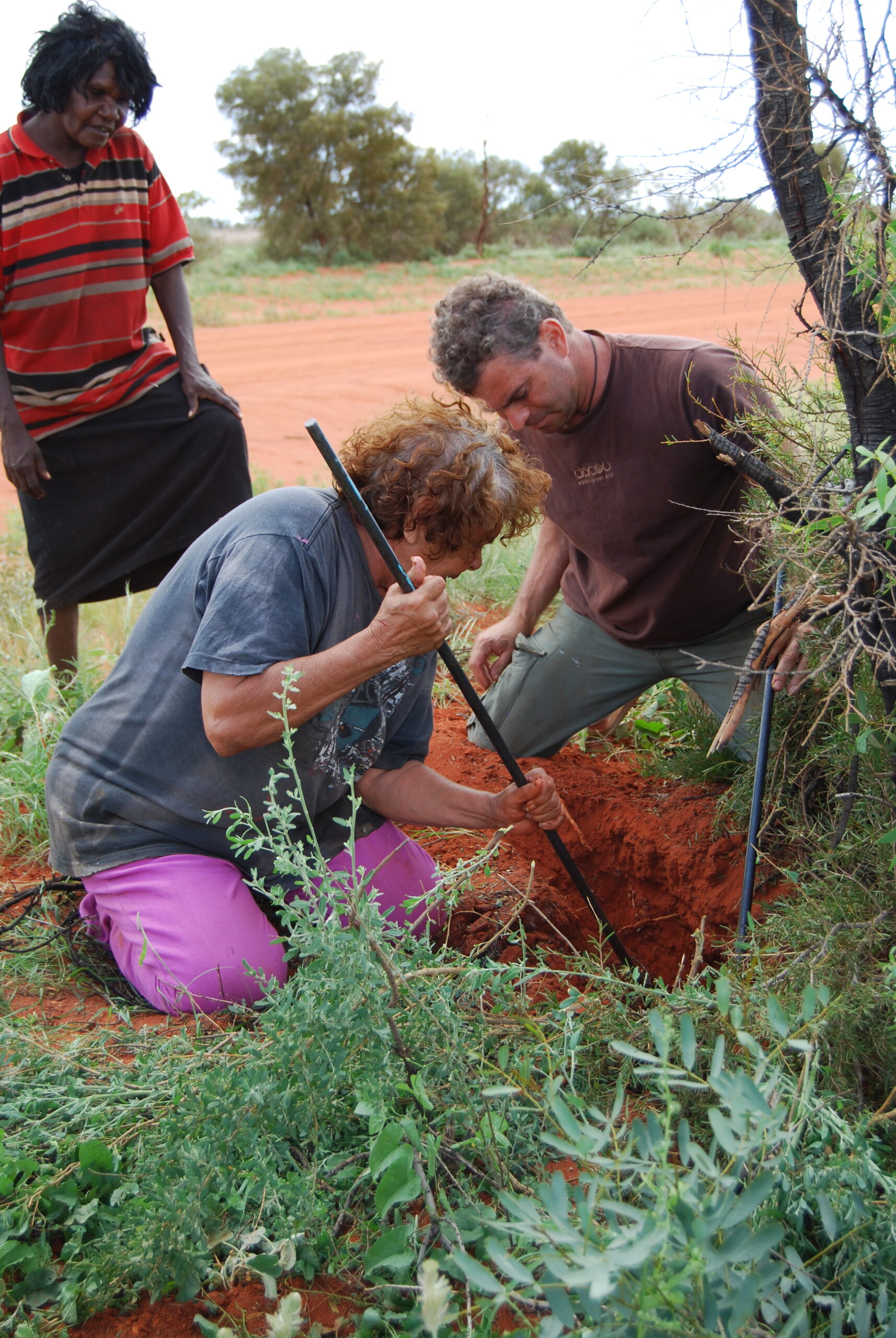
DACOU stands for the Dreaming Art Centre of Utopia. It is rarely acknowledged how directly that name describes what Fred Torres built in 1993: not a dealership trading on Utopia’s name, but a dedicated centre, built by family, for family, to hold and protect the Dreamings of the Utopia artists it represented.

This matters because of a simple historical fact: Utopia had no government-funded, community-run art centre for most of the period its most significant paintings were created. The community-controlled Utopia Art Centre is a recent addition to the region, opened decades after DACOU was already operating, decades after Emily Kame Kngwarreye, Minnie Pwerle, and the artists of that era had already painted the works that built this market. Every major gallery associated with Utopia’s history from this period; DACOU, Delmore, Utopia Art Sydney, the Aboriginal Gallery of Dreamings, CAAMA operated the same way: privately, because there was no alternative structure yet in existence.
This is the part that gets left out of generic warnings about “gallery versus art-centre” certificates. You cannot hold a private gallery’s provenance to a standard that didn’t exist yet. DACOU’s provenance isn’t weaker for being privately held it is, for most of Utopia’s defining era, the only kind of provenance that could have existed at all.

DACOU was founded by Fred Torres: son of Barbara Weir, great-nephew of Emily Kame Kngwarreye. Over three decades, Fred curated more than 300 exhibitions internationally and was personally present during the creation of some of the most important paintings in Australian art history.

That history isn’t a story we tell, it’s a matter of public record. Earth’s Creation I, commissioned through DACOU in 1994, set the world auction record for Aboriginal art and for an Australian female artist when it sold for $1,056,000 in 2007. In 2017, the same painting sold again for $2,100,000 - doubling its own record. Both sales list “Commissioned by Dacou Gallery” as the work’s provenance, on the public auction record, independently of anything Pwerle or DACOU has ever said. Earth’s Creation II, from the same 1995 DACOU-facilitated workshop, carries its own independently recorded sale history through Menzies.

This is not a certificate that needs to ask for trust. It has already been tested by Sotheby’s, by Menzies, by the auction floor itself, the most unforgiving form of scrutiny that exists in this market. The record speaks for itself.
[ Learn more about DACOU and Fred Torres’ history with Emily Kame Kngwarreye → ]
How you know a Pwerle certificate is genuine?

Every certificate we issue is custom printed and individually dated, then sealed with a custom Pwerle stamp that exists only within this gallery. That stamp is how a Pwerle certificate is identified as authentic, it cannot be replicated or issued by anyone outside this gallery, and it is applied to every single piece without exception. There is no version of a genuine Pwerle certificate without it.

We stand behind every certificate we have ever issued without a single inch of doubt. Our family has spent over forty years building this record. We do not need anyone else’s permission to call it what it is: among the strongest provenance in this industry.

What this means for you as a buyer?

When you buy through Pwerle, your certificate doesn’t stand alone. It connects to a documented, three-decade history that has already been tested at the highest levels of this market. That is the standard we hold ourselves to on every single piece we sell; not just the ones that end up at auction.

How our certification works:

Beyond certification, we also provide detailed artist context and, where possible, archival documentation drawn from our family records. These materials ensure that the story behind each piece is preserved and can travel alongside the artwork for generations to come. This commitment to documentation protects not only the collector but, most importantly, the artist and their legacy. In a market where Aboriginal art has too often been exploited, misattributed or stripped of its cultural grounding, we stand firm in guaranteeing that every work entrusted to us retains its rightful provenance.

Our certificates are not just paper. They are a bridge, connecting the canvas back to Country, to kinship, and to the Dreaming it carries. Each certificate is carefully handcrafted one by one, dated to the day of purchase and sealed with our custom Pwerle stamp. This process ensures that every document carries the same integrity as the artwork itself, providing confidence to the buyer while safeguarding the authenticity of Aboriginal art for the future.

Every Pwerle certificate of authenticity includes:

- The artist’s name and language group
- The artwork’s title, size and medium
- The date and place the work was created
- The Dreaming or story connected to the work
- A unique catalogue number
- Our signed declaration and custom Pwerle stamp, dated to the day of purchase

Why this matters when you buy

Provenance isn’t just a formality: it has real, practical value to you as a collector:
- It protects the value of your investment. Artworks with strong, verifiable provenance consistently command higher prices at auction and resale than works without it.

- It protects the artist. Clear documentation ensures the right person is credited and properly recognised for their work, for as long as the painting exists.

- It protects your family. A well-documented certificate means the story of your artwork: who made it, what it means, where it came from survives long after the purchase, so the next generation who inherits it understands exactly what they hold.

- It’s part of buying ethically. Provenance is how you, as a buyer, can be confident you’re supporting the artist and community the work actually came from not a supply chain that has exploited or bypassed them.

Need a certificate or advice for a painting you already own?

If you own a painting that came through DACOU or Pwerle Gallery stock and you no longer have its original certificate of authenticity or you need a new certificate issued under the same conditions get in touch with us directly. We can talk you through what’s needed to verify and certify a piece from our family’s history. This applies whether your painting was originally sold through DACOU, through Pwerle Gallery, or has since changed hands and needs its provenance reconfirmed for a sale, valuation, insurance or simply for your own records.

Please note: certificate verification and replacement is a paid service. A fee applies, and will be confirmed with you directly once we understand which painting and circumstances are involved.

Every painting from our family deserves its story intact.

Lost your certificate or need provenance reconfirmed? We can help.

learn more about pwerle

OUR DIFFERENCE

Why Pwerle Exists

ETHICS + AUTHENTICITY

subscribe to our newsletter

follow
© Copyright - Pwerle Gallery | Website Designed & Developed by Tangible.