What a Skin Name Actually Determines
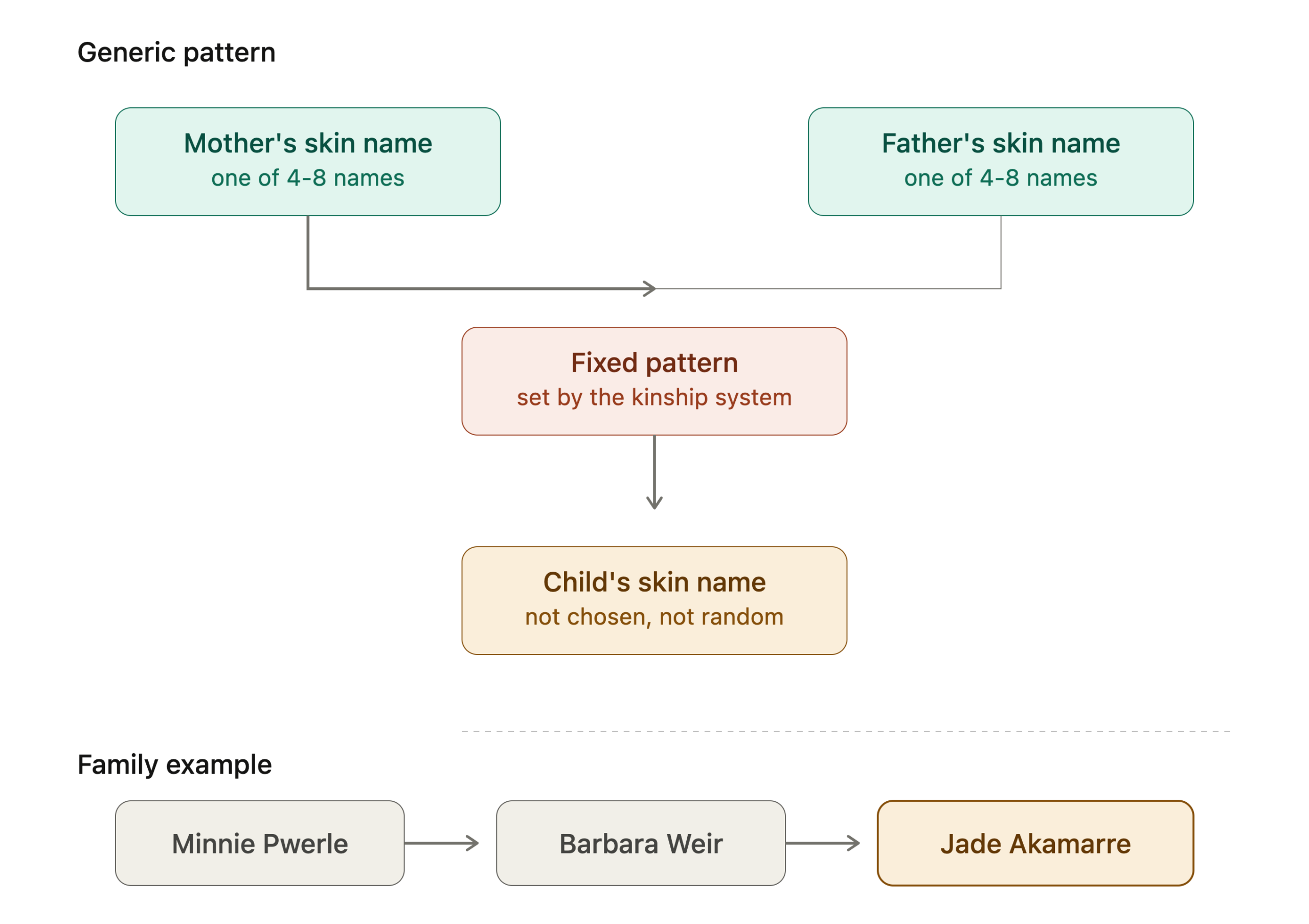
A skin name is best understood as a broad grouping of kin including people who are only distantly or notionally related to you, not just your immediate family. Through the skin system, it's possible to work out your relationship to almost anyone else in the community, even someone you've never met, simply by knowing their skin name.
Skin names determine real, practical things in day-to-day life and culture:
- Who you can and cannot marry
- Proper behaviour between different people; when to show respect, familiarity, or avoidance
- Rights and responsibilities within ceremony
- Land tenure and connection to specific Country
- A broad set of relations: for example, a man's own skin group includes his brothers and sisters, his father's father and his siblings, his son's children, and his brother's son's children
This is why a skin name carries real weight, far beyond being a name. It's a structural part of who you are connected to, what you're responsible for and how the wider community understands your place within it.
Skin Name and Legal Name, Side by Side
In our family, you'll often see a skin name used the way a surname might be used elsewhere - alongside, not instead of, a person's legal name. Jade is a good example: her legal name is Jade Torres, and her skin name is Akamarre, so she's known and paints as Jade Akamarre.
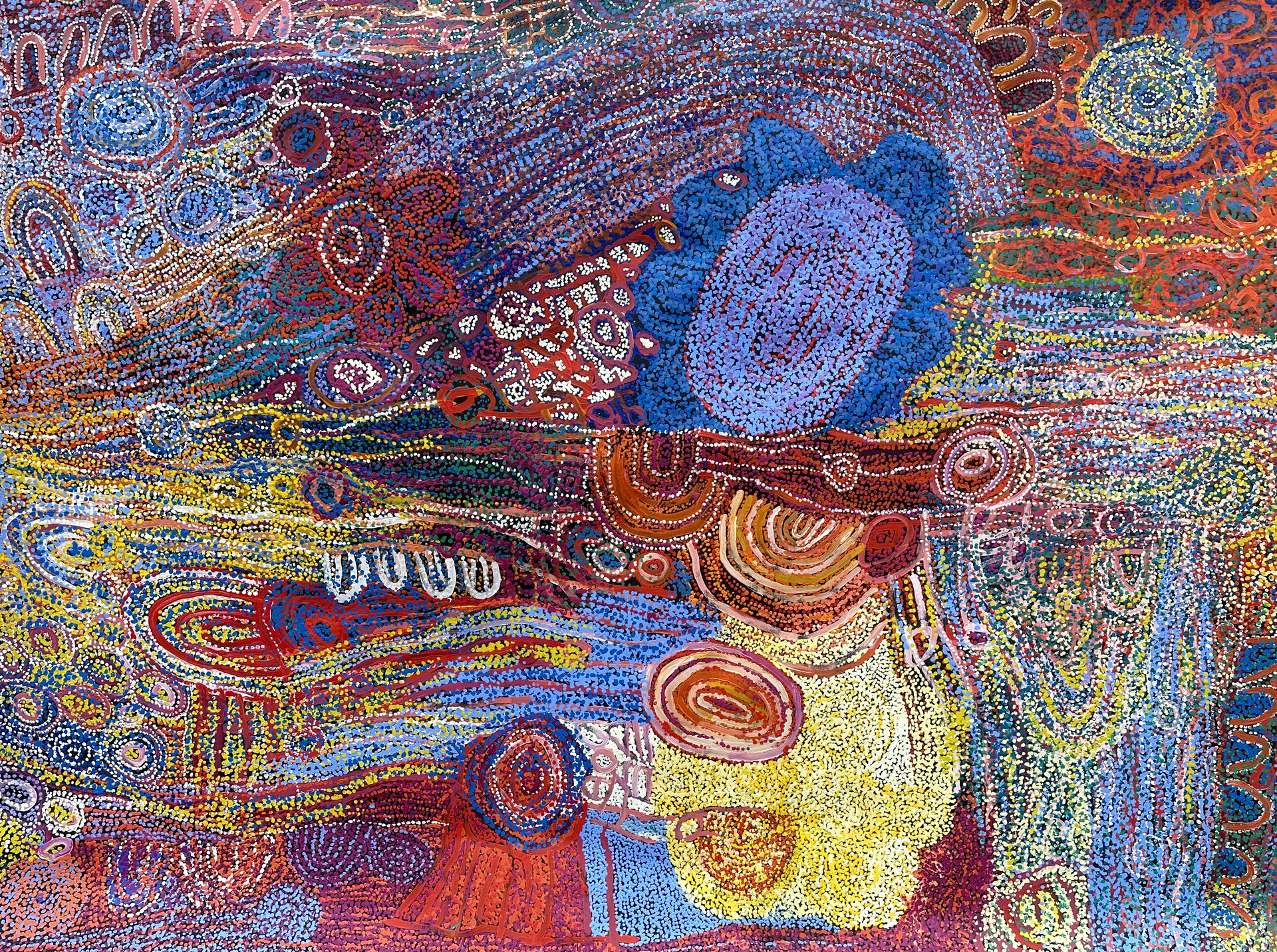
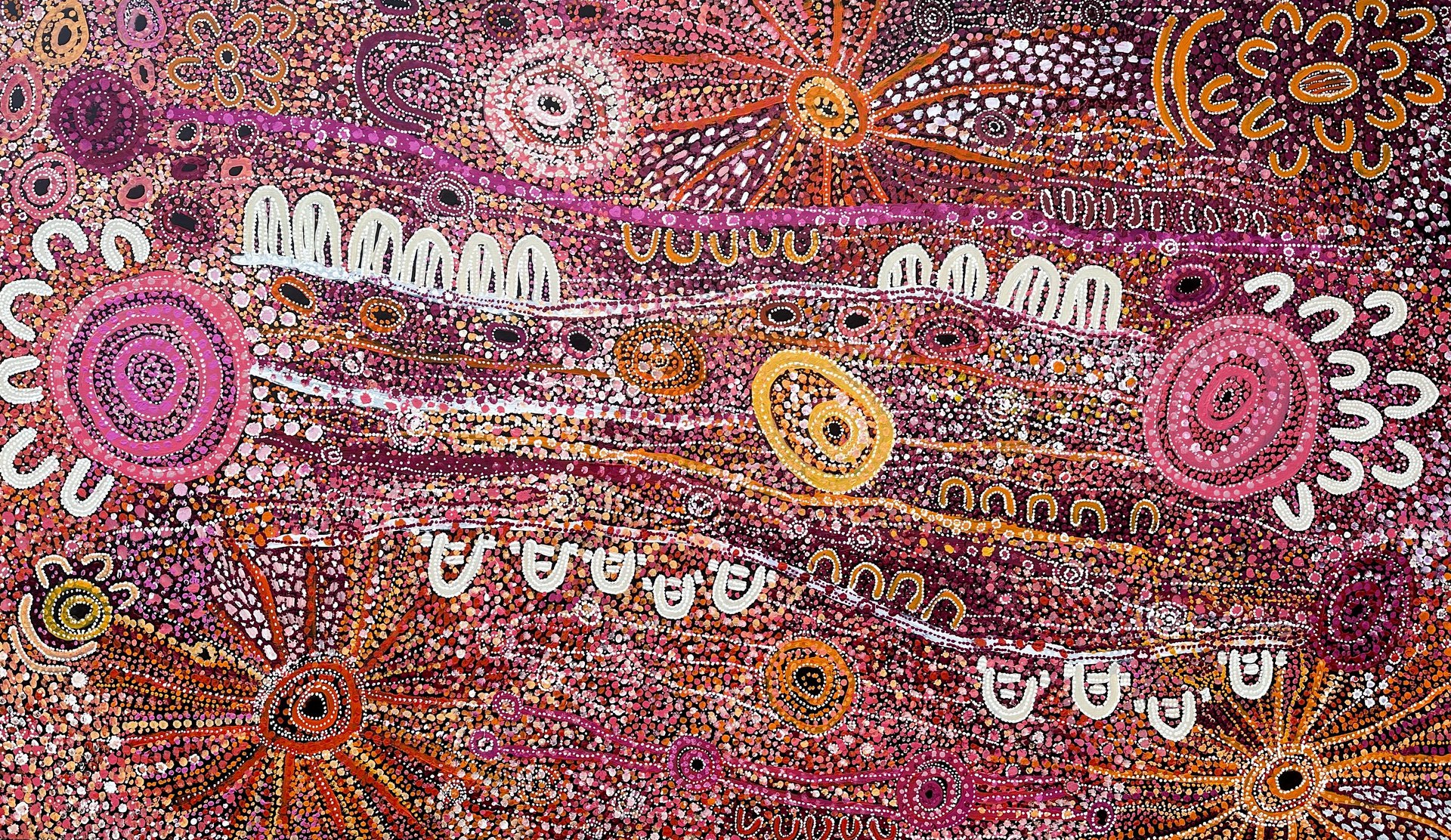
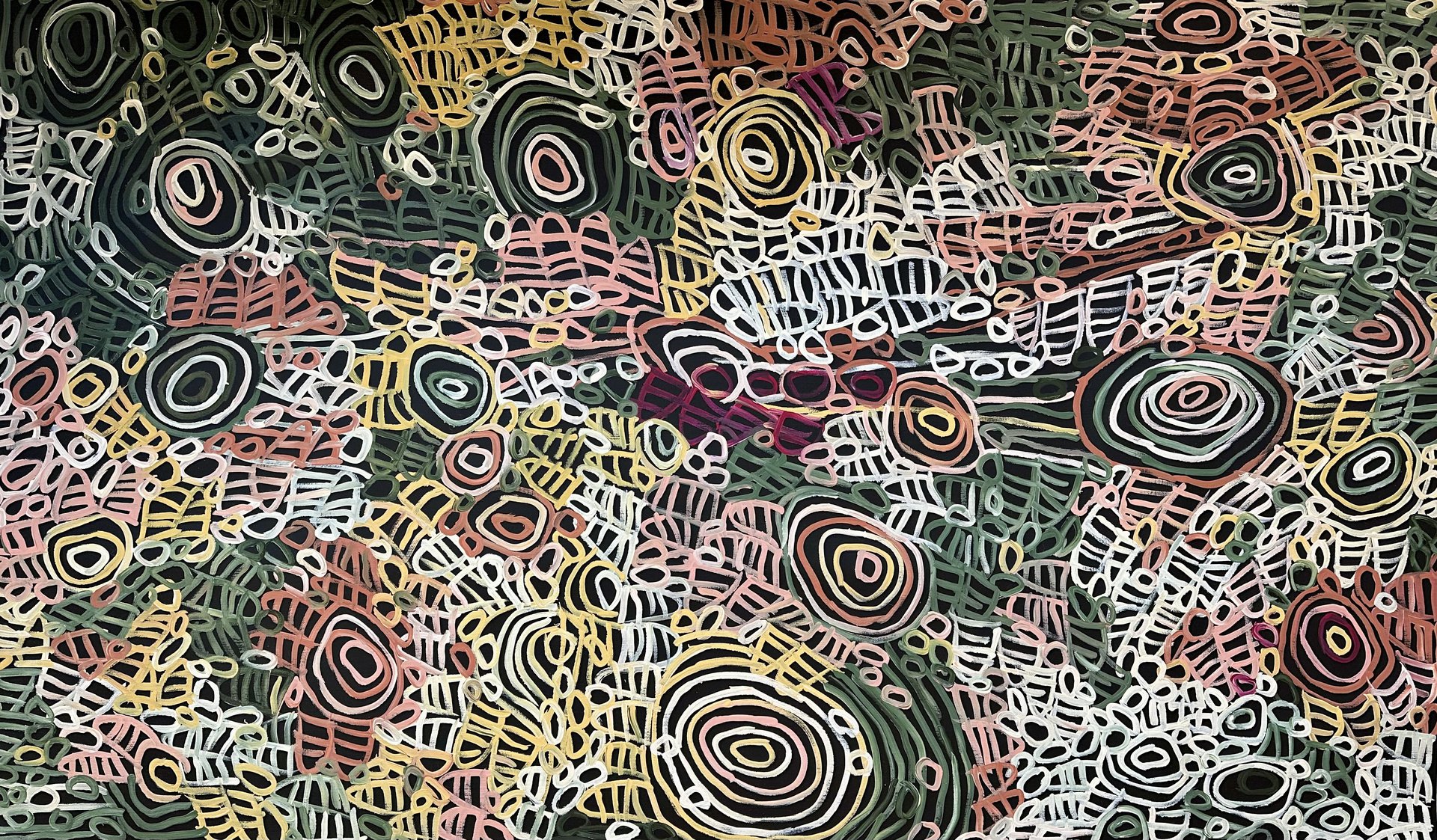
My name is Jade Torres, and my skin name is Jade Akamarre. I am a very proud Alyawarre woman from a community called Atnwengerrp.
— Jade Akamarre
Carrying both names together is common across our family and community, the legal name for the wider world, and the skin name as a living mark of kinship, culture and connection to Country.