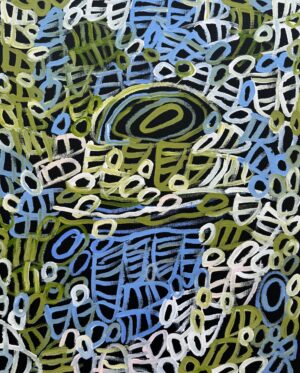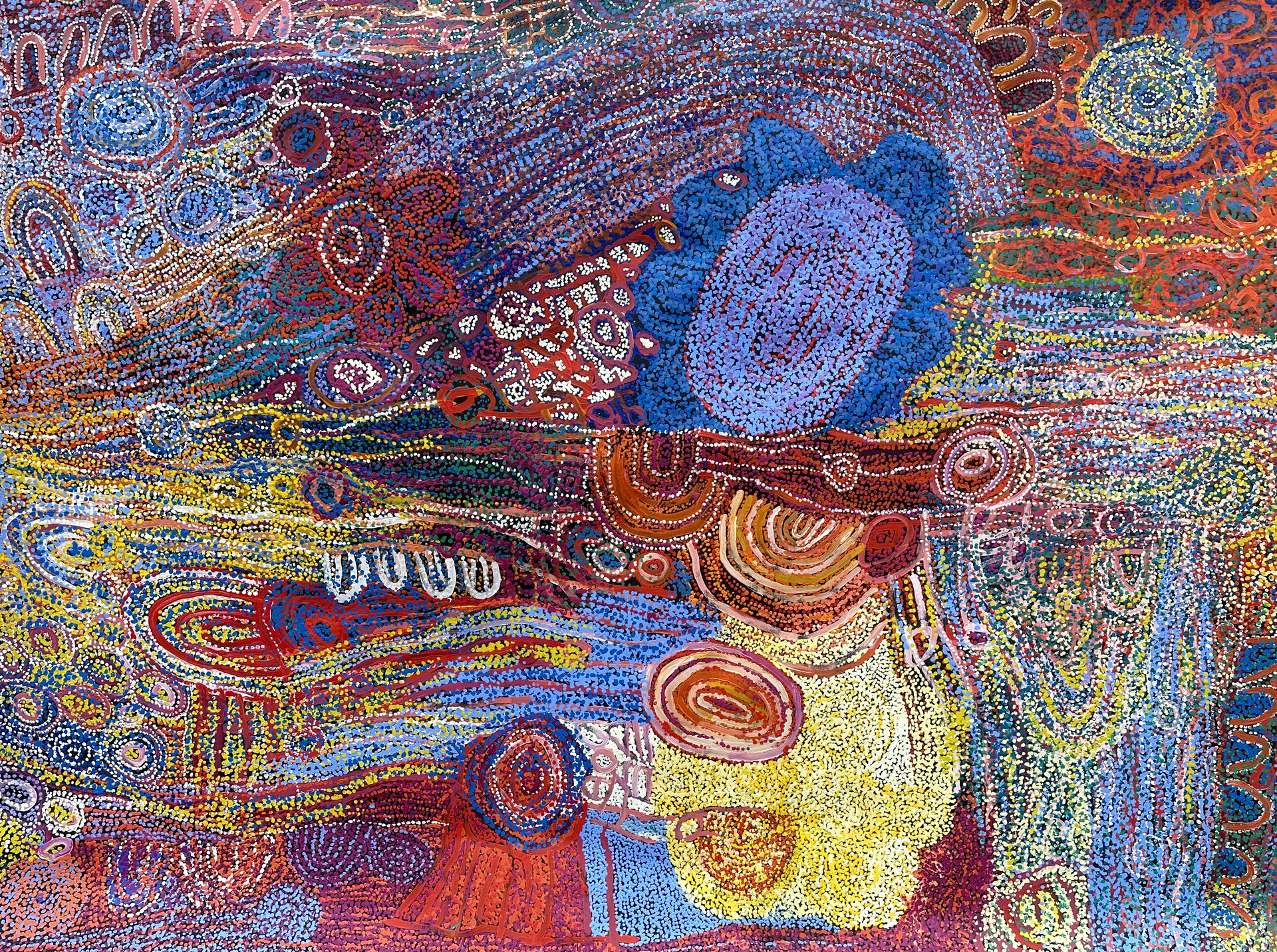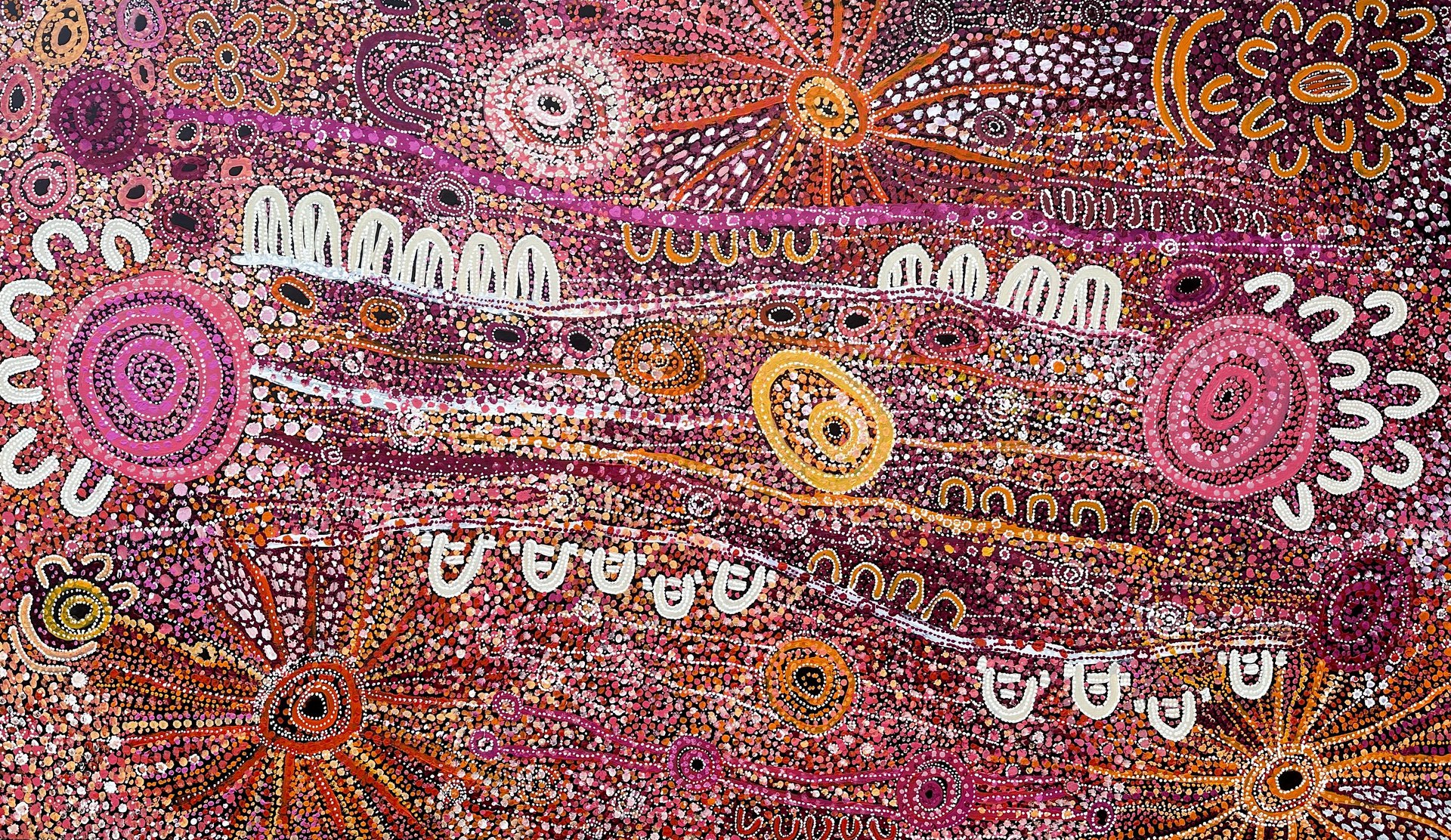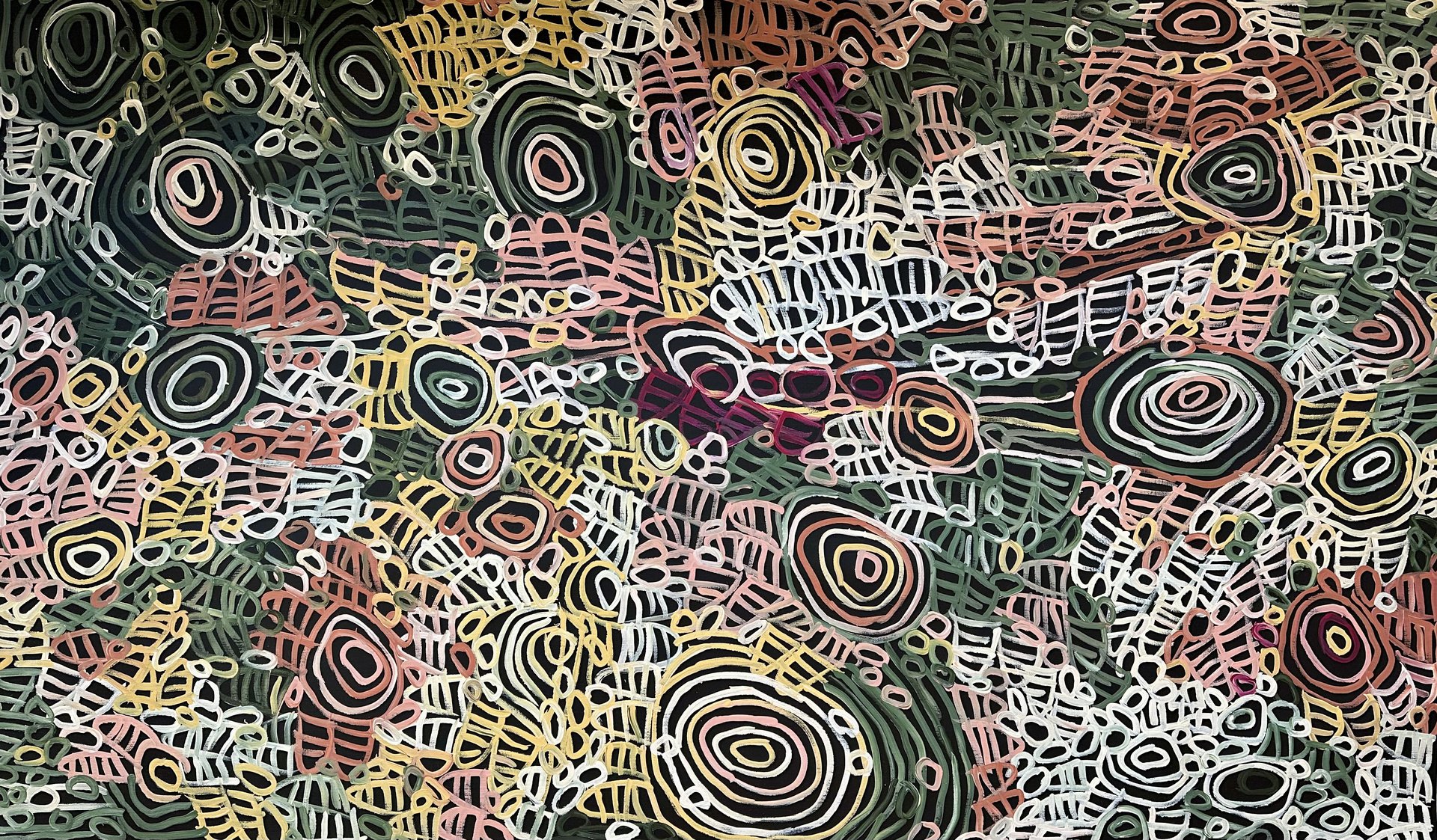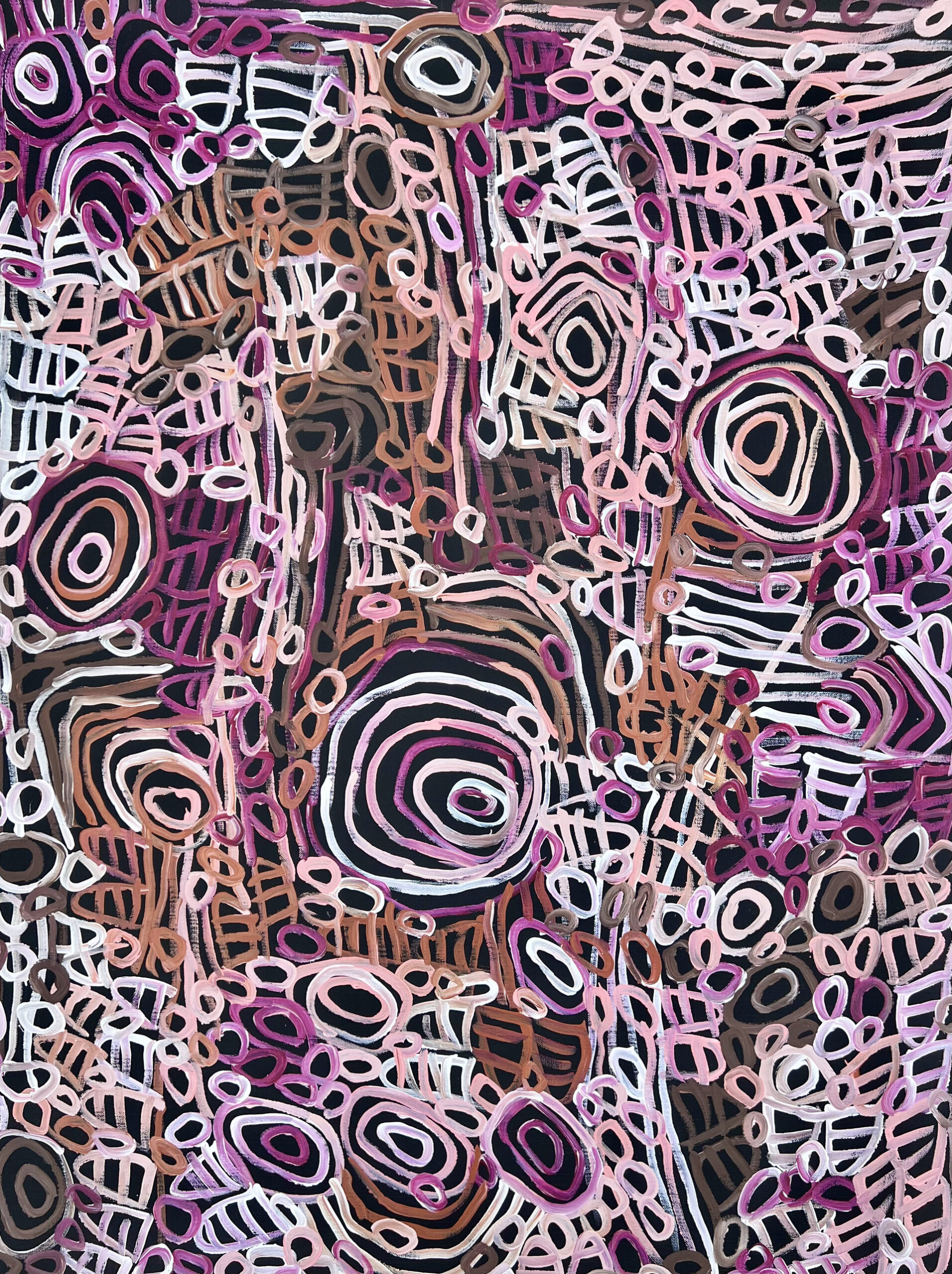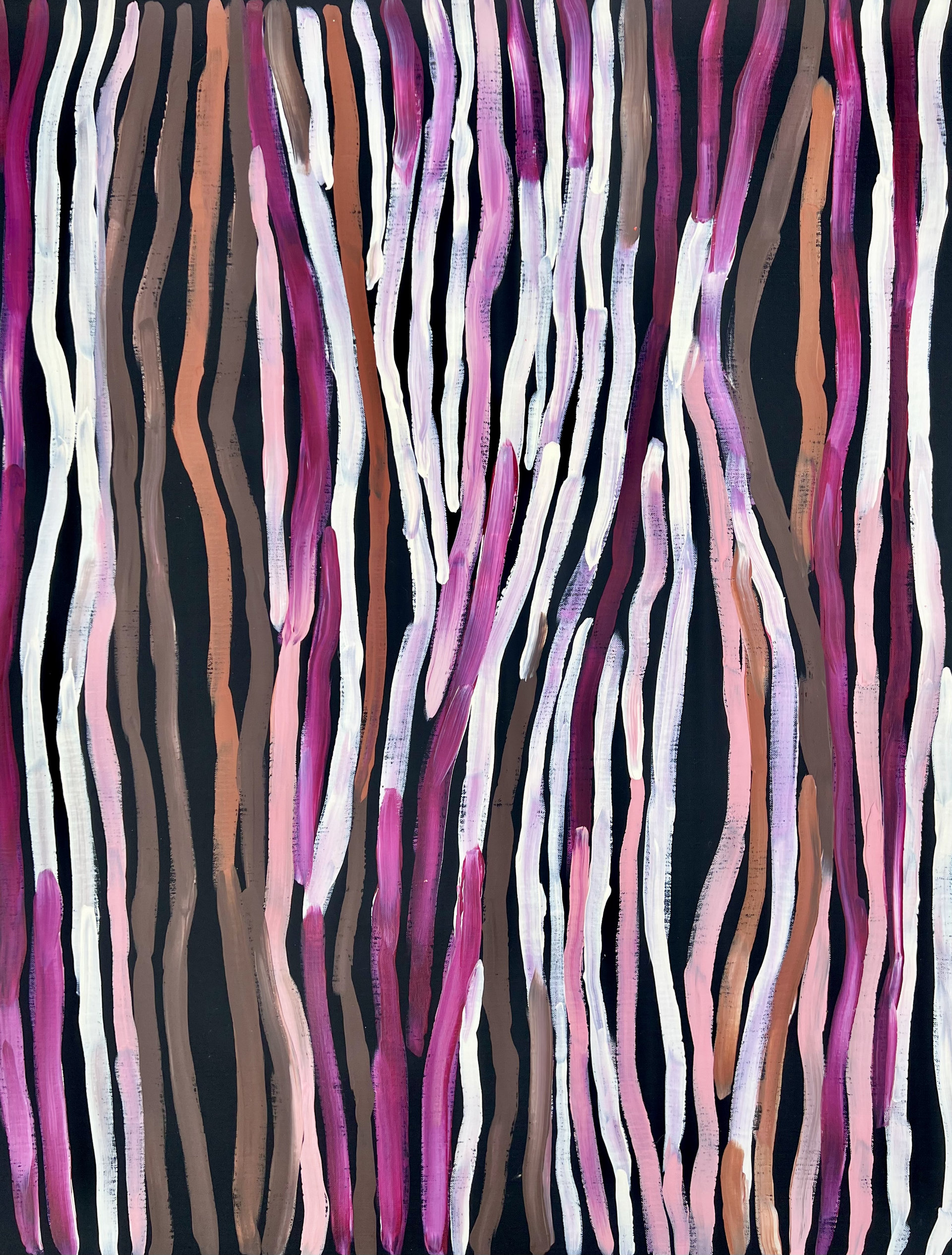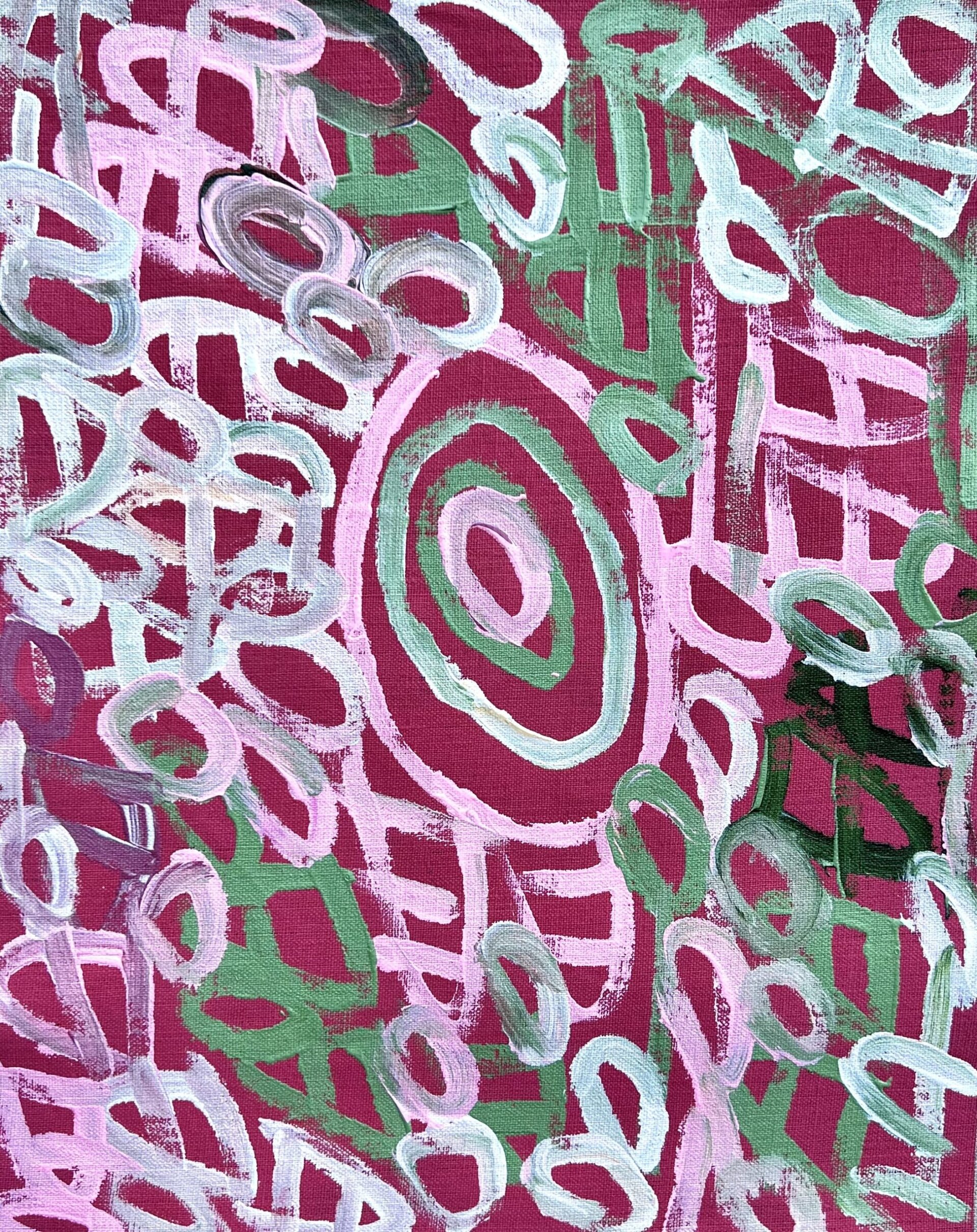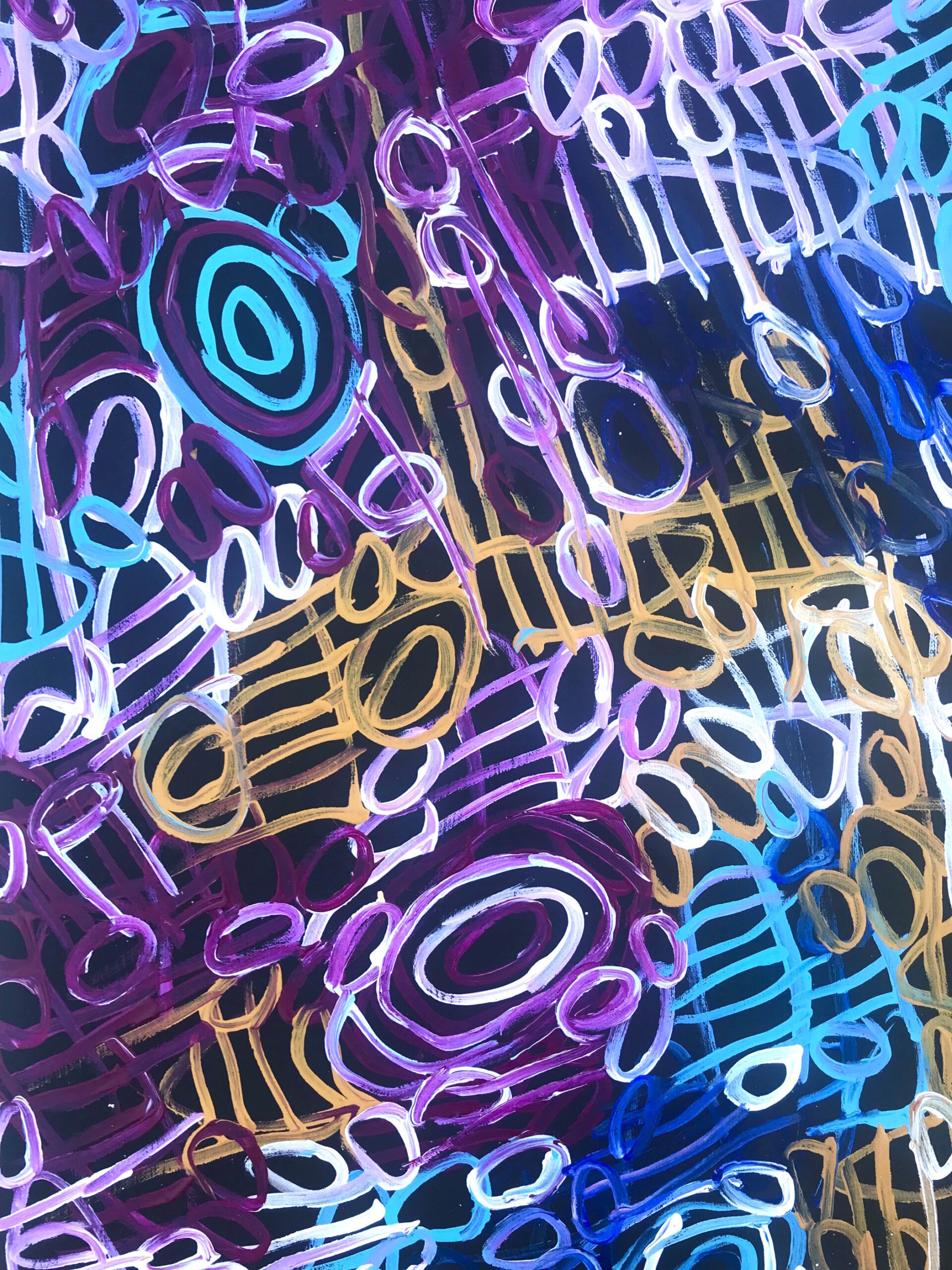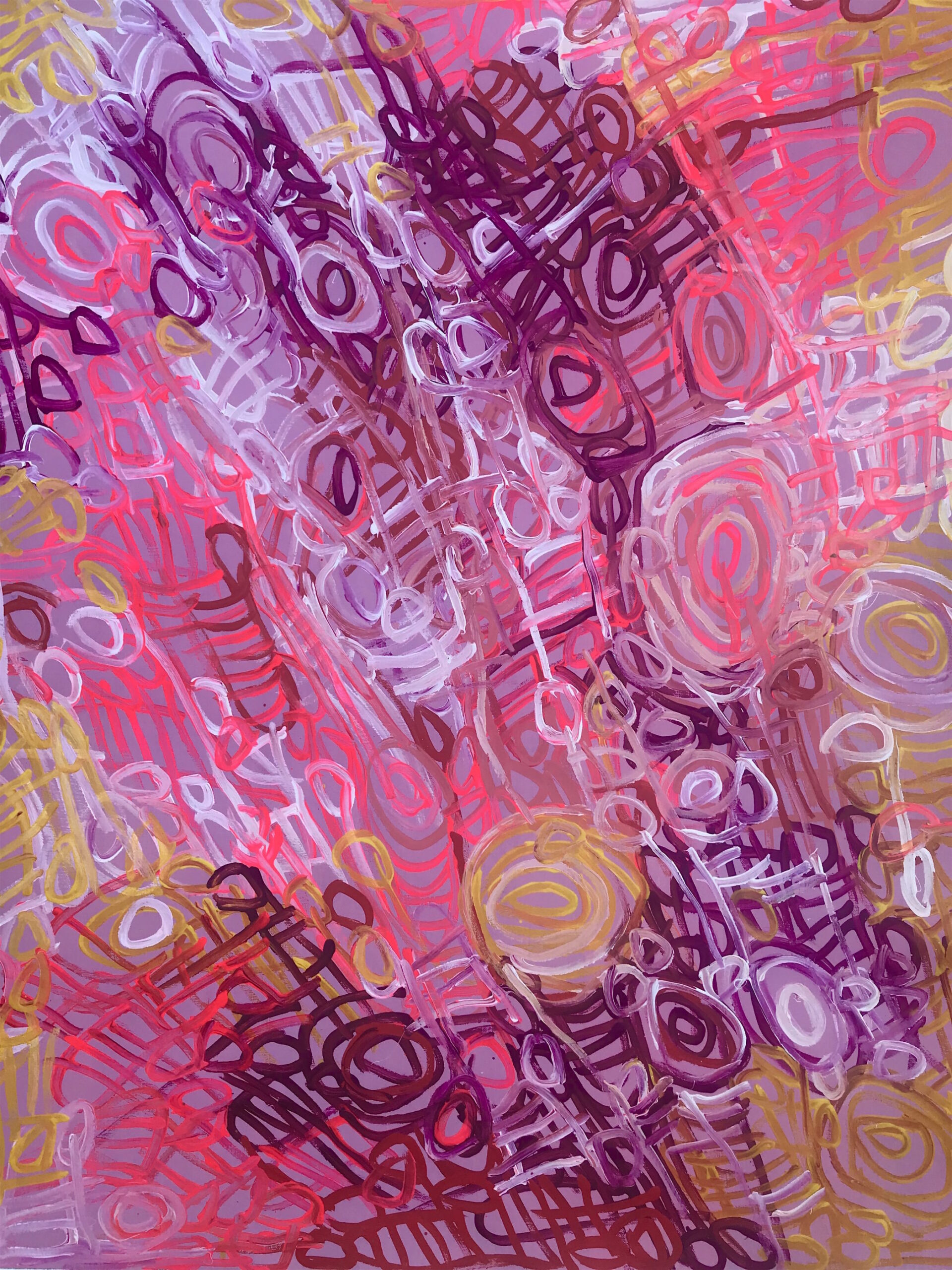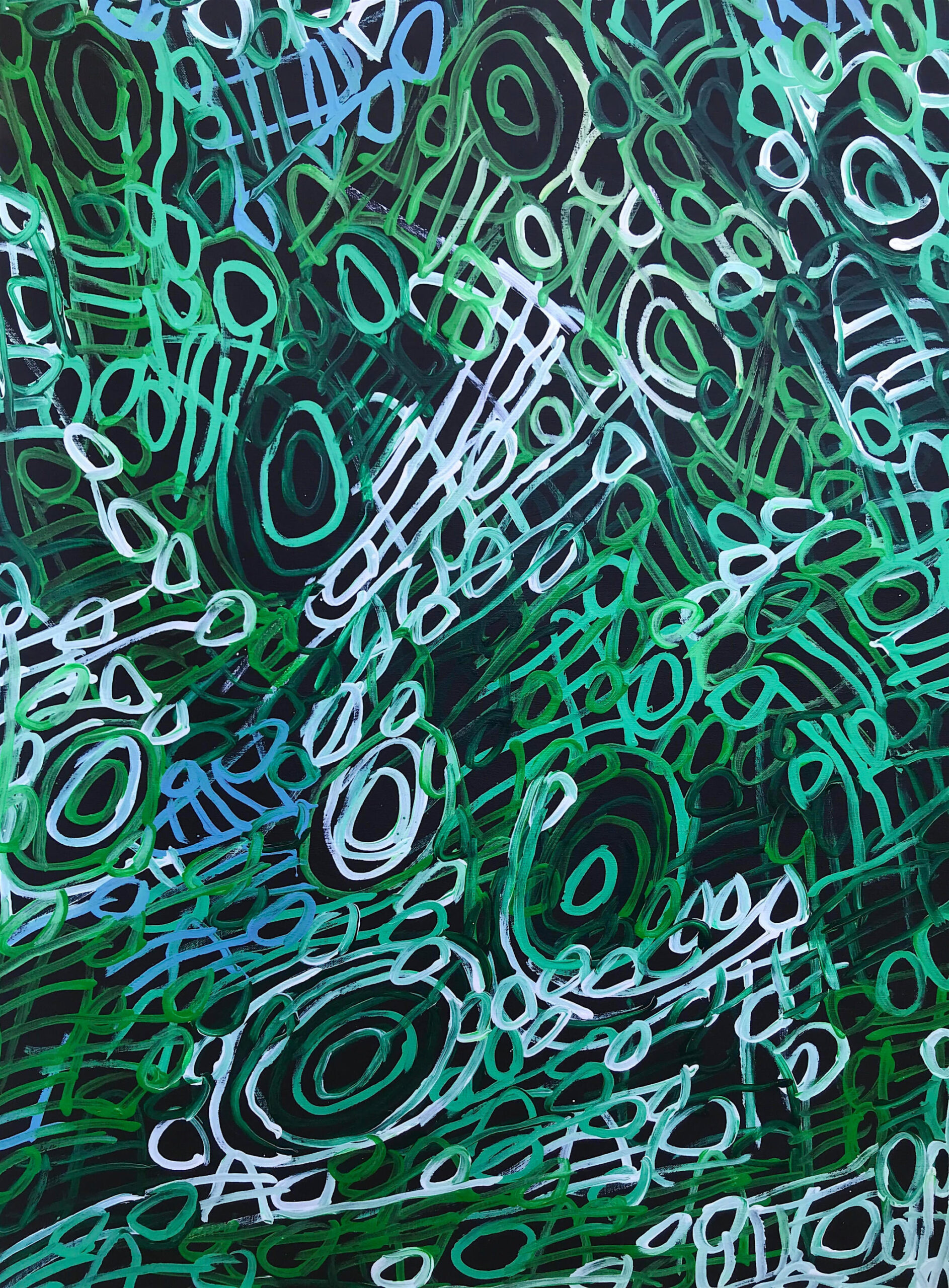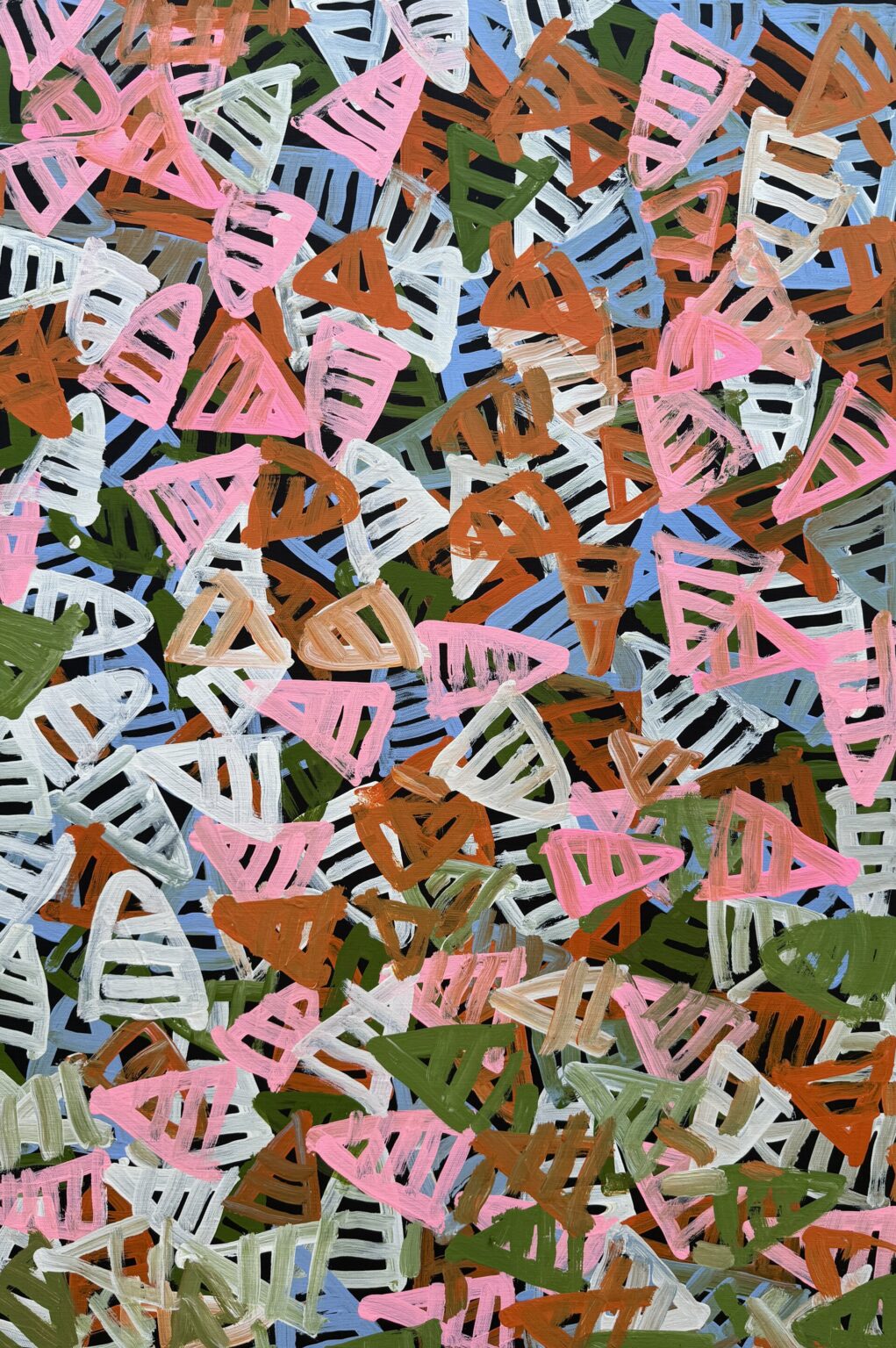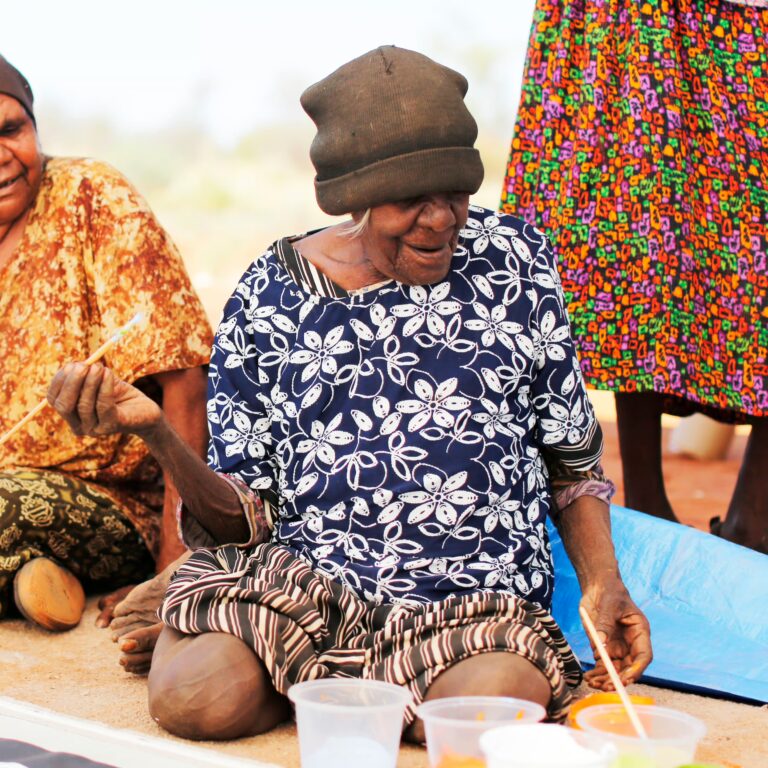
Freddy Purla born Darwin is a celebrated Aboriginal artist and cultural leader whose heritage is deeply tied to the Utopia region. The son of Barbara Weir and grandson of Minnie Pwerle, he is also the adopted nephew of Emily Kame Kngwarreye through Aboriginal Law. Freddy began painting in 1989 and has developed acclaimed styles including Sand Dunes, Scorpion Dreaming, My Grandmother’s Country, and his vibrant dub-dub works.
As founder of the Dreaming Art Centre of Utopia (DACOU) in 1993, Freddy reshaped the profile of Aboriginal art globally, championing cultural authority and artist rights. He played a pivotal role in the creation of Emily Kame Kngwarreye’s Earth’s Creation I–IV and The Final Series. His works are held in collections worldwide, and today he serves as a global art curator and advisor for Pwerle Gallery while continuing his full-time art practice.
Freddy Purla, born in 1968 in Darwin, is an artist whose heritage and creativity are deeply rooted in the Utopia region of the Northern Territory. He is the son of acclaimed Utopia artist Barbara Weir and the grandson of the late Minnie Pwerle. Through Aboriginal Law, he is also the adopted nephew of the legendary Emily Kame Kngwarreye. This profound lineage connects him to some of the most celebrated names in contemporary Aboriginal art, and his work carries forward this extraordinary legacy.
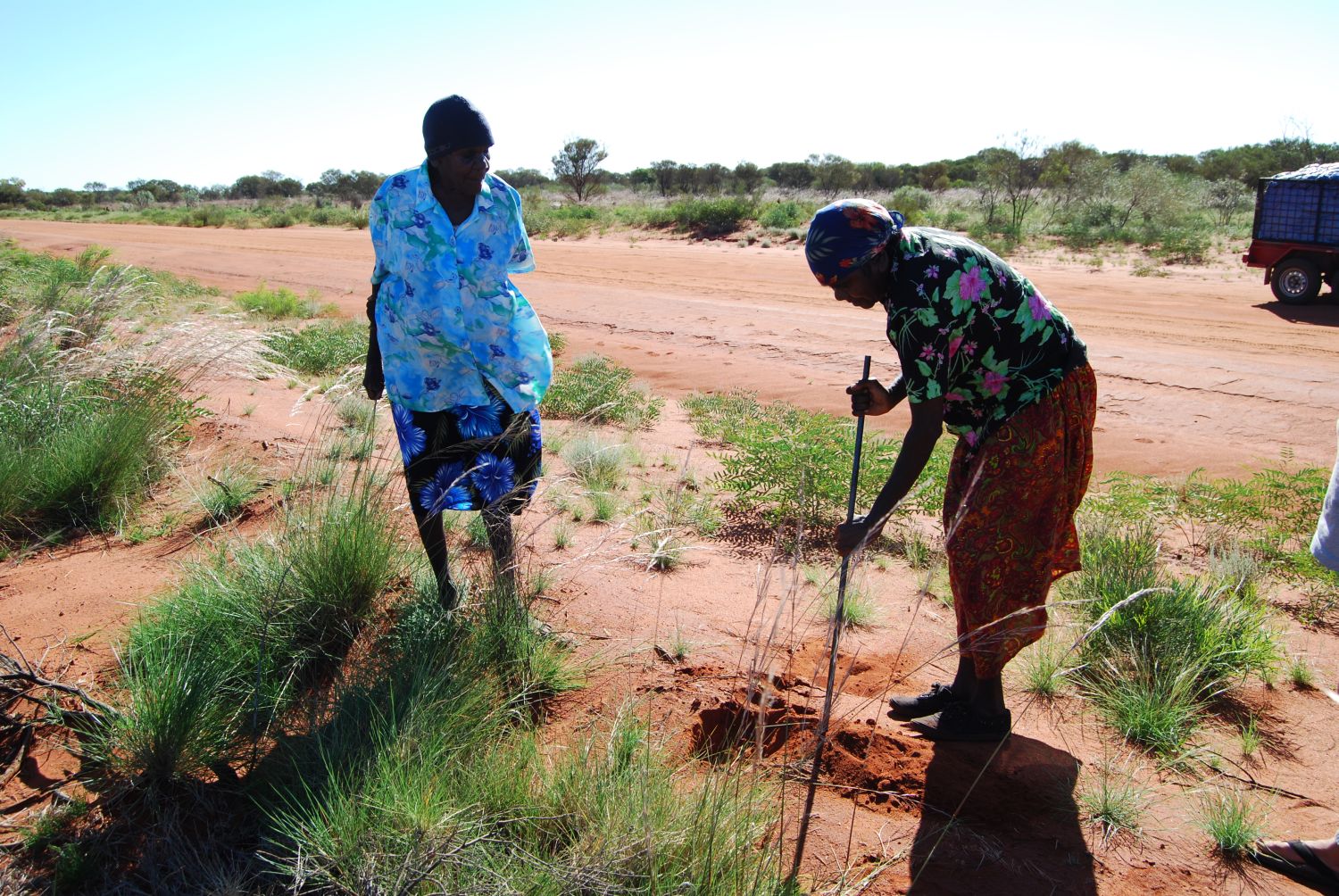
Freddy began painting in 1989 in Alice Springs, inspired by time spent in his homeland of Atnwengerrp. As a child, he divided his life between Utopia, Alice Springs, and Adelaide, making frequent and extended visits to his community. Today, he continues to return to Atnwengerrp to connect with the land, family, and culture that underpin his artistic vision. His work has been acquired by collectors worldwide, with pieces held in Germany, Amsterdam, Paris, Switzerland, and New York.
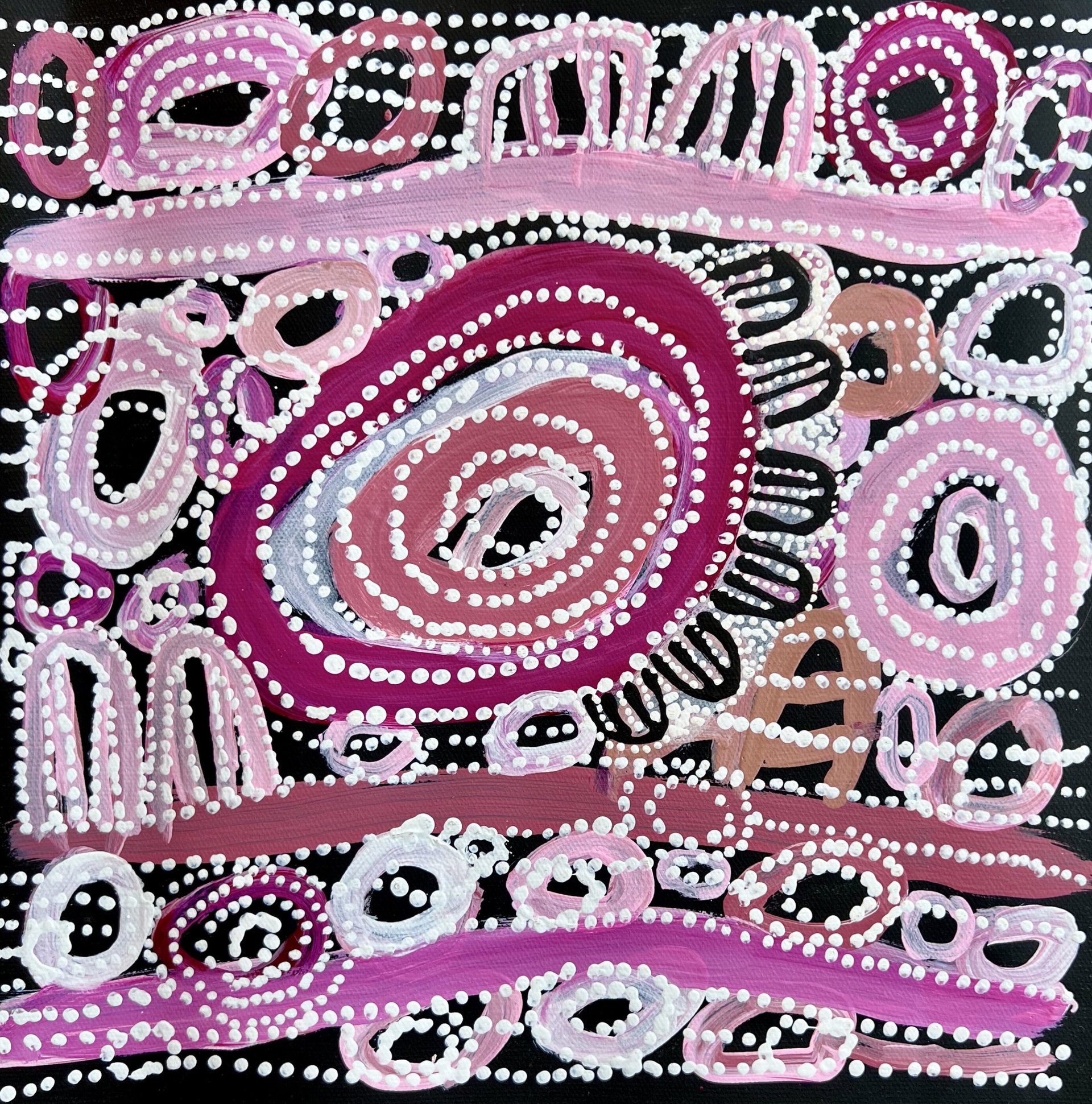
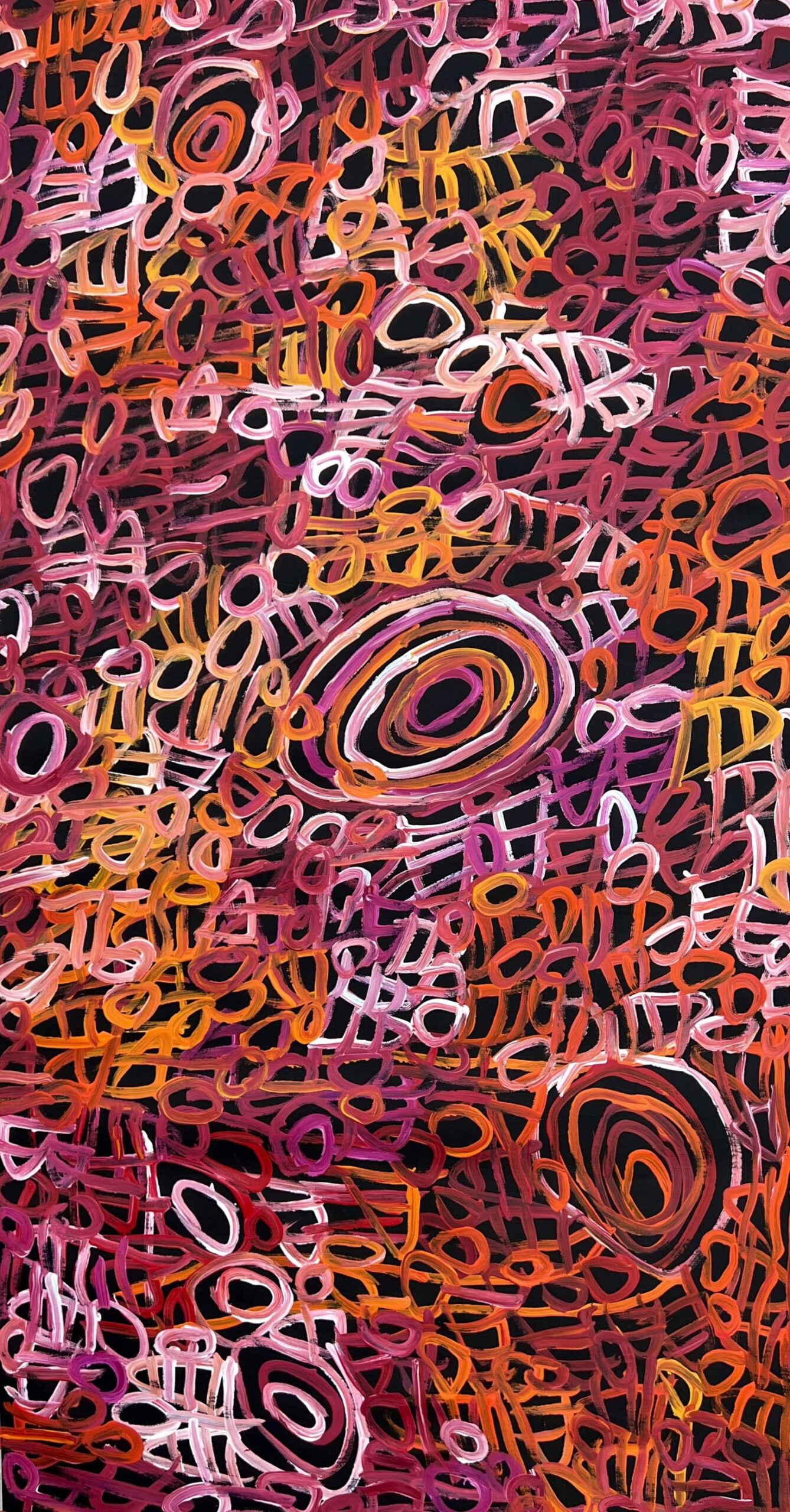
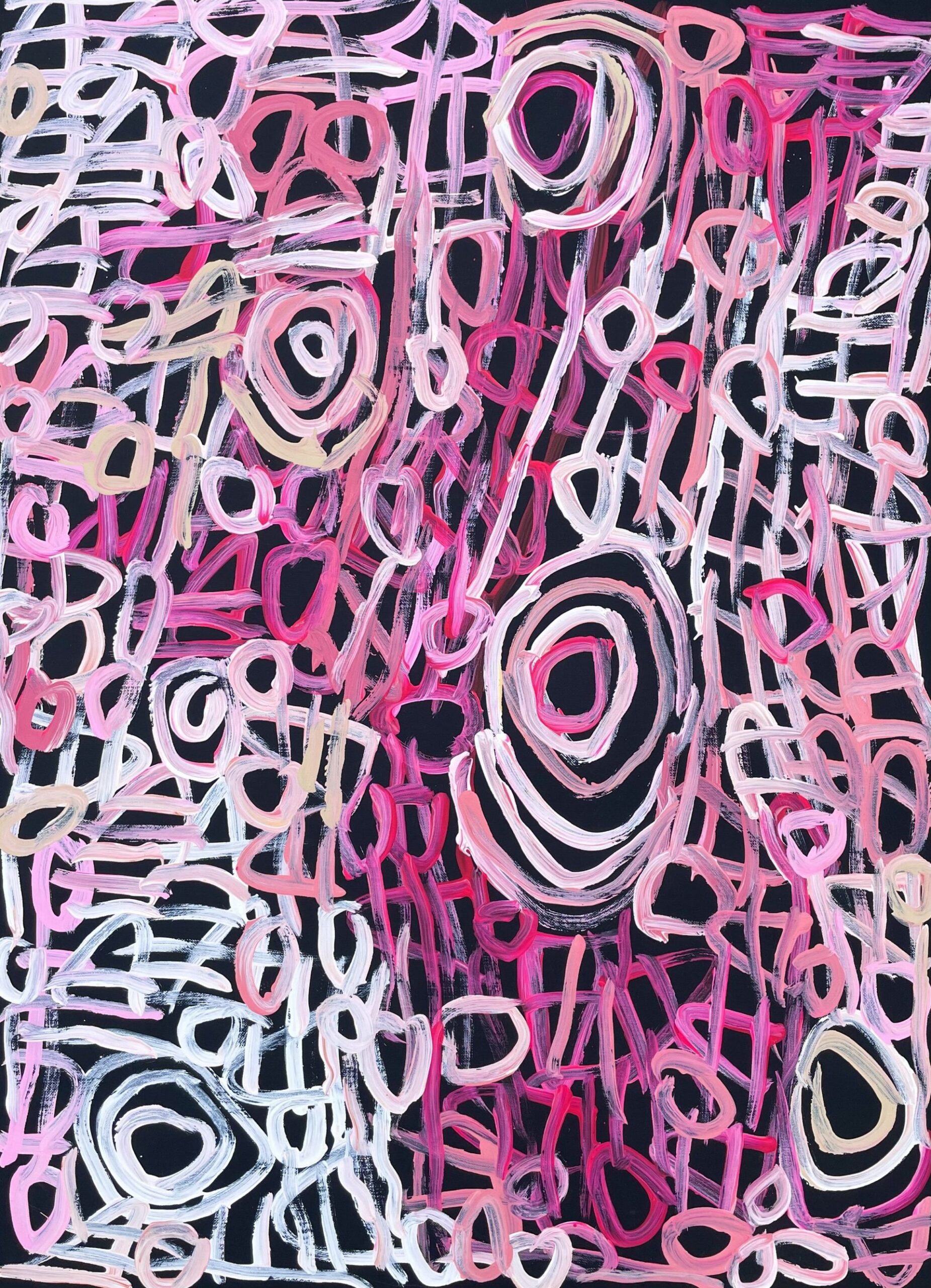
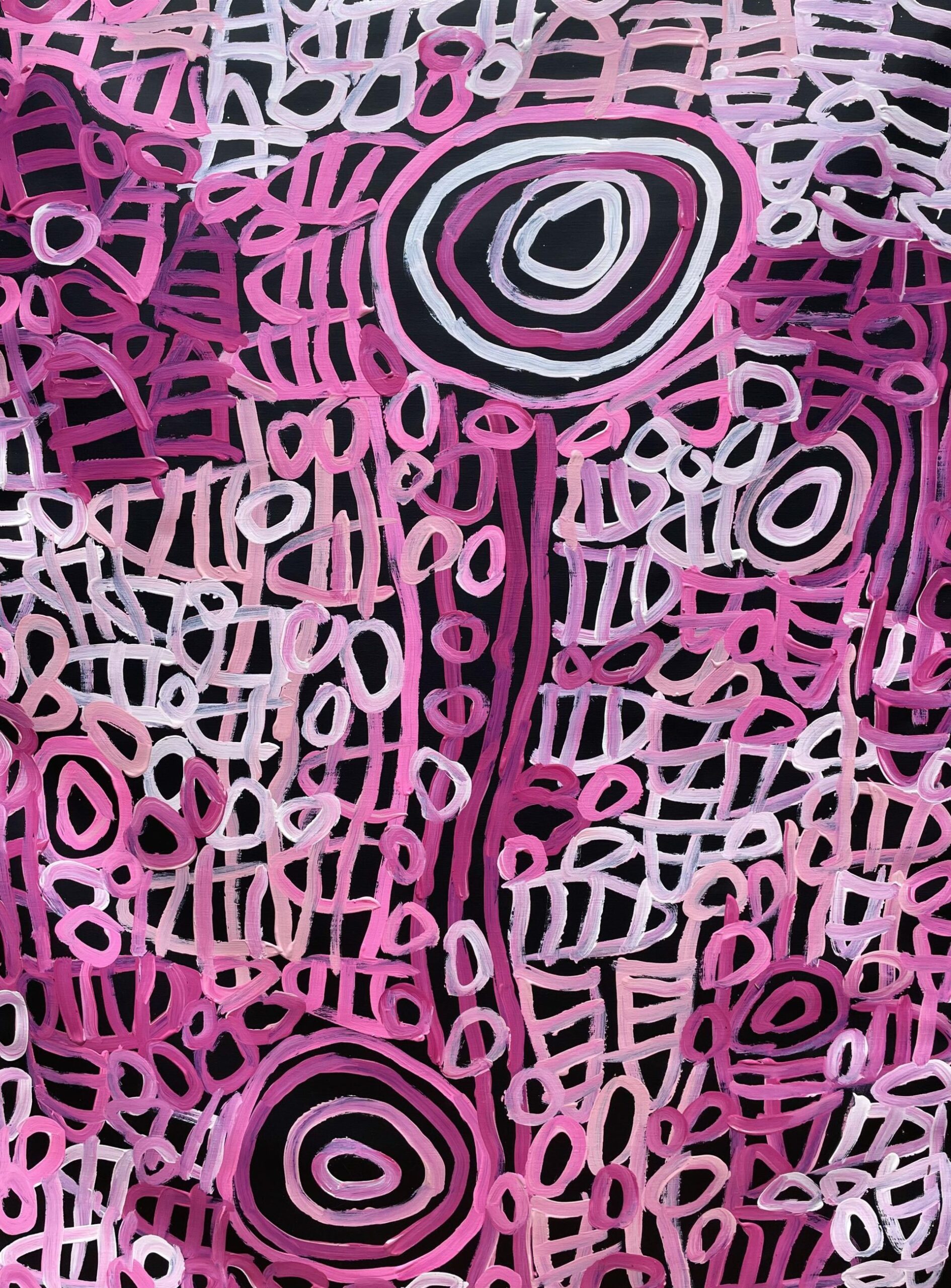
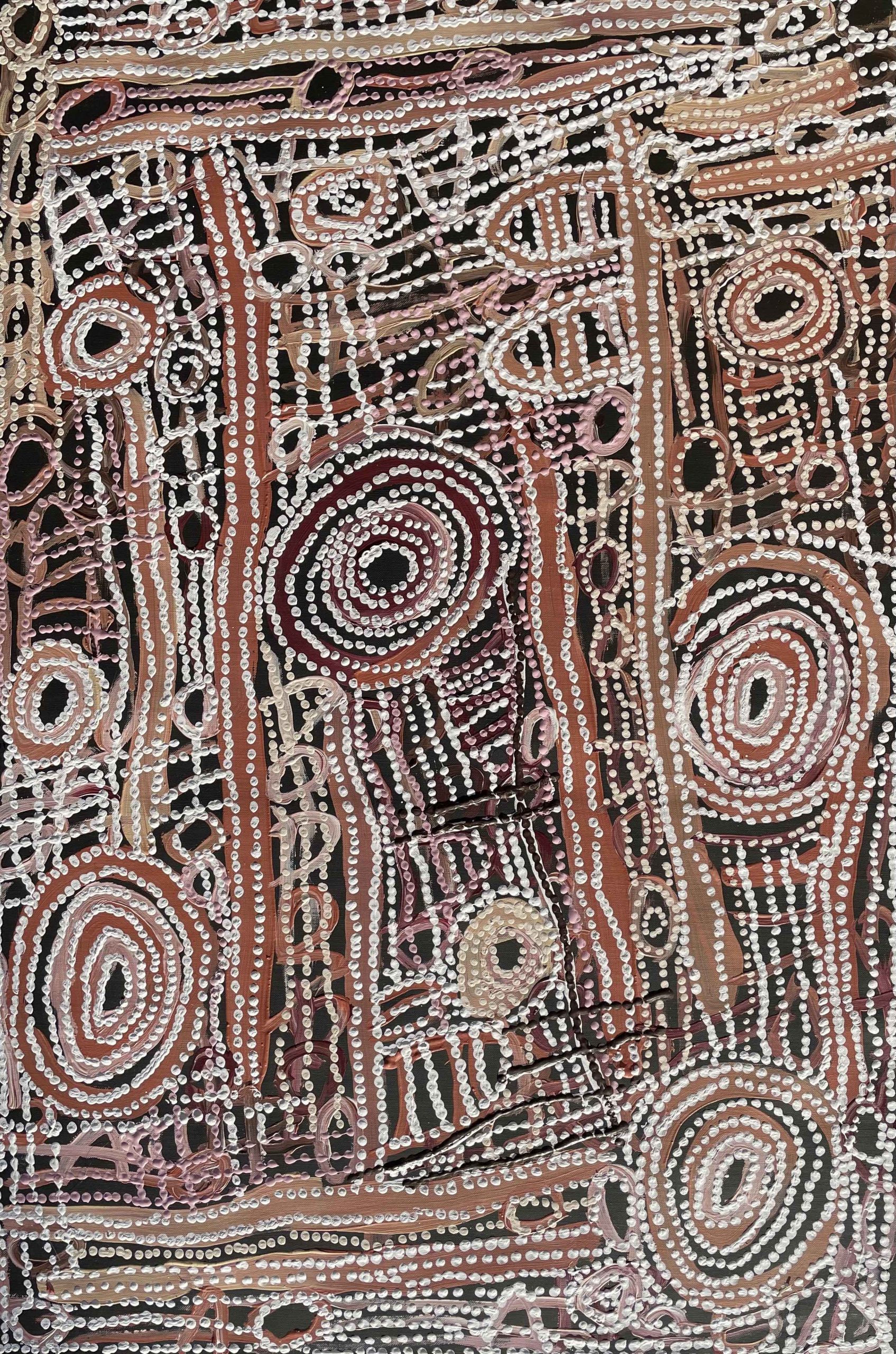
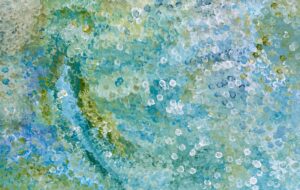
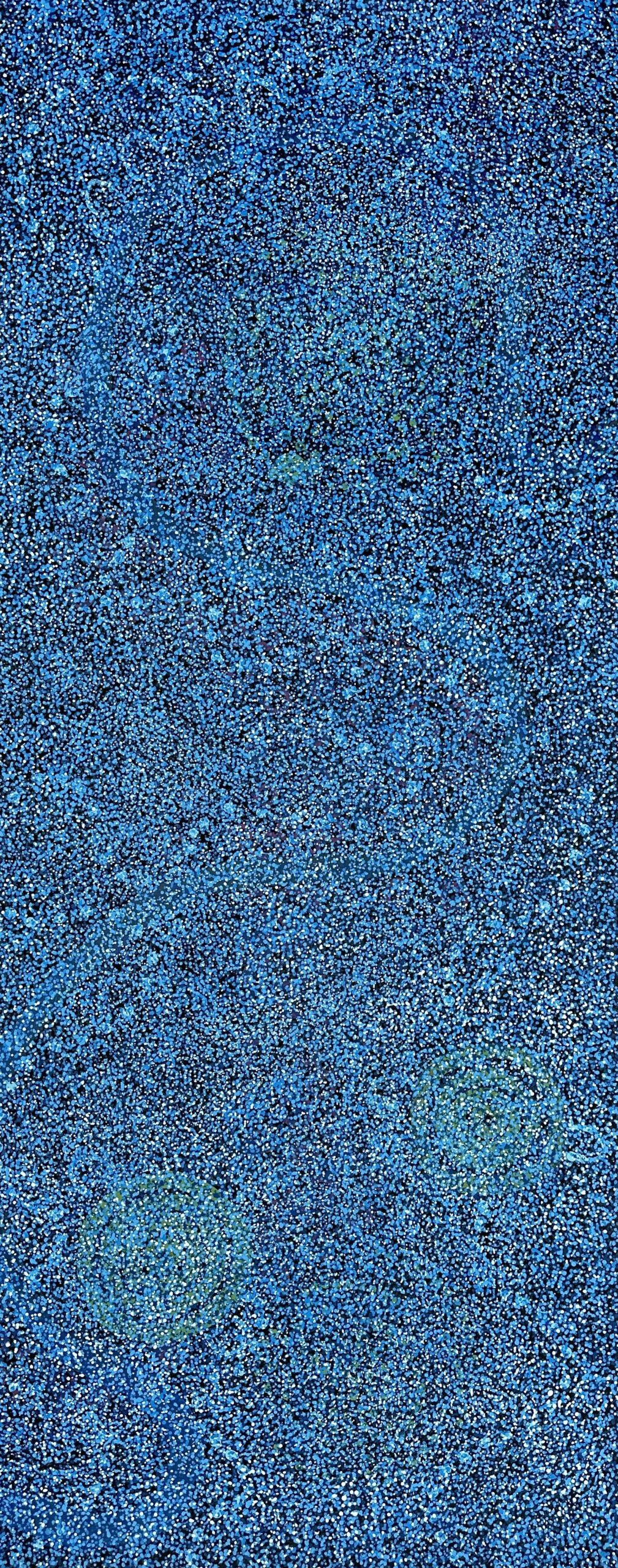
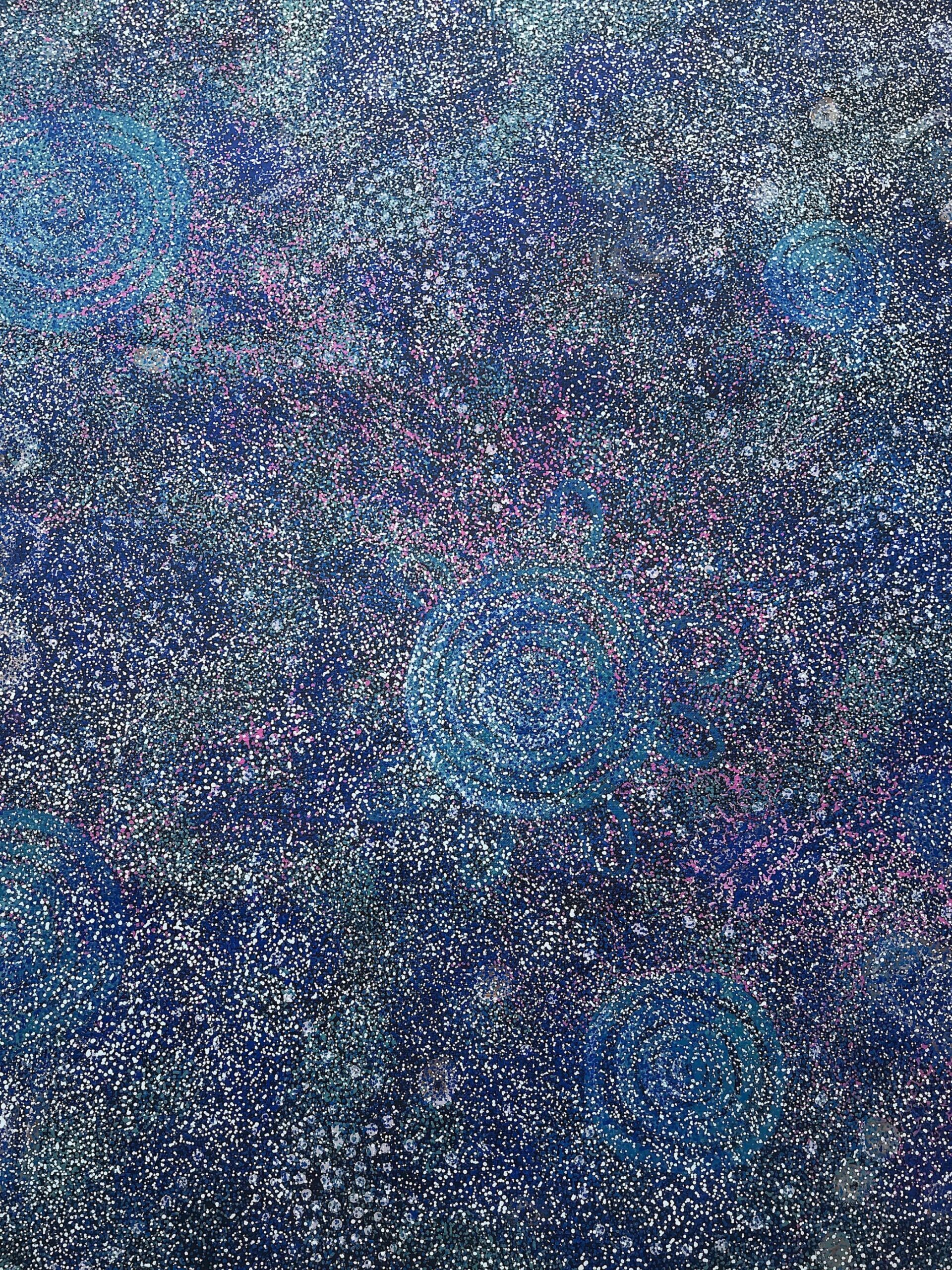
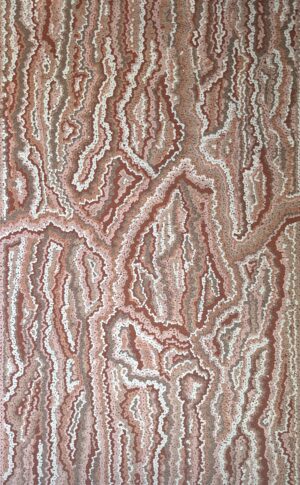
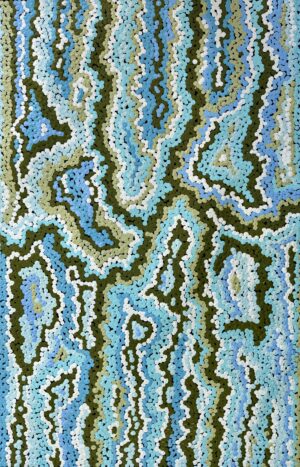
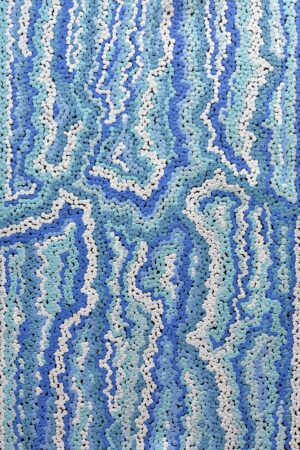
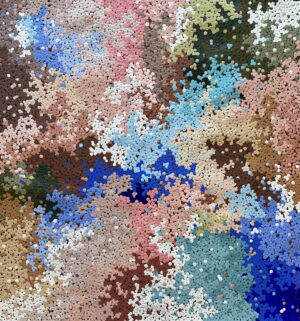
Over the years, Freddy has developed several distinct styles that have brought him critical and commercial acclaim. His Sand Dunes series, a lyrical depiction of Utopia’s wind-shaped desert sands and the Sandover River, earned him a nomination for the prestigious Telstra National Aboriginal & Torres Strait Islander Art Award in 2003. These works capture the ever-changing ripples and movement of the dunes through meticulous brushstrokes.
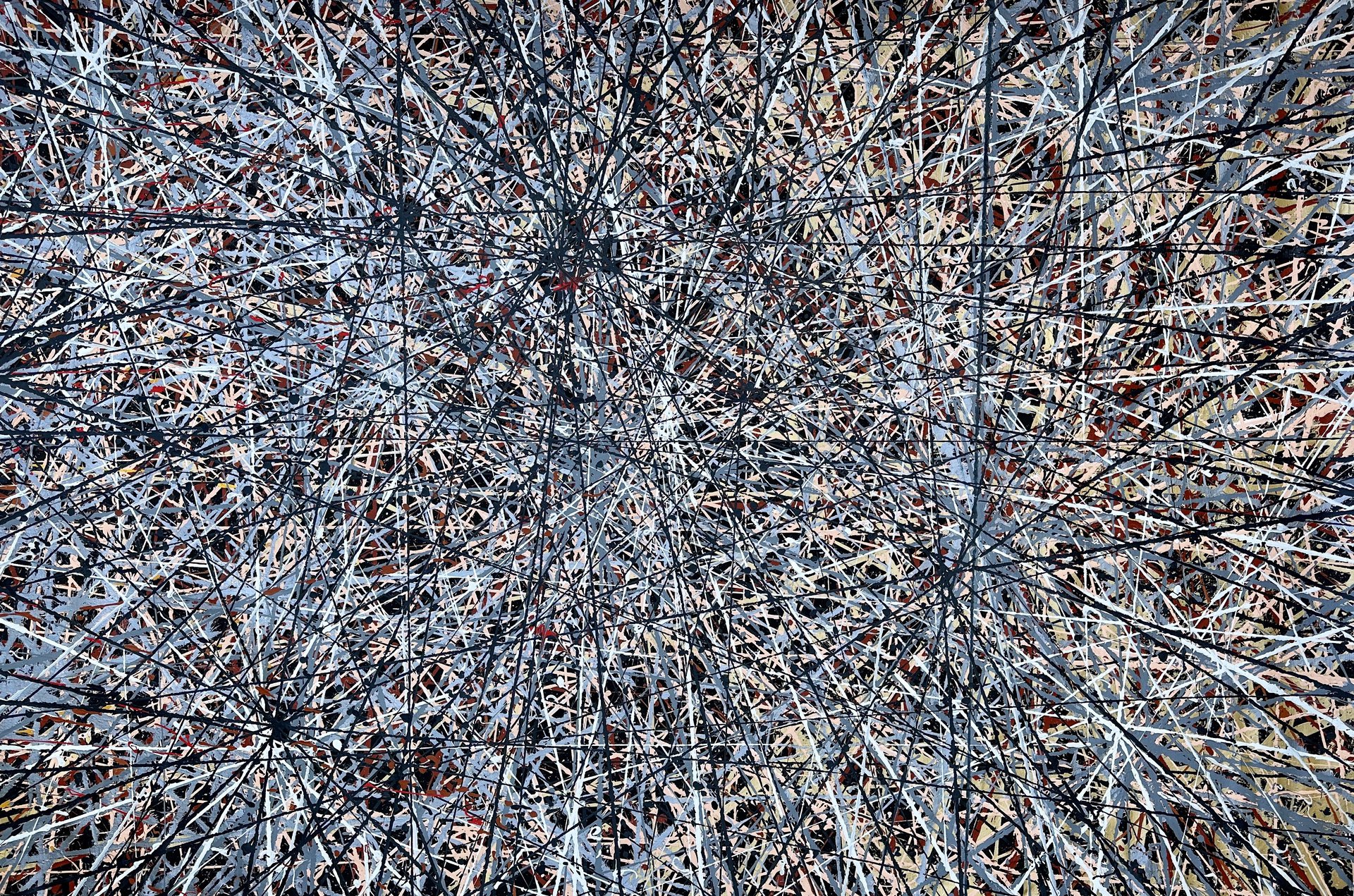
Another significant body of work is his Scorpion Dreaming, a story passed down from his grandmother’s family. In Anmatyerre and Alyawarre culture, the scorpion is a potent totem, respected and rarely disturbed. Freddy’s paintings map the intricate tracks created during the scorpion’s 24-hour courtship dance, weaving straight lines into complex patterns that vibrate with energy and cultural significance.
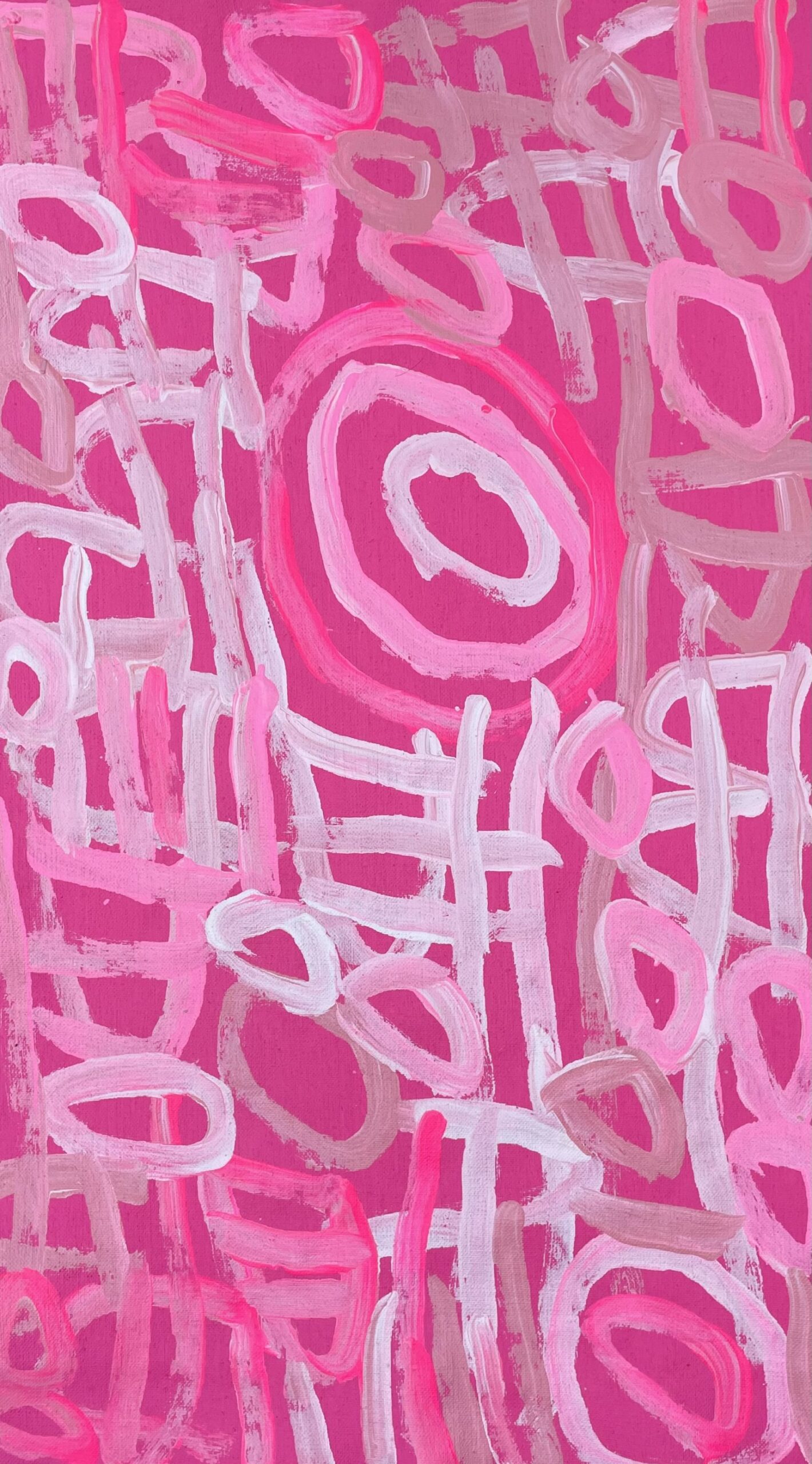
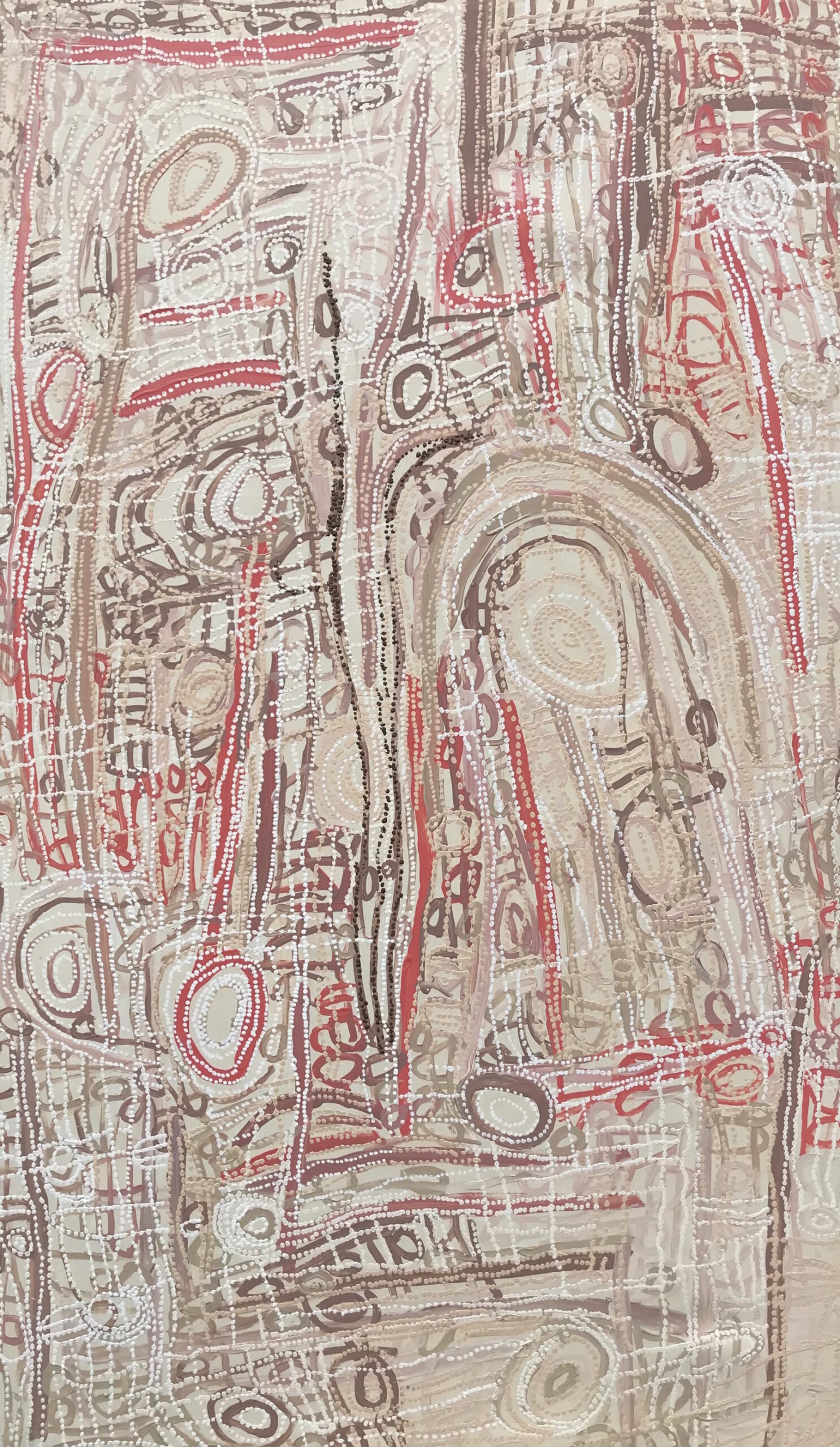
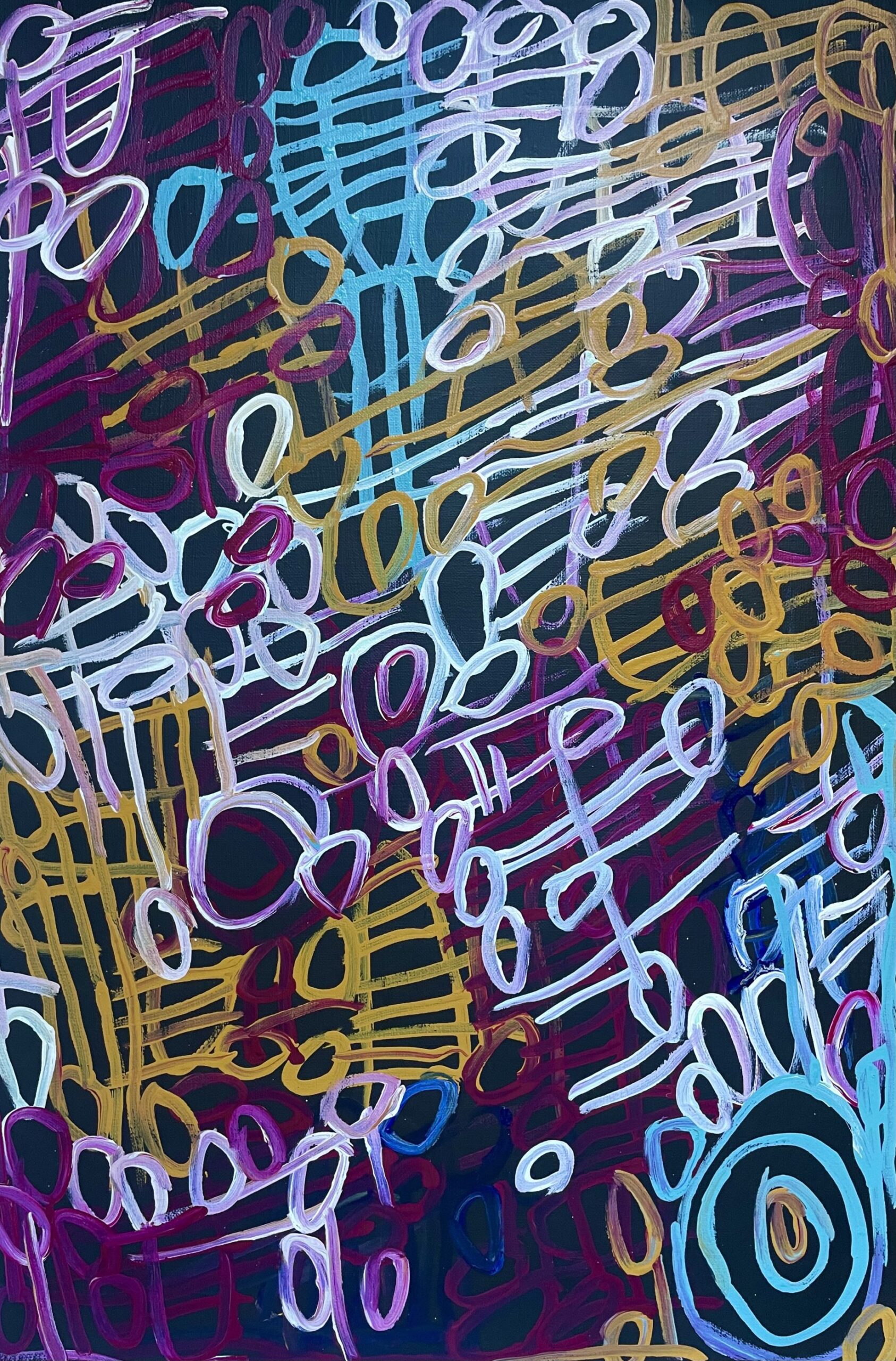
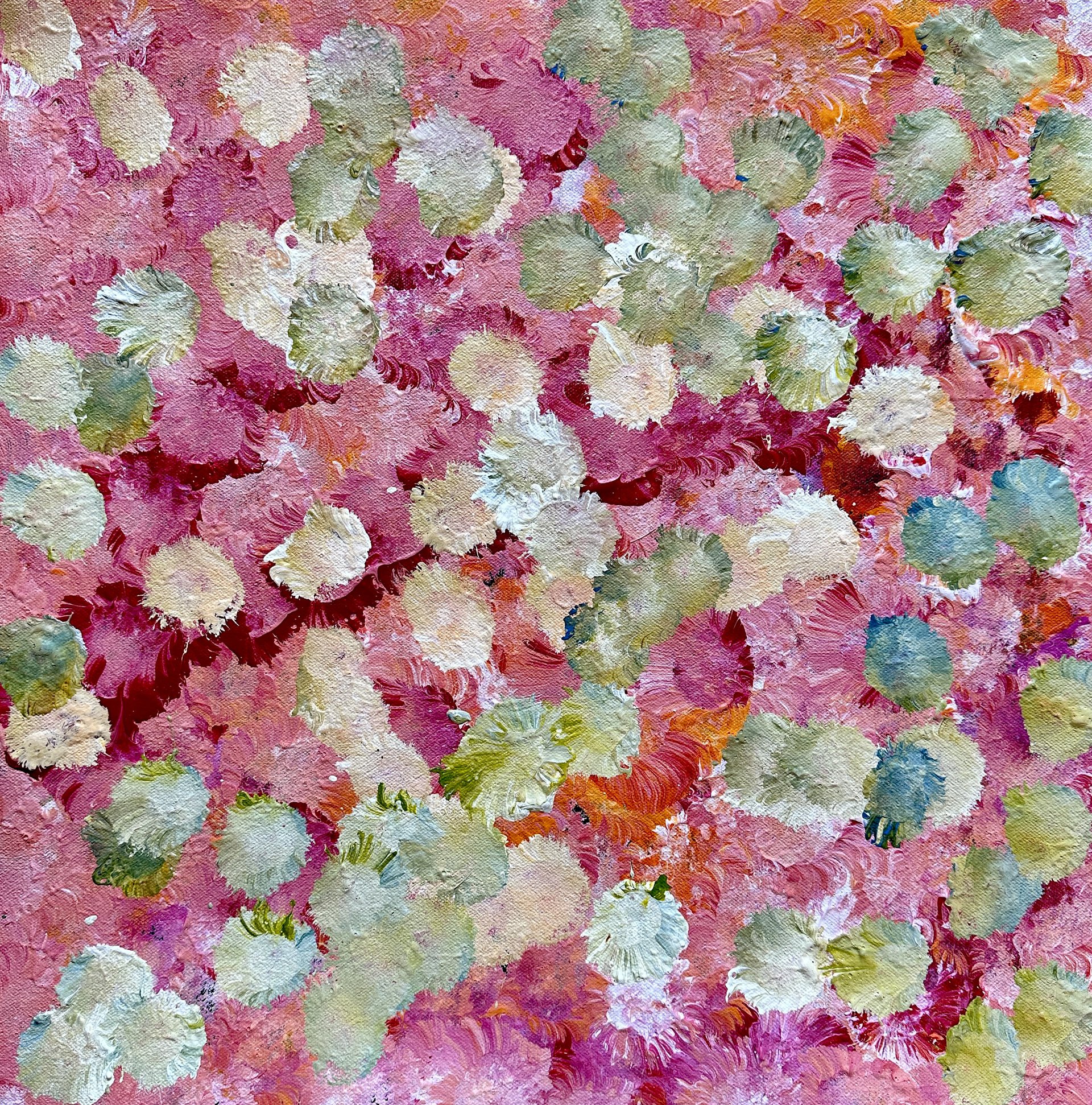
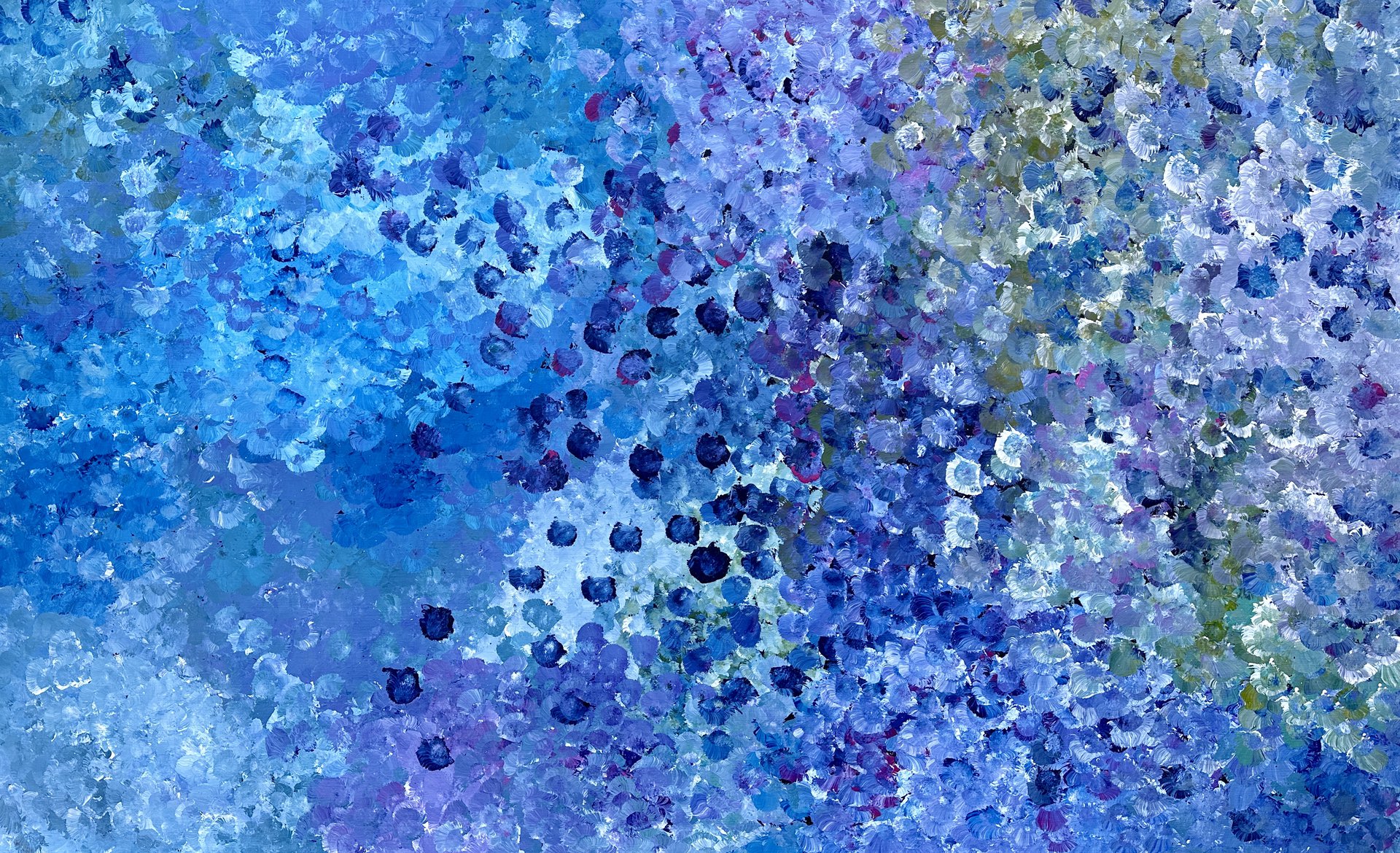
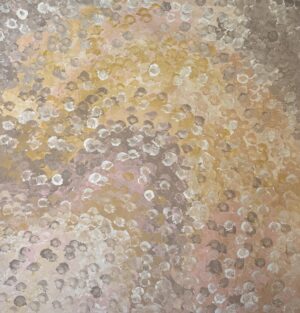
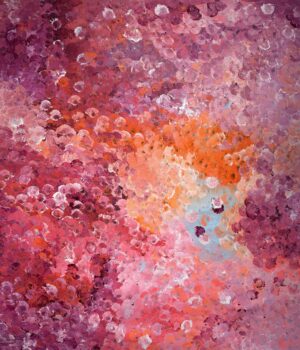
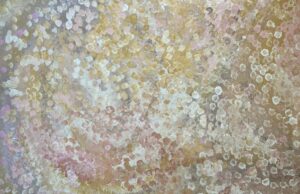
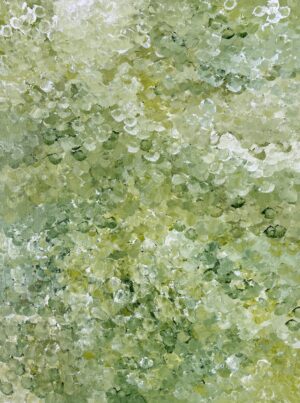
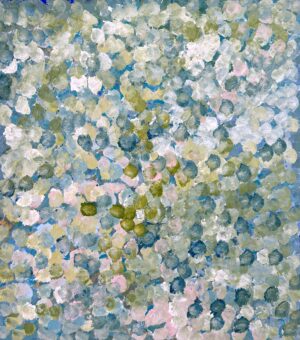
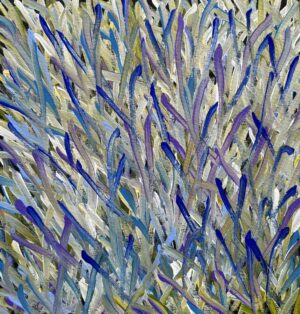
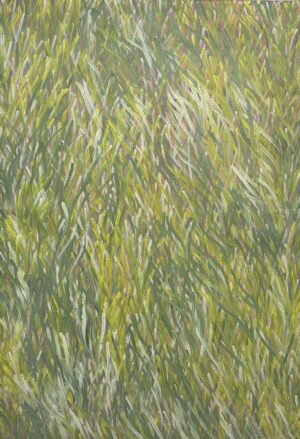
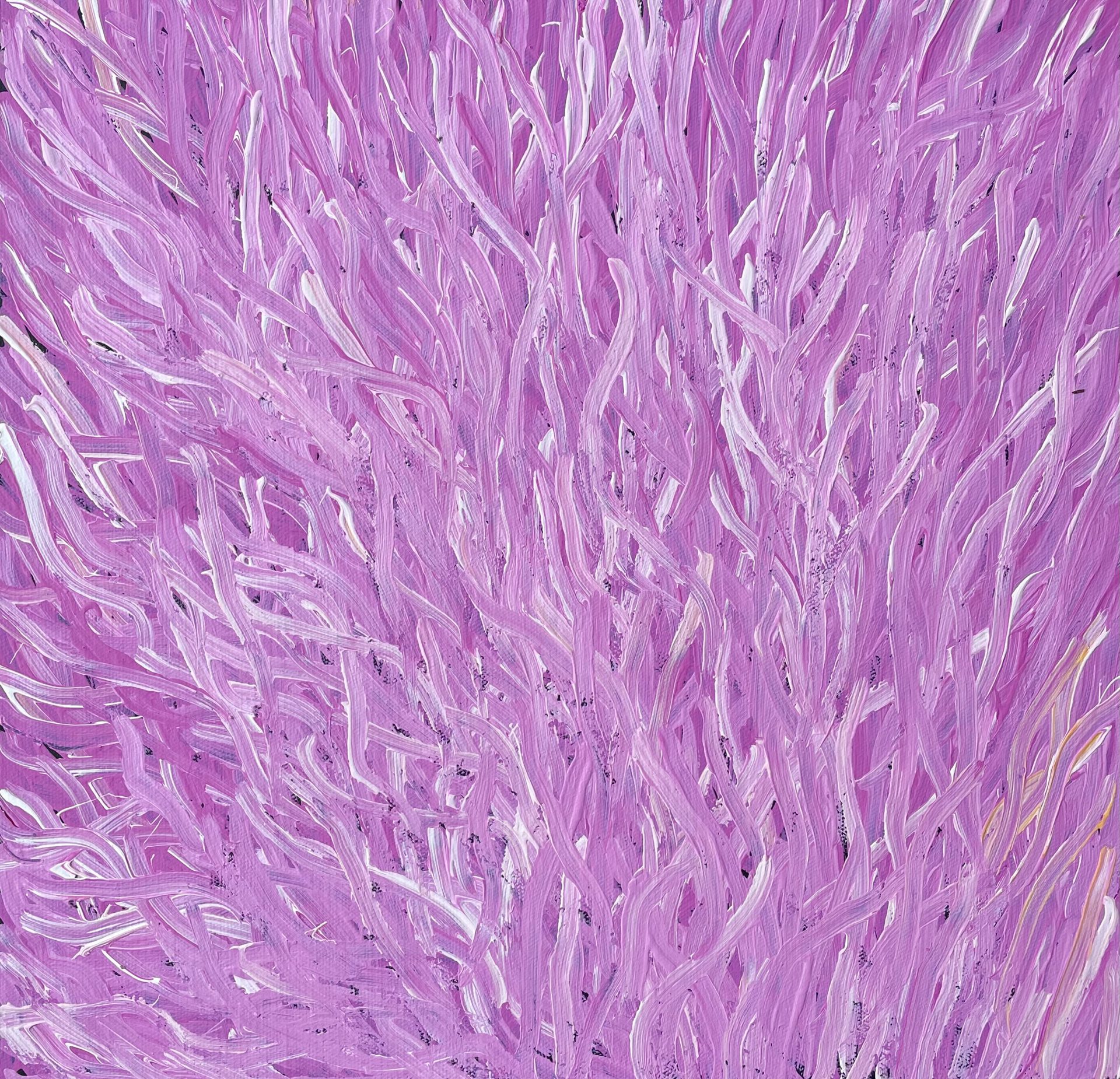
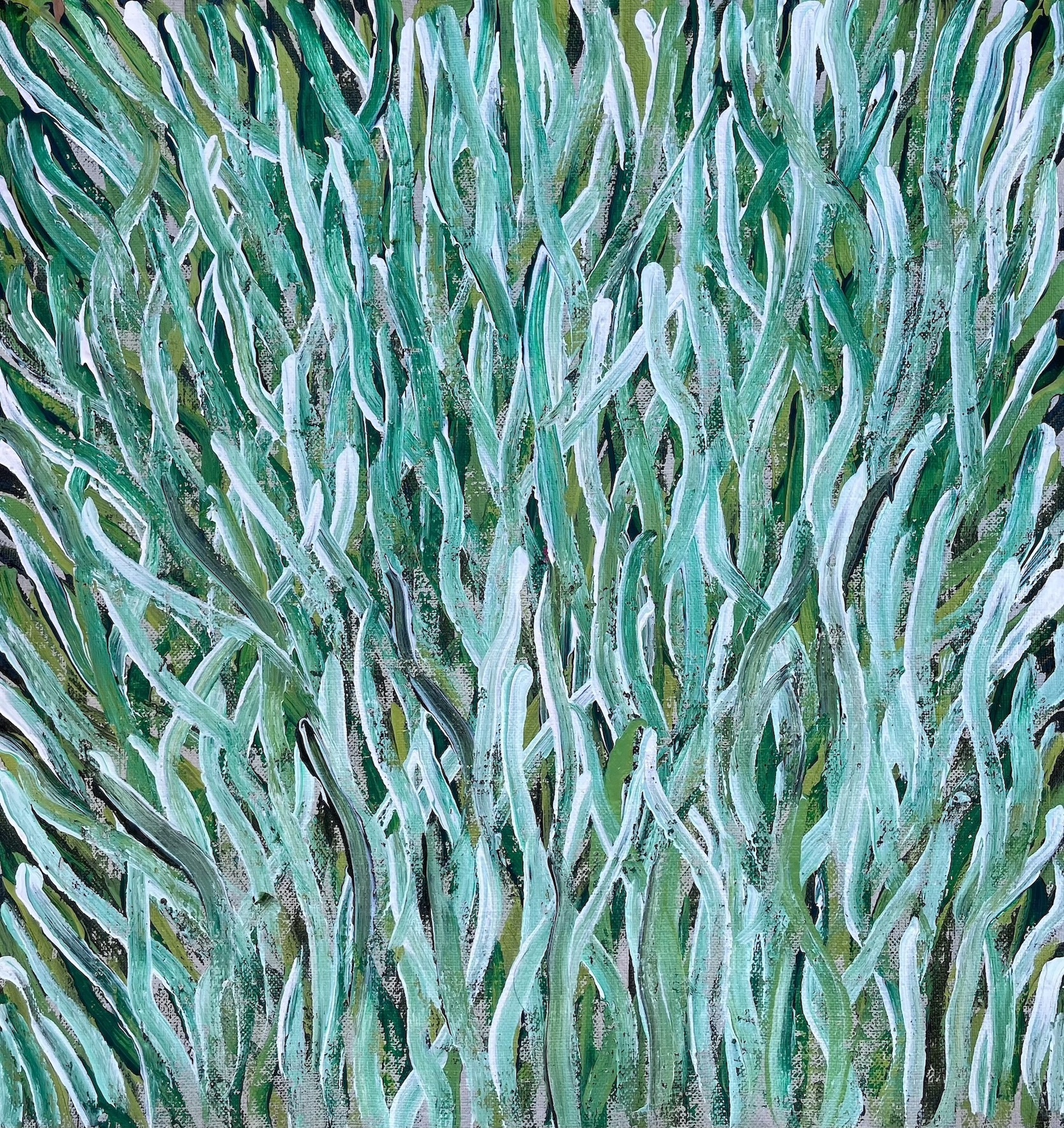
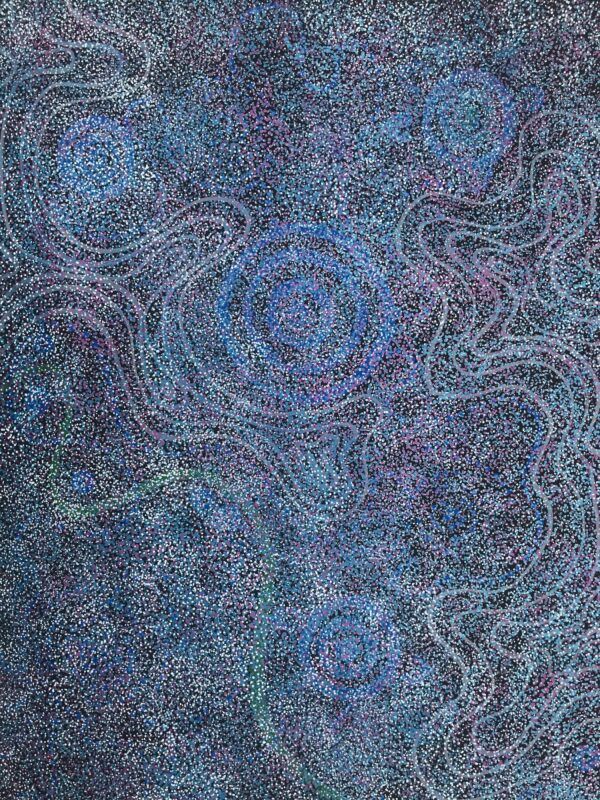
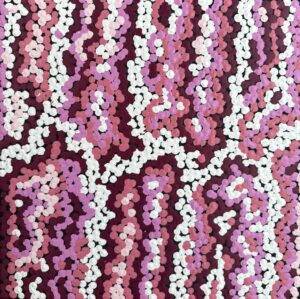
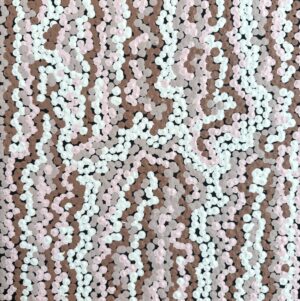
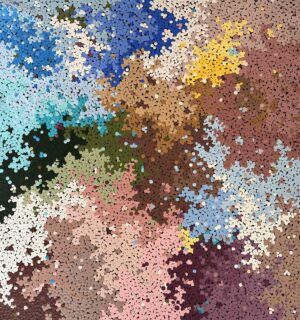
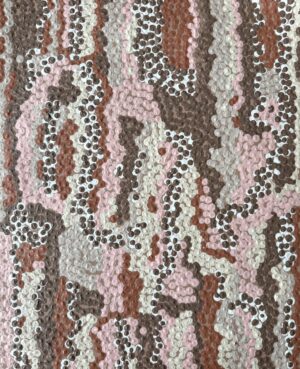
In 2019, Freddy introduced My Grandmother’s Country, a style paying homage to Minnie Pwerle’s homeland. These works are rich with colour, topography, and the spiritual essence of Country, reflecting his deep gratitude for the land and its stories. More recently, he has embraced a dub-dub style inspired by the colours and spirit of both his and Emily’s Country.
Purla’s impact extends far beyond his own canvases. In 1993, he founded the Dreaming Art Centre of Utopia (DACOU) in Melbourne — a pioneering gallery that reshaped the national and international profile of Aboriginal art. Through DACOU, he championed cultural authority, artist rights, and the legacies of senior Utopia artists, ensuring their work reached audiences across Europe, Asia, and North America.
DACOU championed artists such as Emily Kame Kngwarreye, Barbara Weir, Minnie Pwerle, and many others, introducing their work to major international markets. Under his leadership, DACOU provided a platform for artists to share their stories with authenticity and ensured they received fair recognition and compensation for their work. Freddy played a pivotal role in the creation of Emily Kame Kngwarreye’s most celebrated series, including Earth’s Creation I, II, III and IV. Working alongside his great-aunty, he also conceived and brought to life The Final Series, ensuring these culturally significant works were documented, preserved, and shared with the world.
Today, he continues his dual path as both artist and advocate. His paintings are held in collections worldwide, and his curatorial and cultural leadership remain influential. He plays a significant role at Pwerle Gallery as a global art curator and advisor, while working full-time as an artist dedicated to preserving and sharing the artistic and cultural heritage of his community.
Aliquam lorem ante, dapibus in, viverra quis, feugiat a, tellus. Phasellus viverra nulla ut metus varius laoreet. Quisque rutrum. Aenean imperdiet. Etiam ultricies nisi sit.